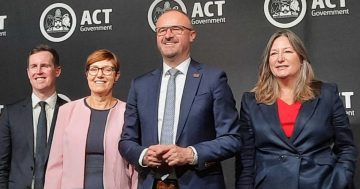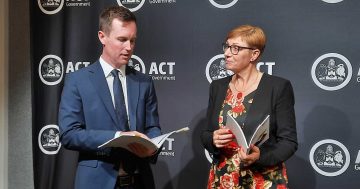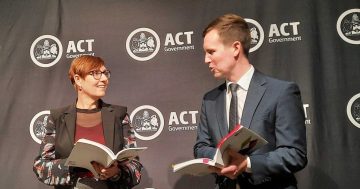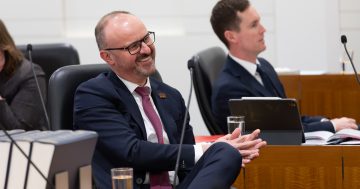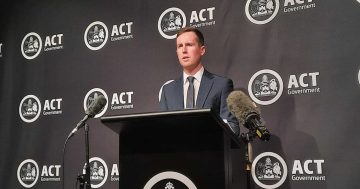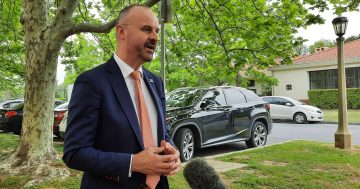

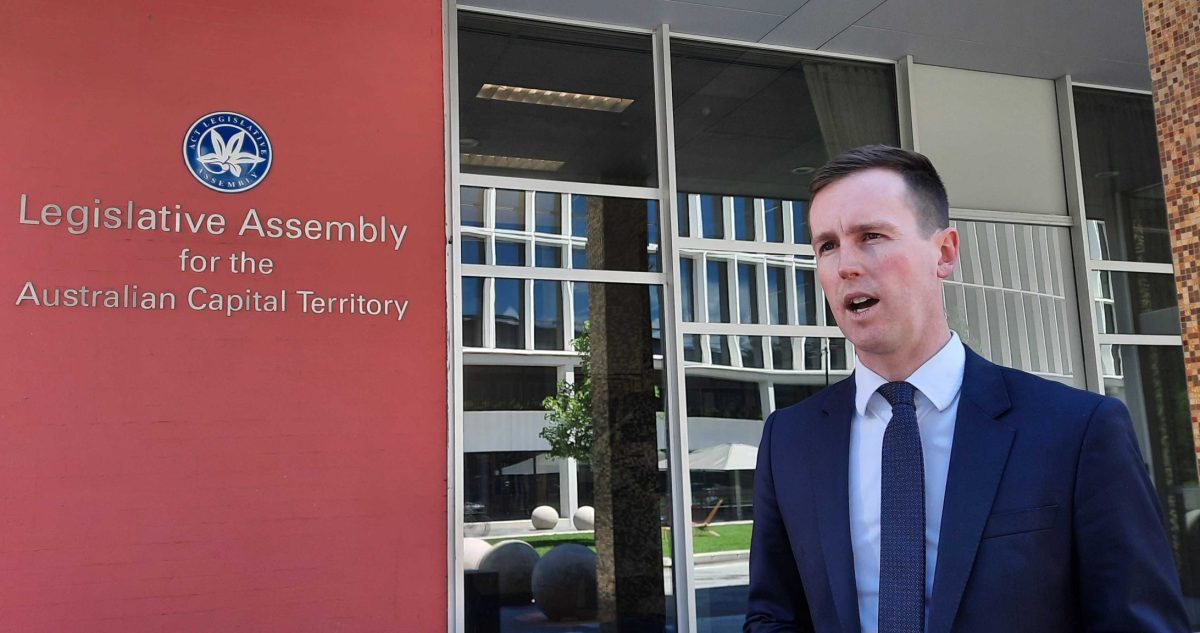
Treasurer, Transport and Planning Minister Chris Steel endured a trifecta of troubles. Photo: Ian Bushnell.
2026 could be Andrew Barr’s last full year of being Chief Minister.
After a year in which Mr Barr kept a relatively low profile for the first half and then emerged to right the ship, the plan is still for him to step back in 2027 to give his successor a runway to the 2028 election.
2025 was not a good year for the ACT Government, particularly for the man who according to the factional numbers is best placed to follow Mr Barr.
Treasurer, Transport and Planning Minister Chris Steel endured a trifecta of troubles during the year, with the censure over his handling of the botched MyWay+ rollout the most damaging.
It is a long way to go until 2028 but the prospect at this point of a Steel-led government should give the Opposition hope that Labor will be vulnerable.
Mr Barr has been Chief Minister since 2014. It is a big ask for him, the party and the electorate to sustain another term. Everybody has a use-by date.
But a transition to a new leader after such a lengthy tenure will pose considerable risk for the government.
Which is why it will need to put the issues it faced in 2025 well behind it in 2026.
The year began with controversy raging over the Health budget top-up and the Liberals fuming about how that should have been revealed to the voters during the election campaign.
That was only a precursor to the unprecedented, red-inked Budget result in June, followed by the school budget crisis in July and the establishment of an independent review of school resourcing.
The new MyWay+ ticketing system for the public transport system, which had been built up to almost magical proportions, proved to be a profound disappointment as bugs persisted way beyond teething issues and it is still not meeting expectations.
This led to a damning Legislative Assembly Committee committee inquiry report, a censure of Mr Steel in the chamber and a press conference in which he stubbornly refused to apologise, despite being given numerous opportunities.
It was up to Mr Barr to tidy that mess a few days later and apologise on behalf of the government.
While Mr Barr still had confidence in his Minister, it left Mr Steel damaged.
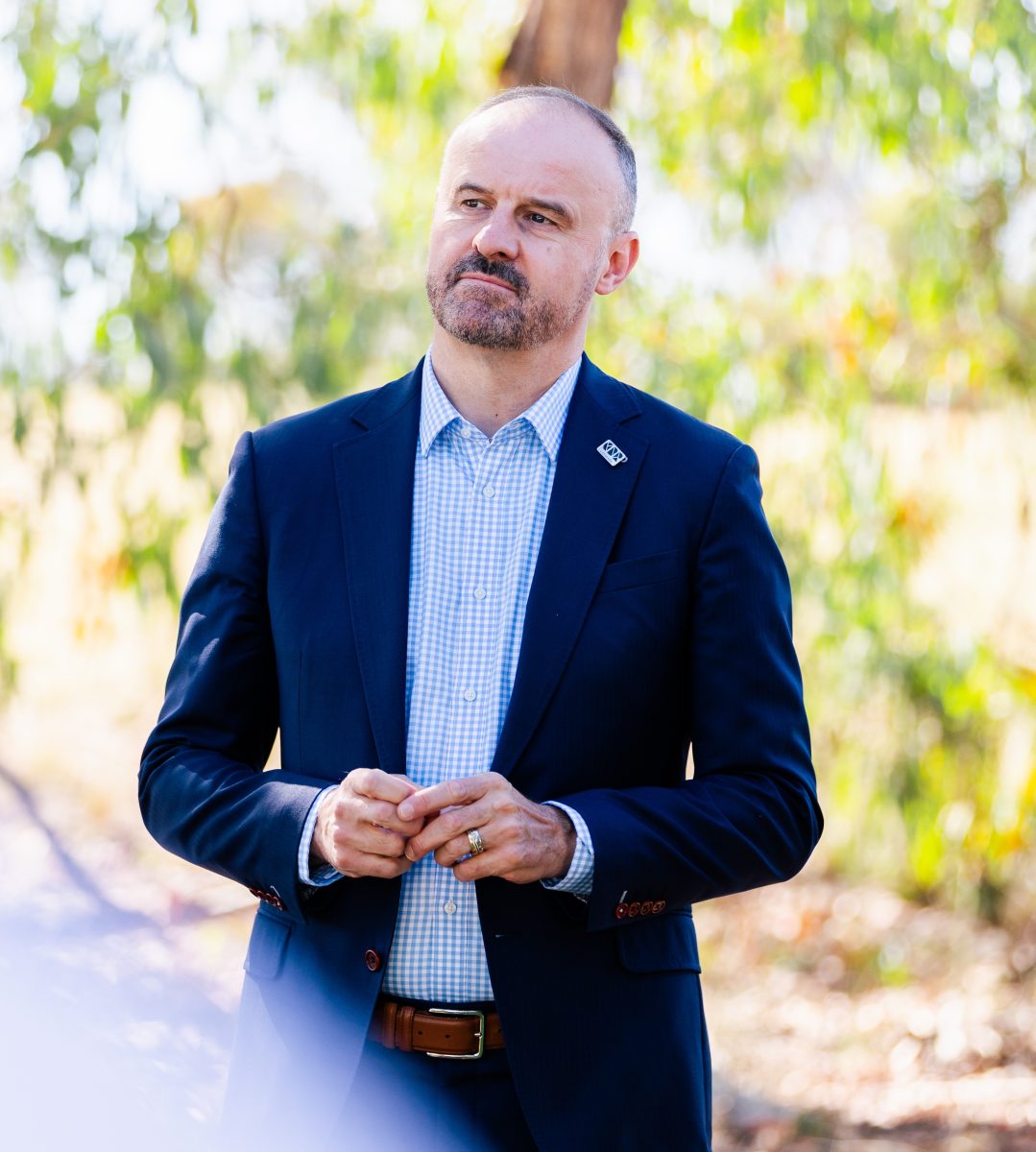
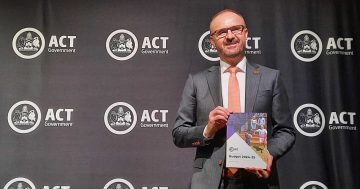
Time is running out for Chief Minister Andrew Barr. Photo: UC Media.
Back in June, Mr Steel had to hand down his first Budget, with a record $1.1 billion deficit and debt spiralling out to $13.6 billion in 2028-29.
In September, global ratings agency S&P downgraded the Territory’s credit rating from AA+ to AA due to its large deficits and rising debt. The ACT wasn’t on its own among the states and territories but the government’s economic credibility was tarnished.
Post election, new Treasurer Mr Steel had warned of belt-tightening across the government but obviously the squeeze wasn’t enough.
Mr Steel will now have to put together a 2026 Budget that reduces the deficit and puts the Territory on a path back to a more manageable bottom line and debt level.
The third leg of Mr Steel’s trifecta is planning, including setting the platform for the ACT to achieve its housing goals.
The government was caught in crossfire from the property industry and community organisations.
The property industry welcomed reforms to encourage infill development but attacked the government throughout 2025 over approvals red tape and high taxes and charges, particularly the Lease Variation Charge (LVC).
That led to Mr Barr, not Mr Steel, articulating the give and take the government was prepared to enter into on LVC.
For community organisations unconvinced about the government’s gentle urbanism, looming infill is a case of “there goes the neighbourhood” and the demise of the bush capital.
Irking the government in particular was some community organisations’ appeals to the ACT Civil and Administrative Tribunal over community and public housing projects.
So the passing of legislation that bans these appeals was a considerable win for the government and Mr Steel, who championed the bill.
Of course the property industry welcomed the change but asked why a ban could not be extended to all projects, to hasten new housing.
Mr Steel’s big three portfolios will always leave him exposed to attack, but his rival on the left for the top job, Rachel Stephen-Smith, has the perennial basket case of Health to deal with.
Health is now consuming a third of the Budget and, as mentioned, needs a top-up to keep the hospitals running. Elective surgery and Emergency Departments are running sores, culture problems persist and the management and payment of specialists and Visiting Medical Officers is a nightmare.
Health in 2025 was no different, although the latest ED data offers hope that reforms are making an impact. Ms Stephen-Smith showed patience and persistence in dealing with VMOs and specialists such as orthopedic surgeons.
But, like all the states and territories, the Territory will be looking for a new funding deal from the Commonwealth in 2026 that will really make the difference.
Ms Stephen-Smith is also Finance Minister. Can she be sufficiently ruthless to find savings that will put the government on a better financial footing?
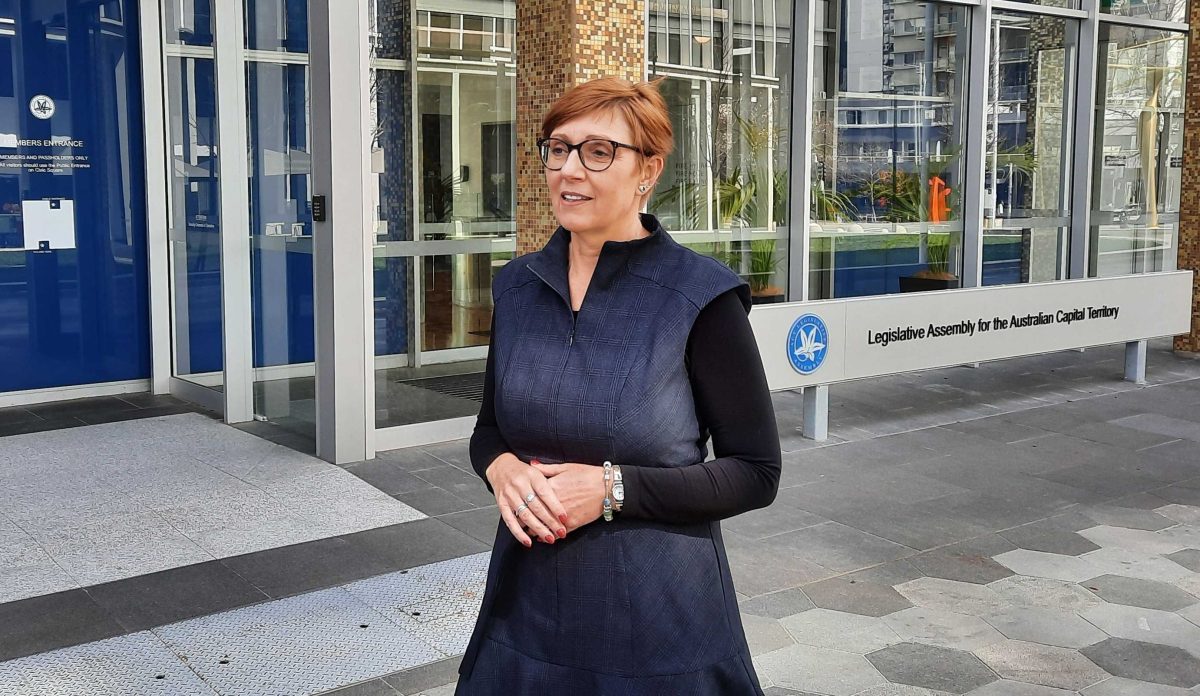
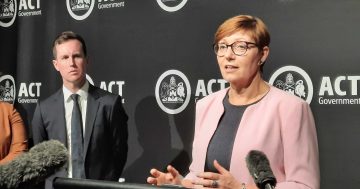
Health and Finance Minister Rachel Stephen-Smith. Photo: Ian Bushnell.
The government’s infrastructure program rolled on in 2025, the most visible items being in the city where disruptions mounted to take the gloss off what Labor believes are not only important projects but vote winners.
Light rail stage 2A is now well under way and track will be laid in 2026 but nearby businesses are hurting and the fear is that they will be collateral damage by the time the line is up and running.
This was compounded by the closure of the Theatre Lane car park for the Lyric Theatre project which gets under way in 2026, after Multiplex got the nod for the $317 million contract.
The government’s response was less than ideal for the businesses, which wanted concrete support such as rates relief and a partial reopening of the car park.
It’s a long game for Labor, which believes that come 2028, light rail stage 2a will be complete, the Lyric Theatre to follow soon after and the city disruption will be over.
The government also cleared the decks for other projects, selecting an early delivery partner for the Northside Hospital, Multiplex and late tenders for the new Canberra Aquatic Centre in Commonwealth Park and the Kingston Arts Precinct.
The risk is that the focus on big-ticket items will detract from smaller ones and basic service delivery.
But 2026 will be key to setting the tone and pace for the path to 2028.
The Budget must improve, MyWay+ and the public transport system must be sorted out (the Commonwealth Bridge renewal works won’t help), housing starts have to increase and school funding repaired.
By this time next year the term will be more than half over and the Opposition shouldn’t be in such disarray. Labor can ill afford to have another year like 2025.