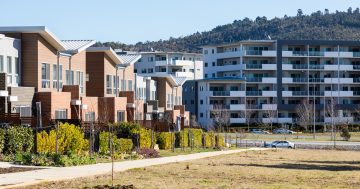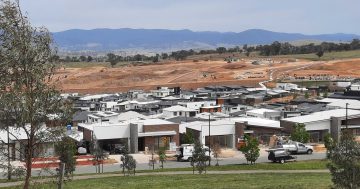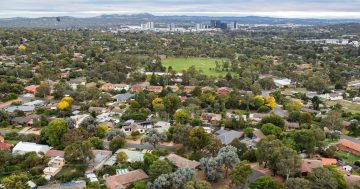

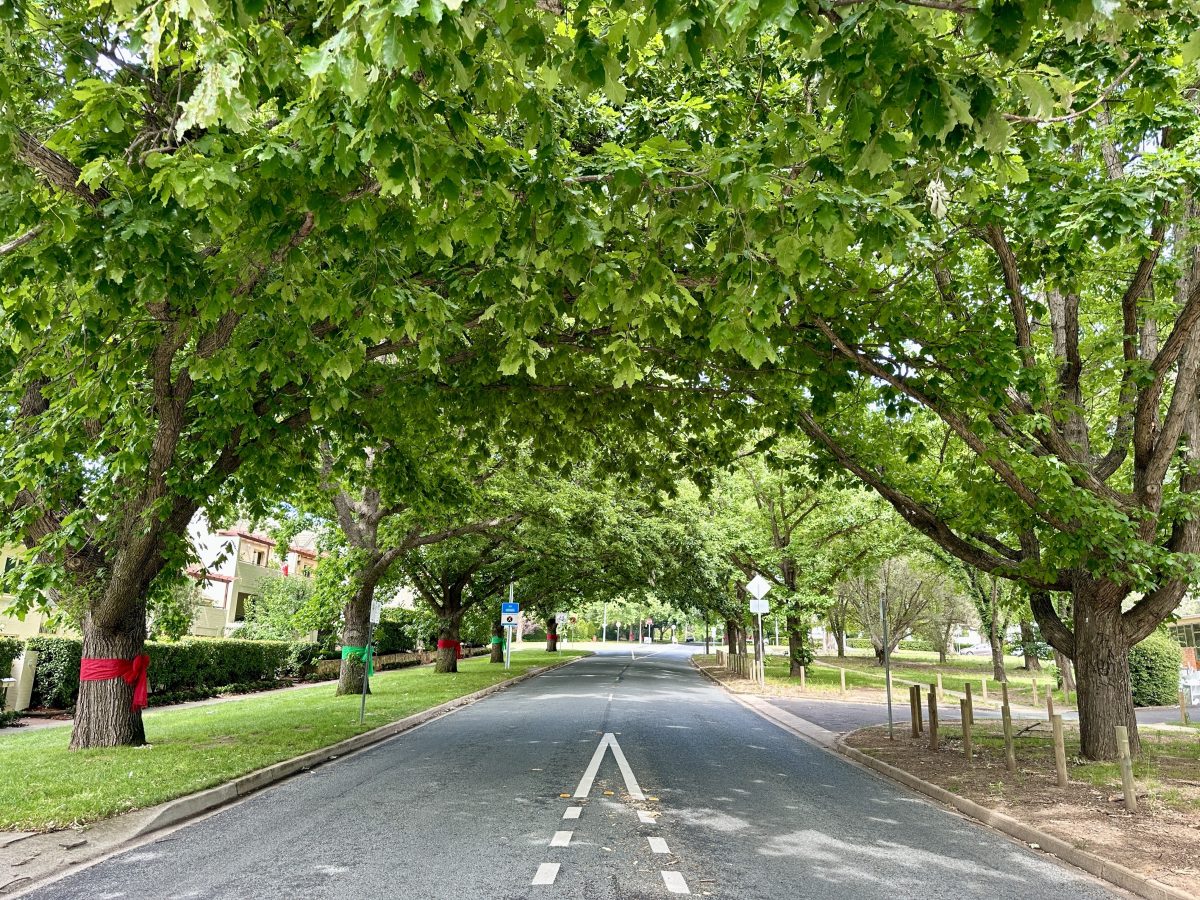
Older suburbs have ageing trees and face infill pressures. Photo: James Coleman.
A combination of ageing trees, densification in older suburbs and new suburbs not having as much space for plantings means the ACT is falling behind in its bid to achieve a 30 per cent tree canopy cover (TCC) by 2045.
In the fifth update to the Legislative Assembly on the Urban Forest Strategy since it was released in 2021, TCC was found to have fallen from 22.7 per cent in 2020 to 21.8 per cent in 2025 across the urban footprint.
But the government is pinning its hopes on thousands of new plantings to reach the three-metre height threshold to be included in the canopy by the time the next count is taken in 2030, although infill development is expected to increase as a result of planning reforms to meet government housing targets.
TCC is monitored every five years as part of the strategy to achieve the canopy cover target, with 2020 data providing the baseline.
The update, which covers actions taken during 2024-25, says that of Canberra’s 121 suburbs, 92 experienced a fall in canopy cover from 2020 to 2025, with a median loss of 1.59 per cent across these.
Significant reductions were seen in Denman Prospect (8.7%), Weetangera (4.15%), Fisher (3.45%), with further reductions of 2.4-2.89 per cent in Torrens, Ainslie, Hackett, Downer, Hawker, Jacka, Flynn, Scullin and Fadden.
Just 24 of Canberra’s 121 suburbs have a tree canopy coverage higher than the 30 per cent target, with 59 suburbs hosting a canopy cover between 20 and 30 per cent.
The districts with the highest canopy cover are Hall Village (38.84%), Woden Valley (30.16%), Canberra Central(27.19%), Weston Creek (25.07%), Tuggeranong (23.81%) and Belconnen (23.43%).
The districts with the lowest canopy cover are Gungahlin (14.53%), Coree (11.13%), Majura (9.21%), and Molonglo Valley (6.16%).
Canopy cover increased on unleased land from 23 per cent in 2020 to 24 per cent in 2025, while canopy cover on leased land decreased from 21 per cent to 19 per cent.
The report says that the increase on public land may be attributed to the growth of young trees planted in streets and parks in newly established suburbs.
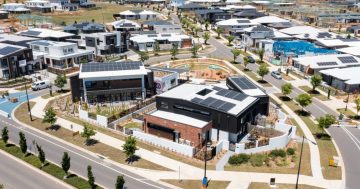
The decline of TCC on leased land, and also observed across older suburbs, may reflect the impacts of urban densification and the lack of tree planting space available on smaller blocks typical in more newly established suburbs in the Gungahlin, Molonglo Valley and West Belconnen districts, it says.
The report says TCC in Canberra’s older leafy suburbs is generally declining, likely as a result of trees being removed to enable urban densification.
A significant number of trees have also been identified as being in decline and will require removal and replacement in the coming decades.
“Canopy cover in these areas may also be significantly affected by planning decisions that enable urban infill, resulting in a loss of mature trees on leased land and adverse impacts to street trees on public land,” the report says.
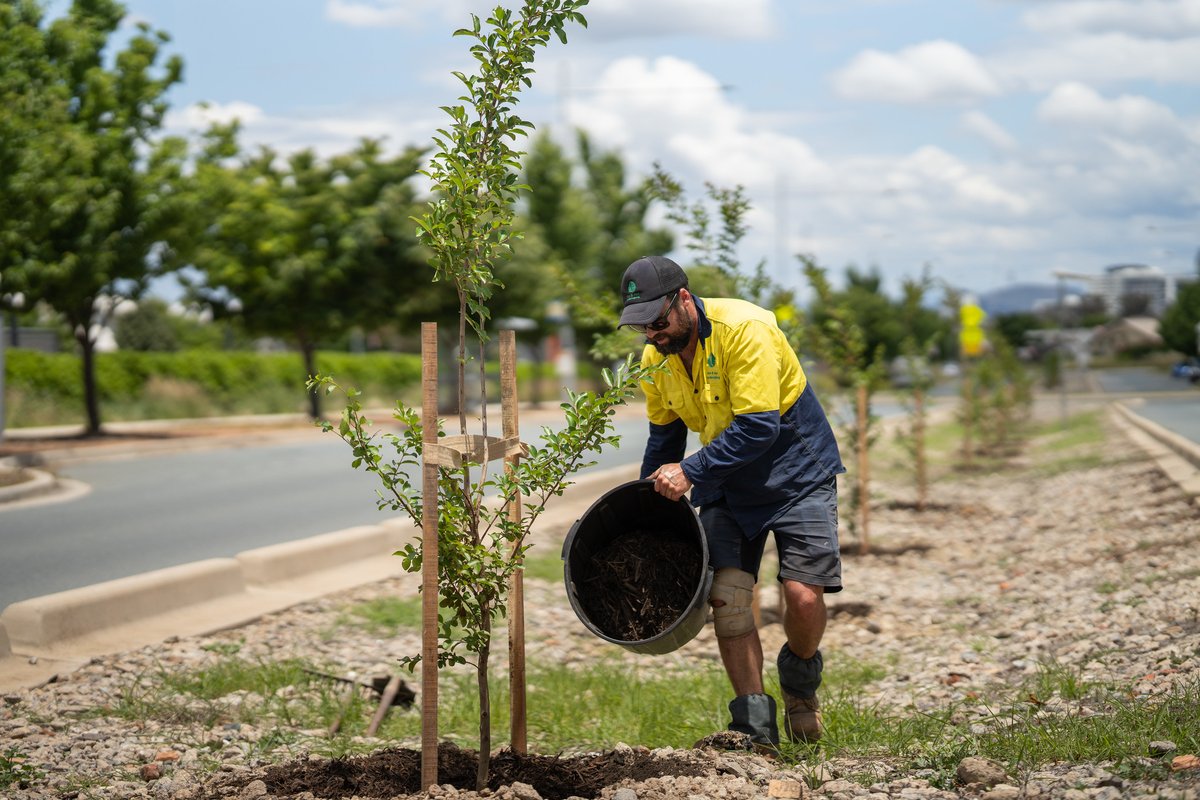
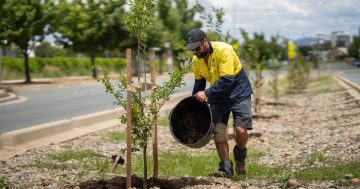
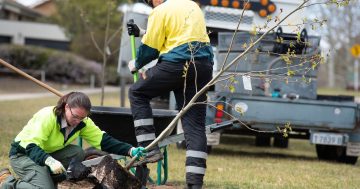
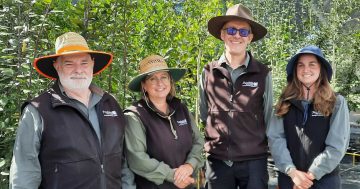
The ACT Government planted 12,730 trees in 2024-25. Photo: ACT Government.
The report recommends that the government should look at plantings in open spaces, such as major and secondary road medians and verges, to offset predicted canopy loss from the removal of ageing street trees and other trees for infill development.
The suburbs with the highest TCC showed some of the greatest decreases in TCC.
Isaacs, O’Connor, Reid and Red Hill all have a TCC above 39 per cent and respectively showed a reduction of 2.15, 2.17, 2.39 and 2.03 per cent.
Weetangera showed the largest decrease in TCC of established suburbs, with a TCC decrease of 4.15 per cent to 27.23 per cent.
Only three suburbs with a TCC greater than 25 per cent showed an increase in canopy over the past five years: Oaks Estate (2.17%), Duffy (0.84%), and Capital Hill (0.53%).
Twenty-seven suburbs have a canopy cover of less than 15 per cent.
“Over half of these suburbs were developed within the last 15 years and canopy cover is expected to increase as the trees planted at development reach maturity,” the report says.
This was the case in suburbs developed over the past 15 years such as Franklin, Crace, Forde, Bonner, Wright and Coombs.
In 2024-25, City Services planted 12,730 trees on unleased land. This followed 65,240 trees being planted from July 2020 to June 2024.
Resident resistance to street plantings continues to be a challenge.
The program received 537 refusals from residents, with 284 in spring 2024, and 253 in autumn 2025.
The refusals occur particularly in suburbs with low canopy cover and vulnerability to urban heat.
This can be due to narrow streets and verges, cul de sacs or steep and smaller blocks or dual occupancies where space for resident parking is limited.
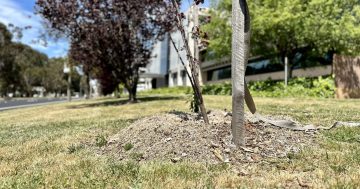
In 2024-25, more than 48,000 trees were watered across Canberra with most of those remulched, weeded, pruned, and tree stakes and guards re-installed or removed through the inhouse watering and young tree care programs.