
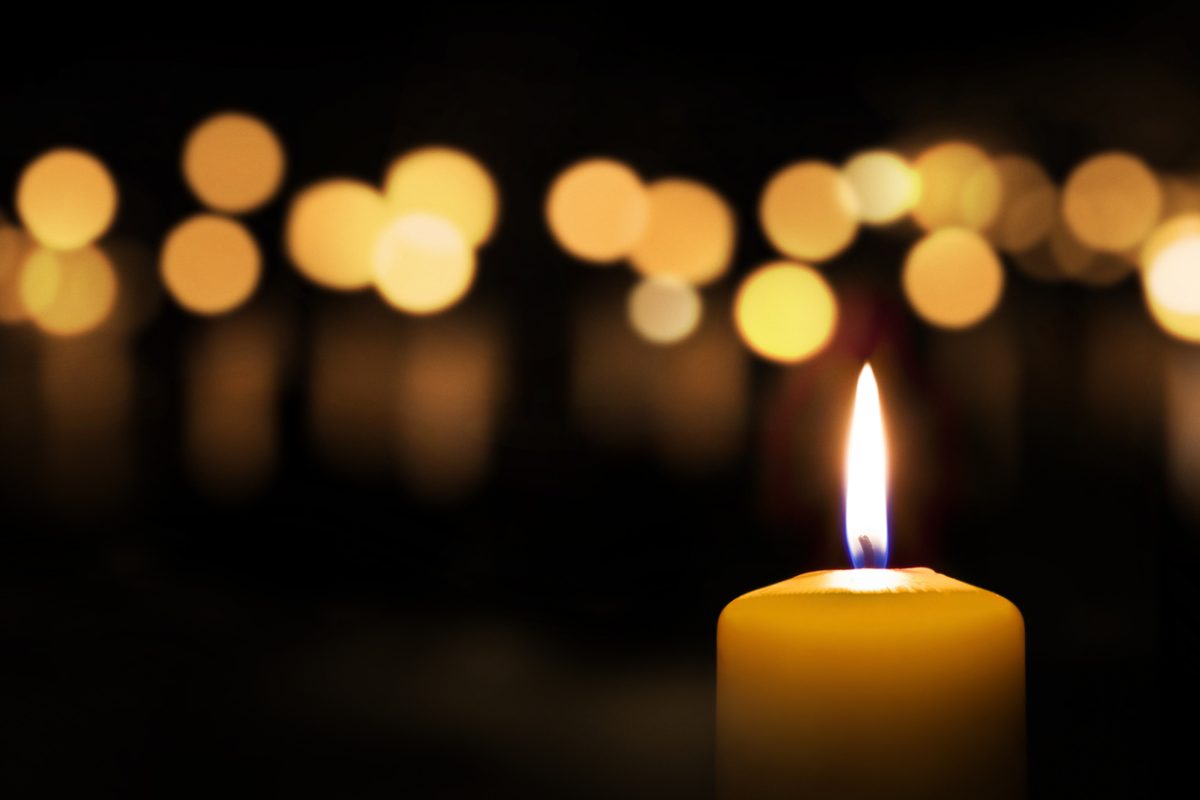
In the Jewish tradition, lights are placed in windows during Hanukkah as a signal of hope, resilience and shared identity. Photo: File.
The police radio in the chief-of-staff’s office crackled to life.
It was the mid-1990s, back when police communications were still transmitted over open radio frequencies and newsrooms kept bulky scanners that looked like something lifted straight from a Doctor Who set.
In the Burnie newsroom of The Advocate in Tasmania, that scanner was always on, always humming quietly in the background, another piece of furniture in a place that thrived on noise and urgency.
It was a Sunday. April 1996. A skeleton crew was on duty, most of us battling the after-effects of the usual Saturday night celebrations. The mood was slow, subdued. Nobody was expecting anything out of the ordinary.
Until suddenly we were.
The first fragments of communication were unclear — broken sentences, raised voices, confusion. But it didn’t take long for those of us in the newsroom to realise this wasn’t routine. As the afternoon wore on, the details became sharper, darker, more horrific. Every new transmission made it harder to breathe. Every pause felt too long.
It became obvious very quickly that this was a day that would change Tasmania forever … and, in time, the nation.
I was a young journalist then, still learning what it meant to witness tragedy from the front row. Port Arthur was not something you reported on and then moved past. It sat in your chest. It stayed with you. It reshaped how we thought about safety, violence and the kind of country we wanted to be.
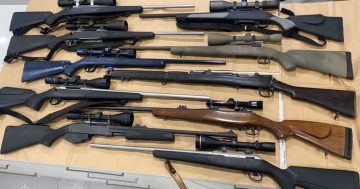
What followed in the months after Port Arthur was extraordinary leadership. John Howard’s decision to introduce sweeping gun law reform remains one of the most significant acts of political courage in modern Australian history. The result has been something rare in a world increasingly desensitised to violence: mass shootings in Australia became few and far between.
Until yesterday.
From a news perspective, the contrast between Port Arthur and what unfolded at Bondi could not be more stark.
Yesterday afternoon, my wife Kellie — herself a Region journalist — and I were sitting on the couch in Flinders, NSW. Within half an hour of the first reports of a stabbing attack at Bondi Junction, we already had a confronting sense of what had occurred. Not through official statements. Not through a police radio crackling in a newsroom.
Through social media.
Videos appeared almost instantly. Raw, unfiltered footage of terror unfolding in real time. Images of the attackers. Images of victims. Moments of bravery and chaos and fear that no journalist of my generation would ever have seen so quickly, or so graphically, in 1996.
We saw things we will never forget.
That is not a criticism of the people who shared those videos — many were simply documenting what they were living through — but it is a reminder of how profoundly the landscape has shifted. Tragedy now arrives in our homes at the speed of a scroll. The distance that once existed between an event and the public is gone.
At Port Arthur, information travelled relatively slowly. Details emerged over hours and days. There was time — not enough, but some — for facts to be verified, for the weight of what had happened to be understood collectively.
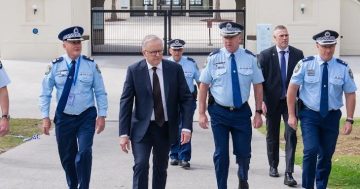
At Bondi, the nation watched grief unfold almost instantly. The Prime Minister graced our screen just a few hours after the event and gave us a firm sense of what had happened.
Like Port Arthur, what happened yesterday will change us. It will change how people feel about public spaces, about shopping centres, about safety in places that once felt ordinary and benign. It will change conversations around policing, public security and community responsibility. It will shape NSW, and indeed Australia, for years to come.
Perhaps the most heartbreaking outcome of all is this: communities who no longer feel safe in their own country.
As we all wake this morning carrying grief — whether directly connected or not — it’s worth remembering that national healing does not always begin with policy or politics. Sometimes it begins with small, human gestures.
In the Jewish tradition, lights are placed in windows during Hanukkah as a signal of hope, resilience and shared identity. Maybe there is something to be learned from that.
Perhaps tonight, across this country, we could place a candle in a window. Not as a solution. Not as a statement. But as a quiet signal of solidarity — to the families who lost loved ones, to the witnesses who will carry those memories forever, and to communities now grappling with fear where there was once familiarity.
It would be a way of saying: you are not alone.
Nearly 30 years ago, a crackling police radio changed the course of our nation. Yesterday, a flood of digital images did the same. The technologies are different. The trauma is not.
What matters now is what follows and how we choose to look after one another when the noise finally fades.
Original Article published by Julian O’Brien on Region Illawarra.