
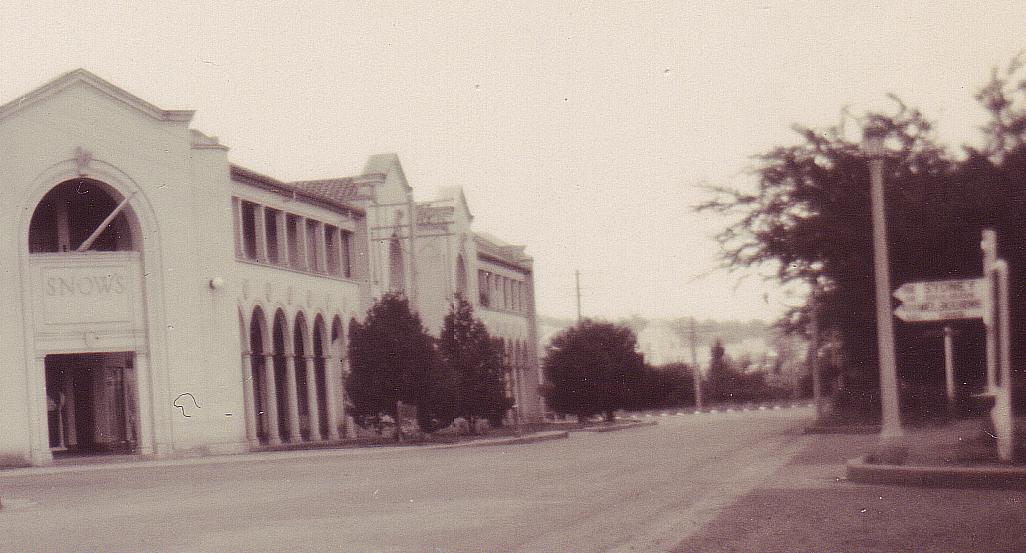
Civic in the 1940s – surrounded by sheep paddock. Photo: Kevin Mulcahy.
When Kevin Mulcahy received his Box Brownie camera for Christmas in 1947, he was like most 10-year-olds with a camera. Everything was worth a photo.
The difference is: he could reach everything on his pushbike. Canberra, in 1947, was a very different place.
“Quite frankly, it was like growing up in any other ordinary little old town,” he says.
“The only thing that made it look like a capital was the big white building – now Old Parliament House – in the middle of a sheep paddock.”
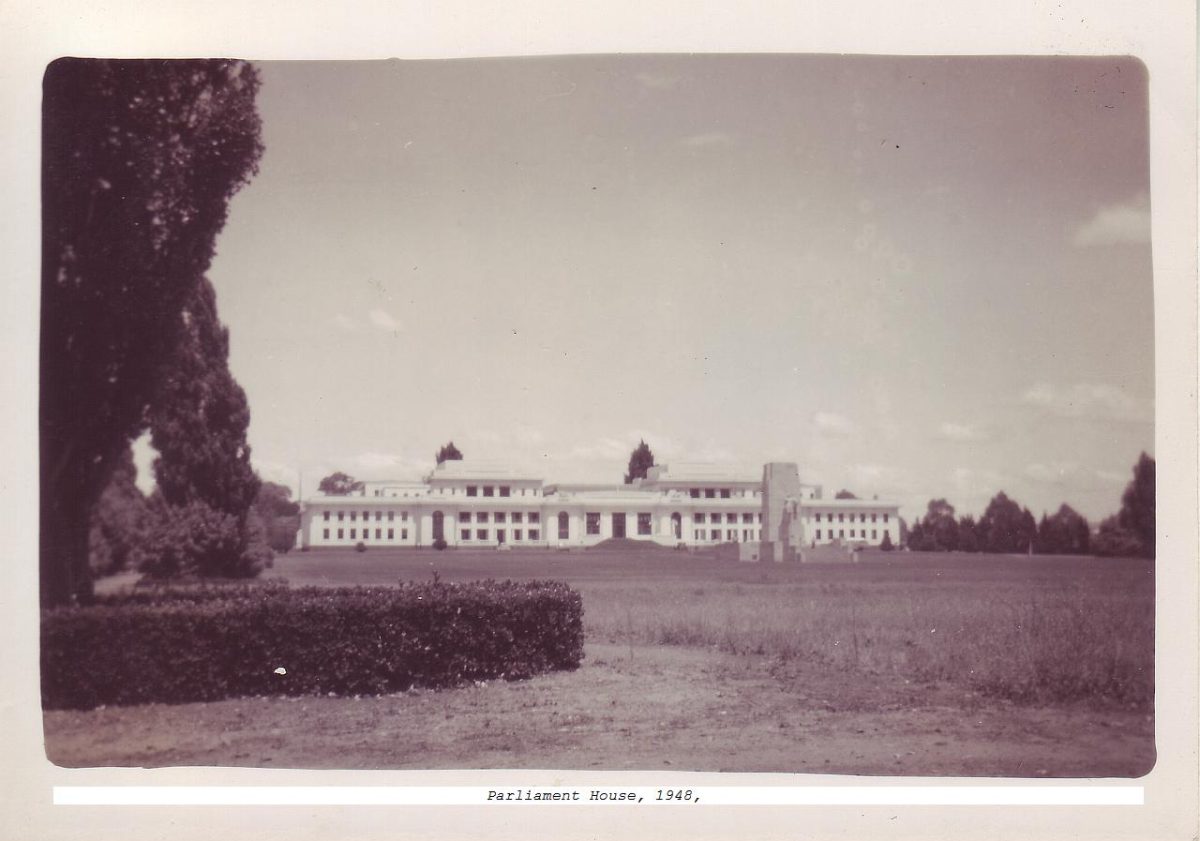
Parliament House in 1948. Photo: Kevin Mulcahy.
Civic was little more than the Sydney Building and half the Melbourne Building. Northbourne Avenue beyond Haig Park was corrugated dirt. Ice, bread and milk were delivered by horse and cart.
But on his pushbike – and with the local chemist on hand to develop the photos later – Kevin recorded everything.
And now, decades later, he’s published the results on his own website so that others can relive Canberra in the 1940s and ’50s, too.
What a 1940s Canberra was like
Kevin is now living out retirement in Merimbula on NSW’s South Coast, aged 88.
He was born in 1937 at Canberra’s first hospital – a small building on today’s Australian National University campus – and was the city’s first caesarean delivery.
“It was quite an interesting entry into the world, because … the doctor, who was also our next-door neighbour, had to do a caesarean, and it was the first one he’d ever done. He had to do it by phone with a gynaecologist in Sydney.”
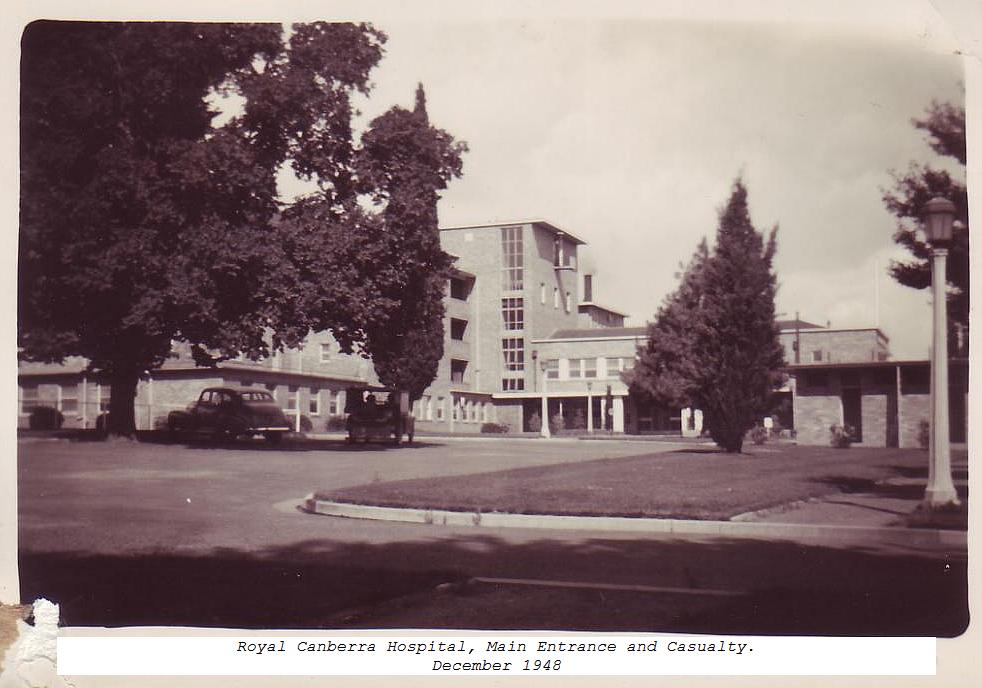
The original Canberra Hospital, where the ANU is today. Photo: Kevin Mulcahy.
Kevin’s father had moved to Canberra in the early 1930s as part of the gradual relocation of Commonwealth public servants.
“Back then, all that existed in Civic was the Sydney Building and half the Melbourne Building. Nothing else around City Hill was there – it was just grass and trees and pine trees.
“It used to take me half a day to get out to Crace. It’s hard to imagine, but Northbourne Avenue from Haig Park out was dirt.”
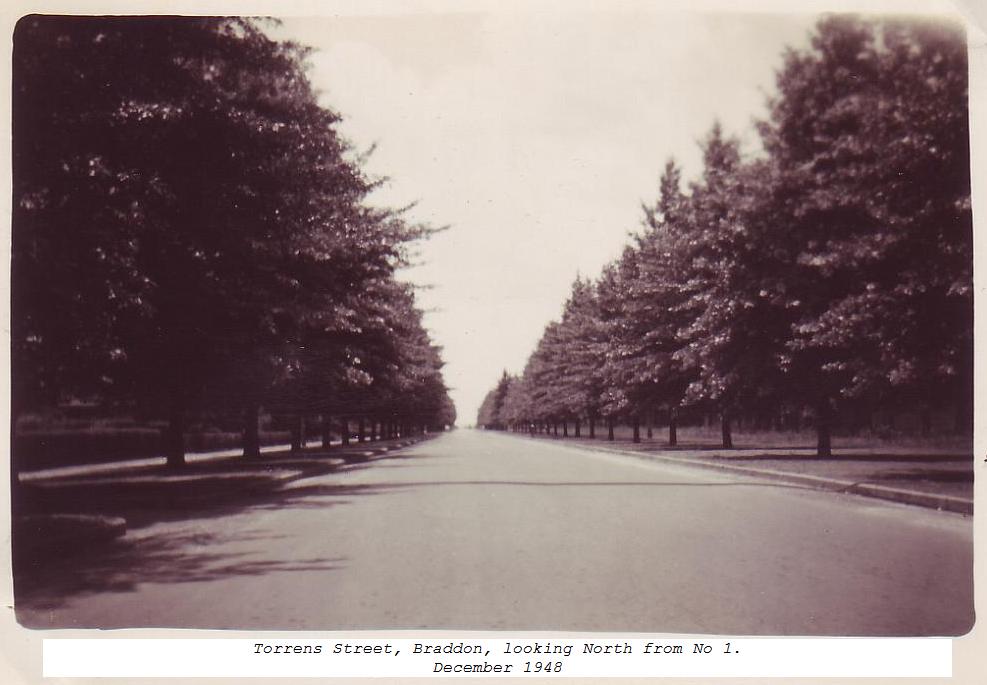
Looking north along Torrens Street in 1948. Photo: Kevin Mulcahy.
The population hovered around 8000, with about 60 per cent of the population being public servants. The city was basically divided into three main centres: Kingston, Manuka and Civic.
“There’d be a shop in each of them that wasn’t in the other two, like Cussack’s in Kingston, where you could get furniture and bedding, but Civic was still the main shopping centre. There was a fruit and vegetable shop, a butcher shop, and a chemist.
“Anything you needed was basically on East Row. My mum used to park on East Row, and go into the grocery store, and she’d just plonk me on the counter.”
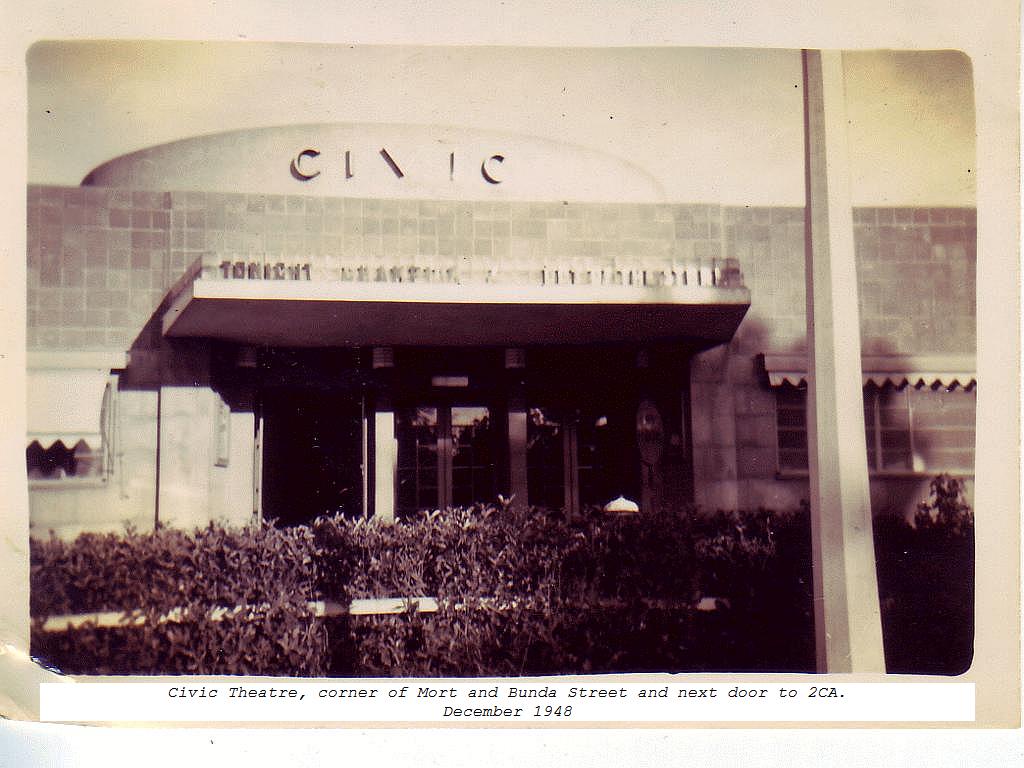
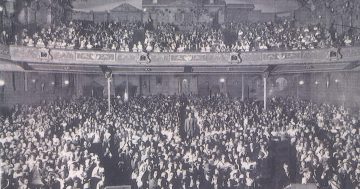
Civic Theatre. Photo: Kevin Mulcahy.
Milk, bread and ice, however, were delivered by horse and cart.
“We lived in a house on Torrens Street, Braddon, and the delivery man would start down the bottom end near Civic, and clip clop up the street, dropping off ice, or bread or milk.
“I used to climb into the back of the bread cart and pick up all the crumbs that had fallen off the high loaves. They tasted really nice.”
Kevin attended seven schools in Canberra, starting at the Girls’ Grammar School because it was the only preschool available.
He moved through Ainslie Primary, St Patrick’s, St Christopher’s, Canberra Grammar, and finally St Edmund’s College as a foundation pupil in 1954.
“While I was at the grammar school, my father asked the area’s Catholic administrator when they were planning to build a Catholic school here, because he got into trouble with the priest for sending me to a Church of England grammar school,” Kevin recalls.
“In fact, he was refused the Sacraments for a while.”
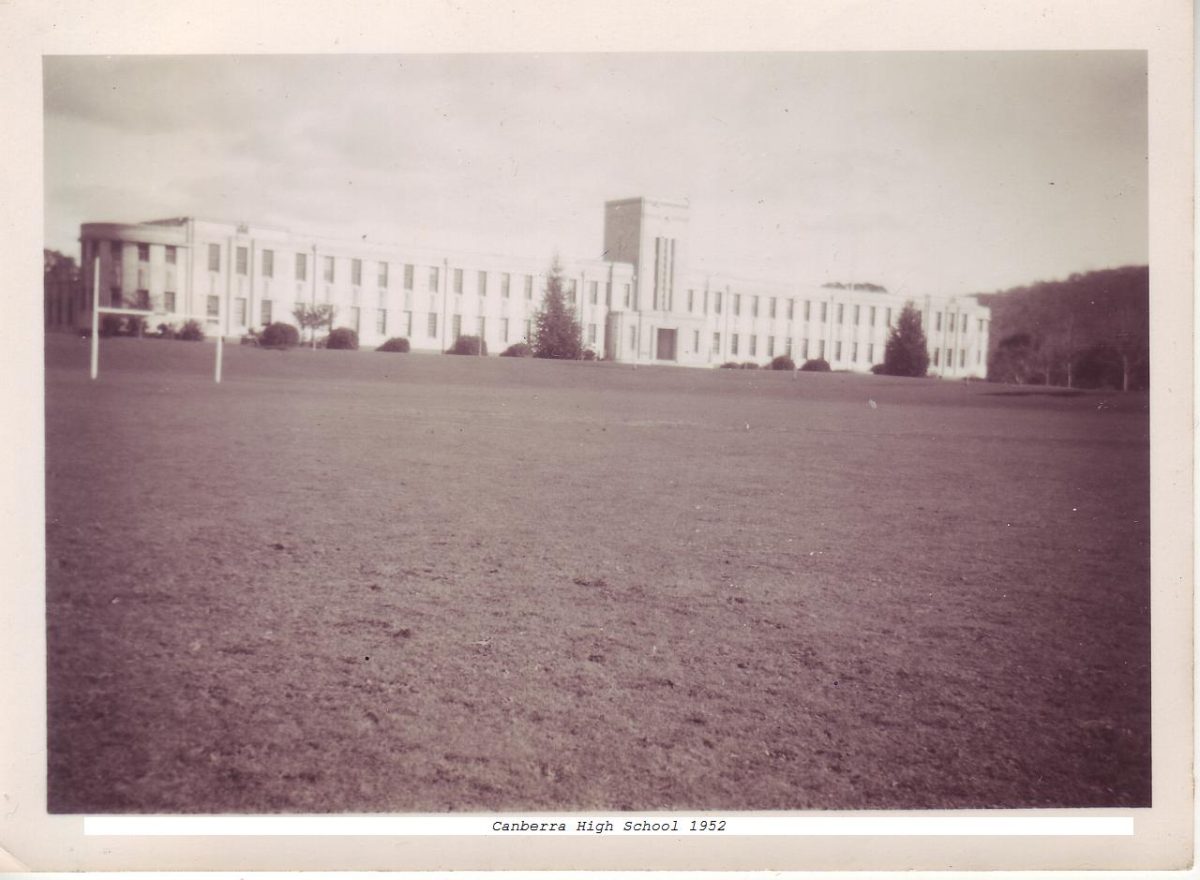
Canberra High School, 1952. Photo: Kevin Mulachy.
The quest to immortalise it in film
Whenever he could, and especially on weekends, Kevin would be out on his pushbike. So when he received that Box Brownie camera for Christmas, that would go out with him.
“I took it with me on all my rides around the place and took all sorts of photos.”
He’d then take the film to the local chemist to develop, and stash the small prints away in photo albums.
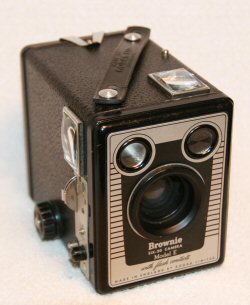
Kevin’s Box Brownie camera. Photo: Kevin Mulcahy.
About 20 years ago, he decided to begin scanning what survived and uploading them to a website.
“I just did it as something to fill in the time,” he says.
The result is a website stocked with tens of images showing empty streets, half-built suburbs, and paddocks where roads now run.
The best was yet to come
Kevin followed the traditional Canberra calling and spent most of his working life in the public service, including 18 years with the National Capital Development Commission (NCDC).
He and his wife raised their three children in Canberra in the 1960s and into the ’70s, which he describes as a golden era for the city.
“That was really the best time to live in Canberra, I believe. The friendliness of the people, the lack of crime, and the fact that no one was in a hurry to get anywhere.
“Canberra has certainly gone through many different phases, but it was interesting as soon as self-government came in – they got stuck into building apartments and townhouses, and that really took off, and it’s been going ever since.”
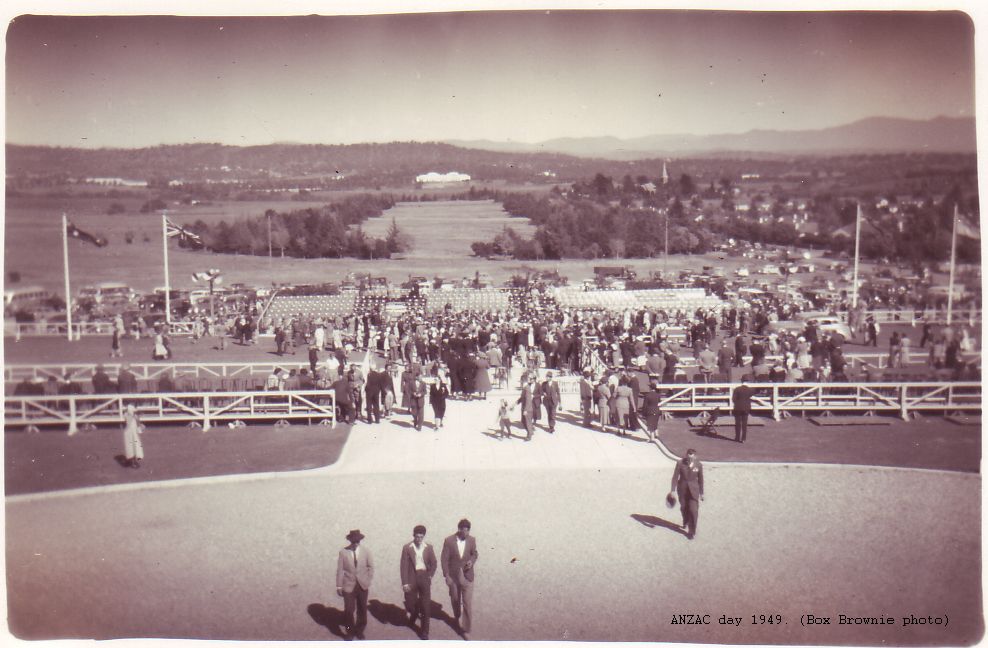
Anzac Day 1949. Photo: Kevin Mulcahy.
Now living on the South Coast, he rarely visits.
“The central Parliamentary Triangle area still looks beautiful, but it’s lost its capital charisma,” he says.
“So yes, I consider myself very fortunate to have grown up in that period – at the same time as Canberra was growing, I was growing. It’s only sort of hit me in the last couple of years, actually.”
Kevin Mulcahy’s Canberra photo collection can be viewed here.