
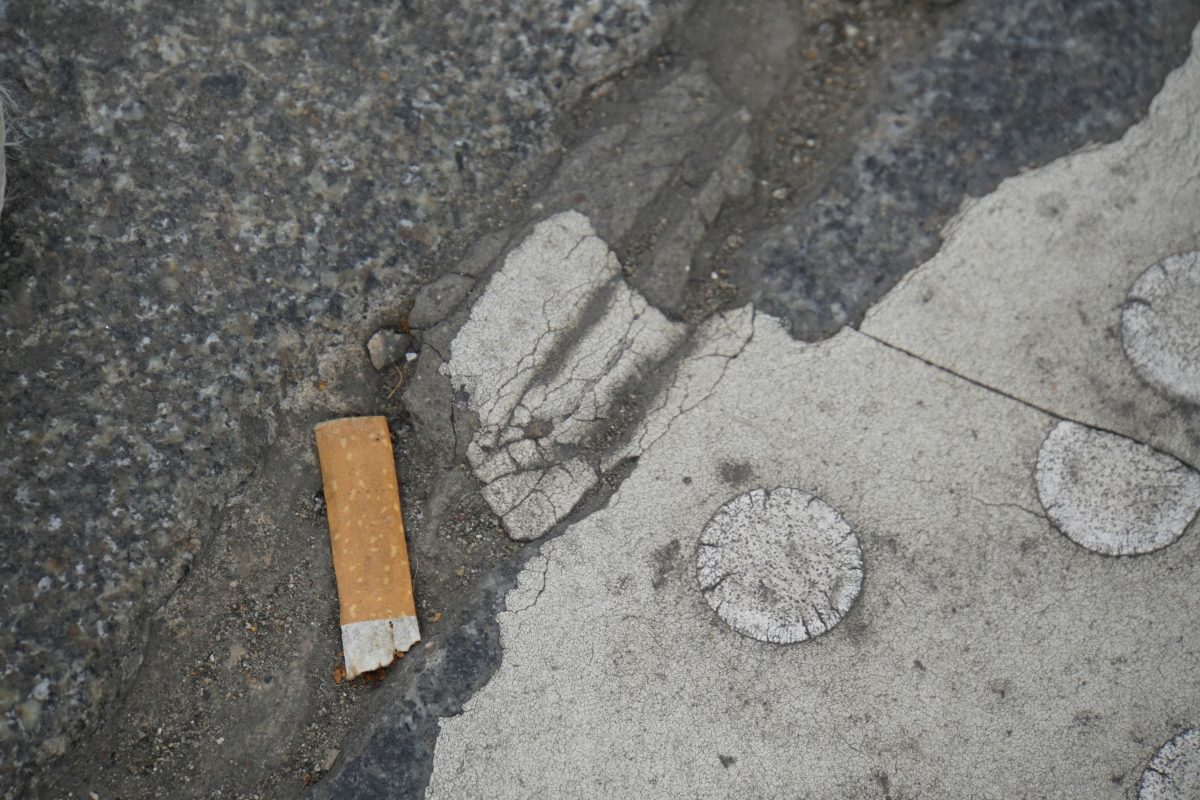
Cigarette butt litter increased in the ACT by 21.1 per cent last financial year. Photo: Jan Zinnbauer.
Cigarette butts were the most common type of litter found across the ACT last year, even as smoking rates continue to fall year on year.
Clean Up Australia has released its 2025 Litter Report, based on what volunteers found at 31 locations across the ACT during the 2024–25 financial year. The report offers a snapshot of what is being dumped – and where – as thousands of volunteers logged tens of thousands of hours picking up rubbish across the territory.
Across Australia, plastics continued to dominate, making up 80.8 per cent of all litter counted. Cigarette butts, themselves made of plastic, were the single most littered item, accounting for 23.6 per cent of all rubbish found.
Cigarette butts still top the list
In the ACT, cigarette butts increased by 21.1 per cent compared to the previous financial year.
Clean Up Australia project and advocacy specialist Lucia Moon said volunteers were now finding more cigarette butts than any other type of rubbish.
“Cigarette butts have become the number one littered item, and they were second last year, so there’s definitely been an increase proportionally,” she said.
“They’re a big problem in the environment because they’re actually made of a kind of plastic called cellulose acetate, which breaks down very slowly – taking up to 30 years to decompose – and leeches plastics into the environment.”
Nationally, Clean Up Australia estimates about 8.9 billion cigarette butts are littered each year.
Packaging makes up most ACT litter
Packaging was the biggest contributor to litter in the ACT, making up 70.2 per cent of all rubbish reported – the highest proportion of any state or territory.
Included in this were non-food packaging items – such as boxes, bags and those pesky cigarette butts – which rose by 26.2 per cent compared to the previous year. Soft plastics dropped from first place to second among grouped items, but still made up 22.4 per cent of all litter in the territory.
Soft plastic packets and wrappers decreased by 7.7 per cent but remained a major problem, accounting for 15.5 per cent of all items found.
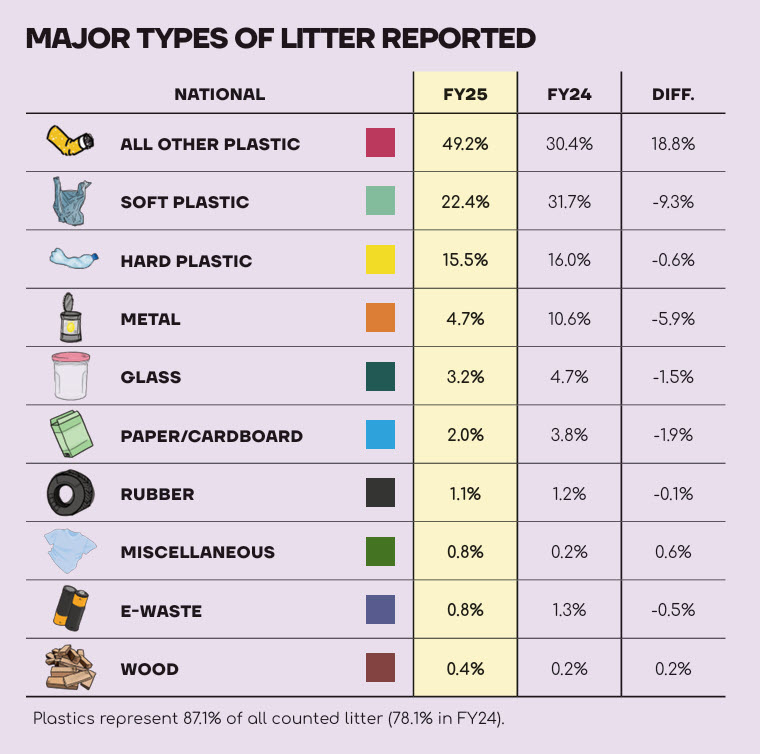
Major types of litter found in the ACT during the 2025 financial year. Photo: Clean Up Australia.
Clean Up Australia chair Pip Kiernan said the findings showed more recycling alone would not fix the issue.
“The pervasiveness of plastics in our environment at 80.8 per cent of all litter shows we cannot simply recycle our way out of this challenge,” she said.
“We need packaging reforms that reduce production of single-use plastics and increase reliance on reusable alternatives.”
Where ACT litter is ending up
Most litter collected in the ACT was found in parks, which accounted for 77.1 per cent of all items. Public bushland followed at 13.7 per cent.
Smaller amounts were found in schools (4.2 per cent), along footpaths (1.4 per cent), near roadsides (1.5 per cent) and in rivers or creeks (2.1 per cent).
During the year, 21,339 volunteers registered with Clean Up Australia in the ACT, putting in more than 42,600 hours across 250 registered clean-up events.
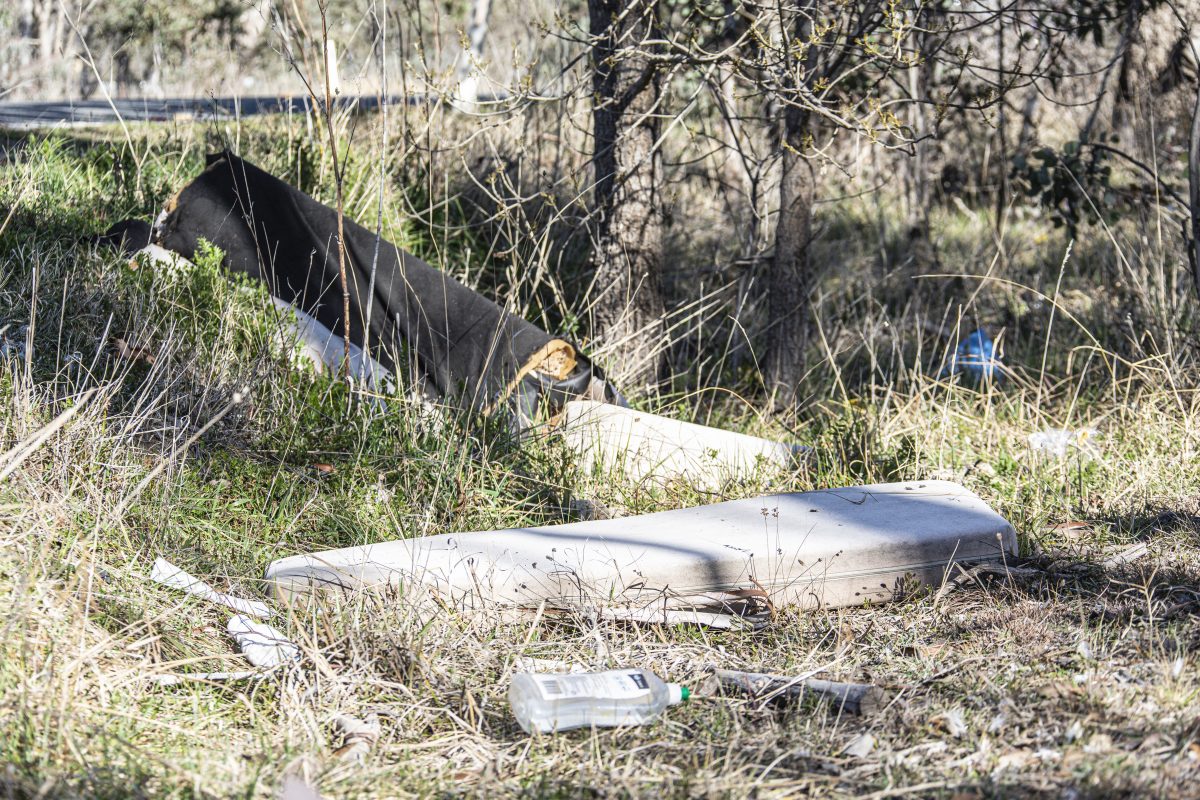
Packaging overall (non-food, beverage containers and food) represents 70.2 per cent of all litter in the ACT. Photo: Region.
Signs of progress in some areas
There were some encouraging trends.
Beverage container litter dropped by 11.7 per cent in the ACT, with cans, bottles and cartons now making up 8.6 per cent of total litter. Ms Moon said the ACT’s Container Deposit Scheme was clearly having an impact here.
“It’s really a great example of the way that putting a price on rubbish does end up reducing the amount of litter found in the environment,” she said.
Plastic bags also declined by 3.3 per cent, following the ACT’s ban on plastic shopping bags in January 2024. Plastic straws, phased out in the ACT in 2022, are also no longer among the top 10 litter items.
Glass, metal and paper litter also fell slightly, while rubber and wood remained unchanged.
Vapes and coffee cups on the rise
Takeaway coffee cups rose from 2.8 per cent to 4.3 per cent of total litter nationally, while vapes were found at more than a third of surveyed sites.
Over three years, the number of sites reporting discarded vapes has increased by 23.5 per cent. Clean Up Australia says the lack of a safe disposal system is a growing problem, as vapes often contain batteries and toxic materials.
With Clean Up Australia Day set for Sunday, 1 March, Ms Kiernan said the nation still has plenty of work to do.
“While we’ve seen positive progress with soft plastics collection and recycling, the fundamental issue remains: Australia’s plastic consumption is increasing,” she said.
“In 2000, we consumed 1.79 million tonnes of plastic. By 2024, this had risen to 3.97 million tonnes, a 122 per cent increase.”
People can register for local events or organise their own clean-up at Clean Up Australia.