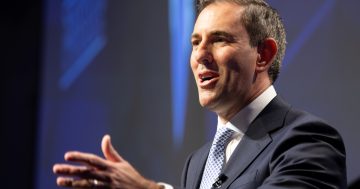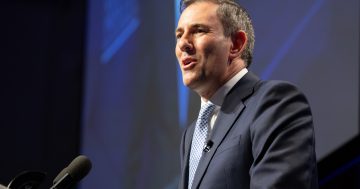

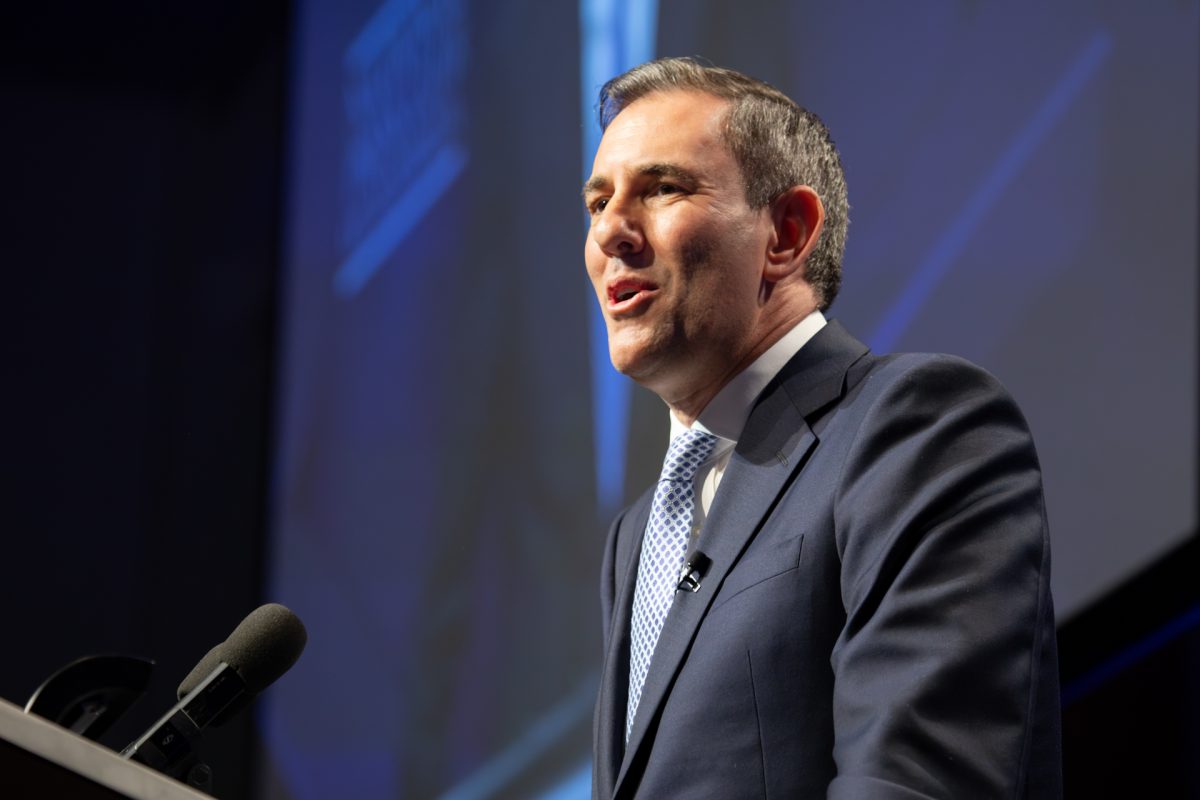
Treasurer Jim Chalmers was a little more subdued on Wednesday, answering questions about the state of the economy. Photo: Michelle Kroll.
Labor is suddenly on the back foot defending its economic management after the first interest rate hike in two years.
The Opposition made a better fist of its attack on Wednesday (4 February) than it did the day before when the RBA increased the cash rate by 25 basis points to 3.85 per cent, up from 3.6 per cent.
Despite the lingering split in Coalition ranks allowing the government to mock the Liberals and Nationals, Treasurer Jim Chalmers was more subdued when answering accusations that his spending is out of control.
Deputy Opposition Leader Ted O’Brien was persistent in asking whether economists who say government spending is a contributing factor to inflation were all wrong.
Persistent until he got kicked out of Question Time for unruly behaviour, that is.
The Treasurer conceded the government has a task ahead, but he has largely placed the blame for the rise in interest rates on the private sector.
“What’s been happening in our economy is an important transition between, over the course of the last year or so, where the private sector, the public sector, measured by public final demand growth, has been retreating,” Dr Chalmers said.
“We know that there is more work to do on inflation and productivity against the backdrop of global economic uncertainty, and that is the government’s focus.”
Sussan Ley asked Anthony Albanese if he would take responsibility for the rate hike, particularly with the likelihood of more rises on the way, but the Opposition Leader was getting no such concession from the Prime Minister.
Instead, the PM repeatedly pointed to the Coalition’s track record when it was in government.
“The fact is, when it comes to the economy, we have an economy that is continuing to grow,” Mr Albanese said.
“Inflation is down compared with what we inherited. Wages are up.
“We had the lowest average unemployment rate of any government in the last 50 years.”
The Prime Minister insisted the federal budget would be in a much worse position if the Coalition had been in office since 2022 and not Labor.
Earlier in the day, however, the Treasurer was forced to dismiss speculation he was looking again at capital gains tax reform as a way to help ease housing pressure.
“Cutting income taxes, standard deduction, a fairer superannuation system from top to bottom, making sure we’re getting the multinational tax regime right – those are our priorities,” he said.
The Greens want the capital gains tax discount axed to free up housing for first-home buyers.
“The billions of dollars in property invested tax perks are turbocharging housing inequality, and it is making it harder and harder for ordinary Australians,” Greens leader Larissa Waters said.
“This is about fairness in that next budget. Those properties and those property investor tax breaks have got to go.”
Meanwhile, in the Senate, the Nationals want an inquiry into government spending and projected cost blowouts over the next two years.
“These are so unprecedented, so significant that there has to be an external audit of what has gone wrong,” Nationals Senator Matt Canavan said during a media interview.
“[Take] the electric vehicle incentive scheme. Treasury estimated that this year that would cost $90 million. It’s now actually costing $1.3 billion.
“What is going on? And why isn’t the government interested in getting to the bottom of these figures?”
Finance Minister Katy Gallagher told ABC Radio that the government was mindful of its public spending and had identified savings in areas that were putting pressure on the budget.
“Part of what we need to do is manage those big programs where they’re growing too fast, and we’re doing that,” she said.
“So, NDIS, aged care, but there are other areas where, as Finance Minister, I look at all these programs and think what’s happening there and how do we get some of the, you know, the growth or the increasing pressure down.”