
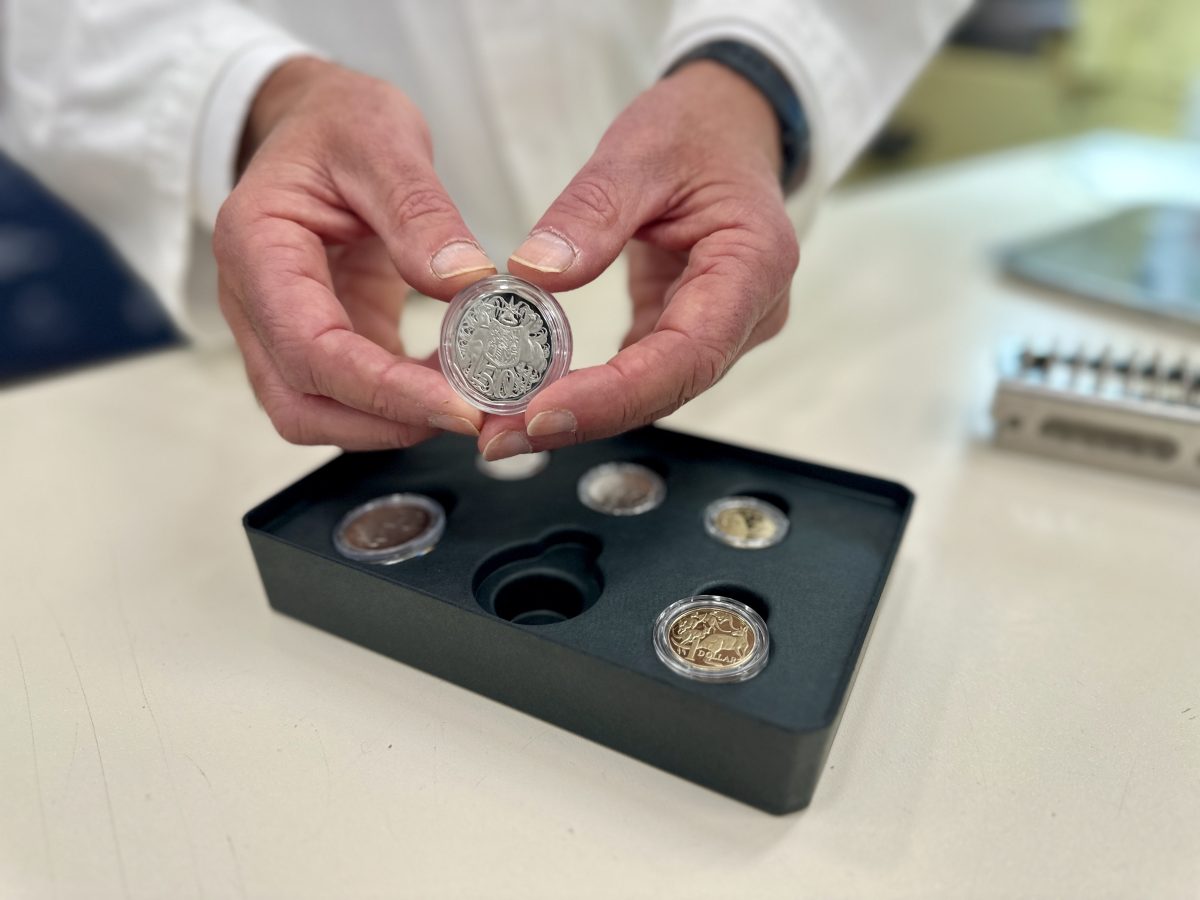
A set of decimal coins in the Royal Australian Mint’s proof hall. Photo: James Coleman.
When Australia woke up on 14 February 1966, the money in its pockets had changed forever.
For Royal Australian Mint chief executive Emily Martin, the moment looms large this week as the nation marks 60 years since decimal currency replaced pounds, shillings and pence – and as the Canberra institution she now leads reflects on its central role in one of Australia’s smoothest big reforms.
Ms Martin herself wasn’t alive on Changeover Day, but the stories stuck.
“I don’t remember it because I wasn’t born, but my Dad was a teenager at the time,” she said.
“I used to be quite fascinated when he talked about things like guineas. It seemed like an incredibly complex system of money.”
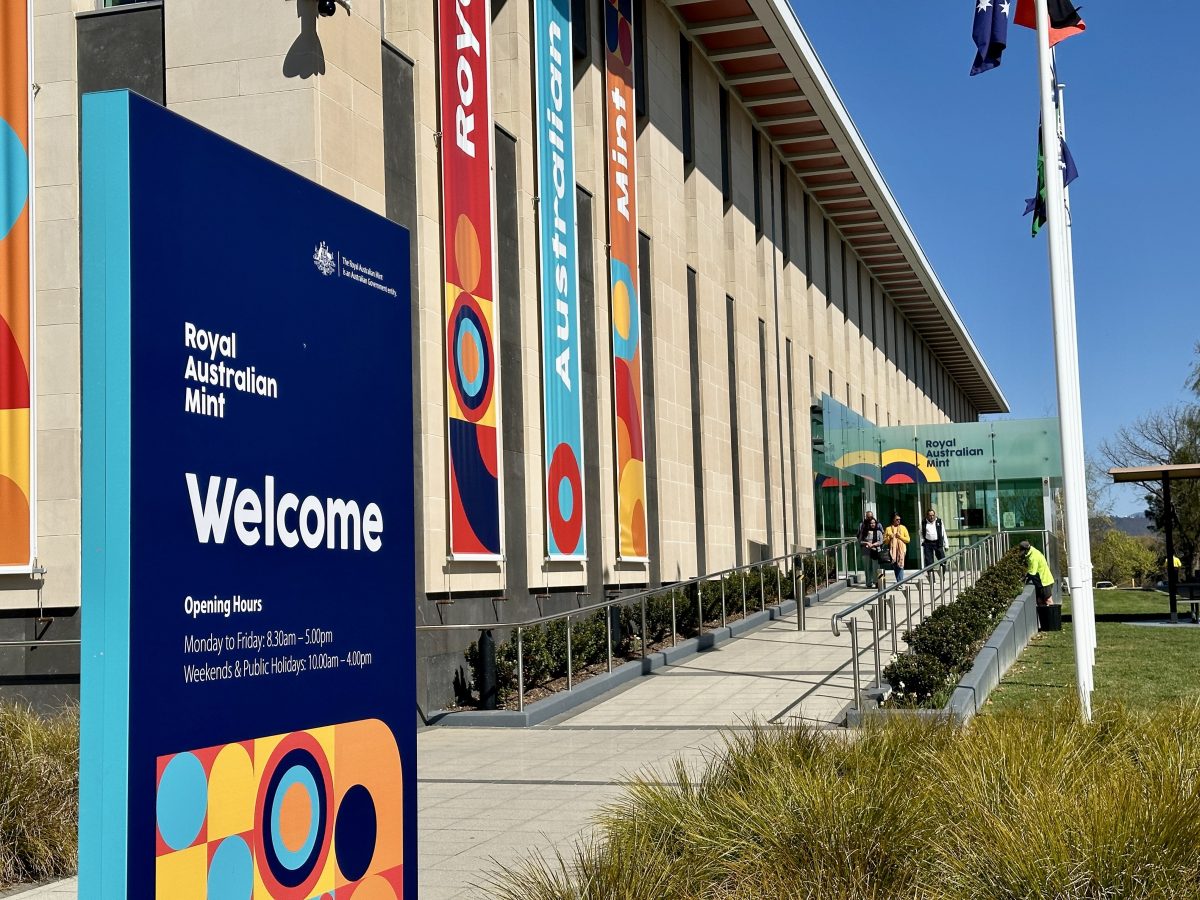
The Royal Australian Mint was established specifically to produce the new currency. Photo: James Coleman.
From pounds and pence to dollars and cents
Before decimalisation, Australians used a system where £1 equalled 240 pence. It worked, but it was awkward, slow and hard to calculate.
“That was one of the main reasons the government decided to make the change,” Ms Martin said.
“It was a symbol of us modernising. It was a transition to a simpler, more easily understood currency that would benefit us in terms of international trade, and a symbol of a modern economy.”
The switch came after years of planning, public debate and a nationwide education campaign led by the friendly cartoon character Dollar Bill, whose jingle – Decimal Currency, the Easy Way! – became part of Australian culture (almost as much as an earworm).
The day of 14 February was chosen because it was a weekday, early in the year, but with enough breathing space between the new year and the big day for the banks.
“They wanted to be near the beginning of the year, but give the banks enough space,” Ms Martin said.
What Changeover Day was really like
On the day itself, there were equal parts excitement and confusion.
“On the day, it was quite confusing for people,” Ms Martin said.
“You hear stories of people going into shops and paying with pounds and shillings and pence and getting their change in dollars and cents.”
That led to nerves.
“There was that scepticism, ‘Have I been shortchanged by the shopkeeper? Do they really know what they’re doing?'”
Banks closed for days in advance to convert their systems. Small businesses had to relearn pricing. And heavily-armed police were tasked with escorting truckloads of the new coins across the country.
At the centre of it all was the Royal Australian Mint, which had opened in Canberra in 1965 – just one year earlier – to strike the new currency.
“It was a massive logistical operation,” Ms Martin said.
“We had to source and pull together some of our coins from other mints in Australia and even from the Royal Mint over in London.”
By Changeover Day, around one billion new coins were ready. And the transition worked better than even the Decimal Currency Board imagined.
“It was a massive national project, but one that is considered to have been extremely successful.”
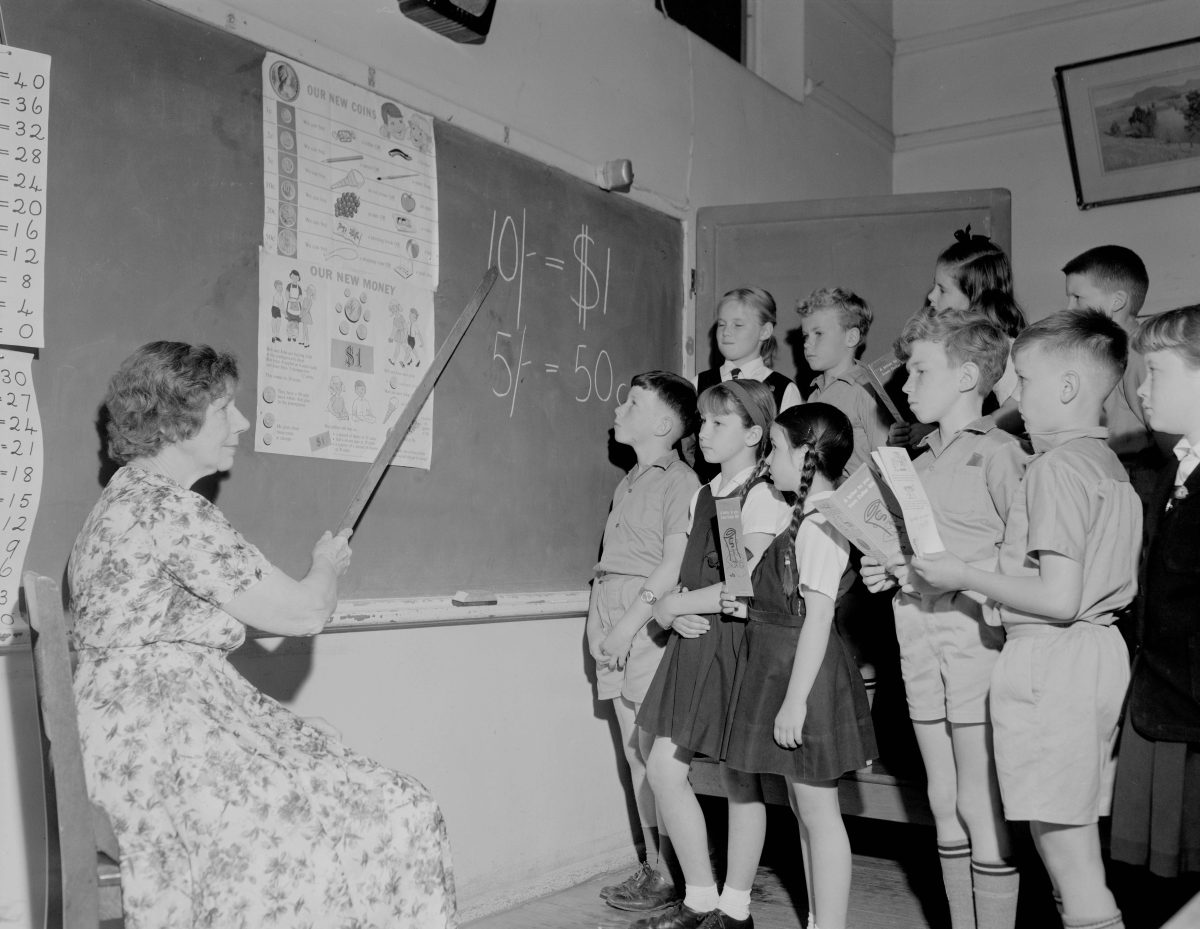
Children learning about decimal currency in a Sydney-based school. But who are the children? Photo: Royal Australian Mint.
The photo with a missing story
To mark the 60th anniversary, the Mint is seeking the people in a famous 1965 classroom photograph showing children learning how to convert old money to new.
The image, taken in a Sydney classroom, has been displayed at the Mint for years – but no names were recorded.
“There’s a teacher, pointing to the blackboard and the conversion of pence into dollars and cents, and we just don’t know who the children are,” Ms Martin said.
“We just thought, given it’s our anniversary, perhaps we’d put that up on our social media and see if anybody remembers being part of that photograph.
“Guessing they are in their early 70s now, we’d like to find these children and hear their stories of singing along with Dollar Bill or counting their shiny new coins.”
Teaching money in a cashless age
Sixty years on, cash itself is becoming unfamiliar – especially to children. And increasingly, that’s changing the Mint’s role.
“We have a lot of school groups come through the Mint every week,” Ms Martin said.
“We get about 350,000 visitors a year, and on an average week, we have about nine school groups come through.”
Children can watch coins being made, see robots like ‘Titan’ moving blanks through presses, and even mint their own souvenir coin.
“It’s really wonderful to see children learning about that part of our history … even if they’re not using coins the same way I did when I was a child.”
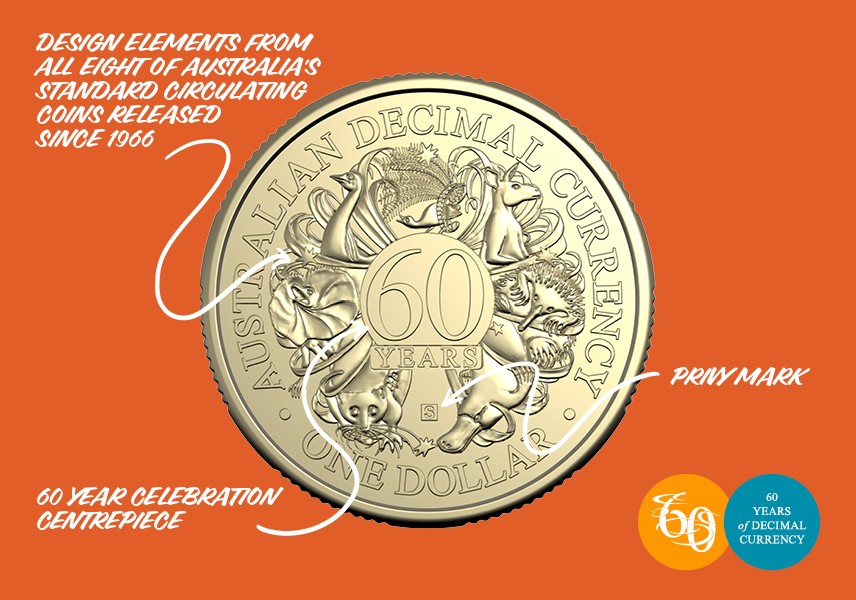
The Mintmark Series of coins, for the 60th Anniversary of Changeover Day. Photo: Royal Australian Mint.
With cash use declining, Ms Martin says the Mint has ramped up its production of non-circulating collectible coins. For the anniversary, this looks like a Mintmark Series, combining design elements from all eight of Australia’s standard circulating coins released since 1966.
“Look closely, and you’ll find a possum, a frilled neck lizard, a platypus, a lyrebird, an echidna, a kangaroo, an emu and the Southern Cross constellation,” the set’s description reads.
“The Mint will continue to make our circulating coins for as long as there is demand, but we are also a multifaceted business,” Ms Martin said.
The Mint is holding a Family Fun Day on 28 February to mark the 60th anniversary of Changeover Day. Visit the Mint for more information.