
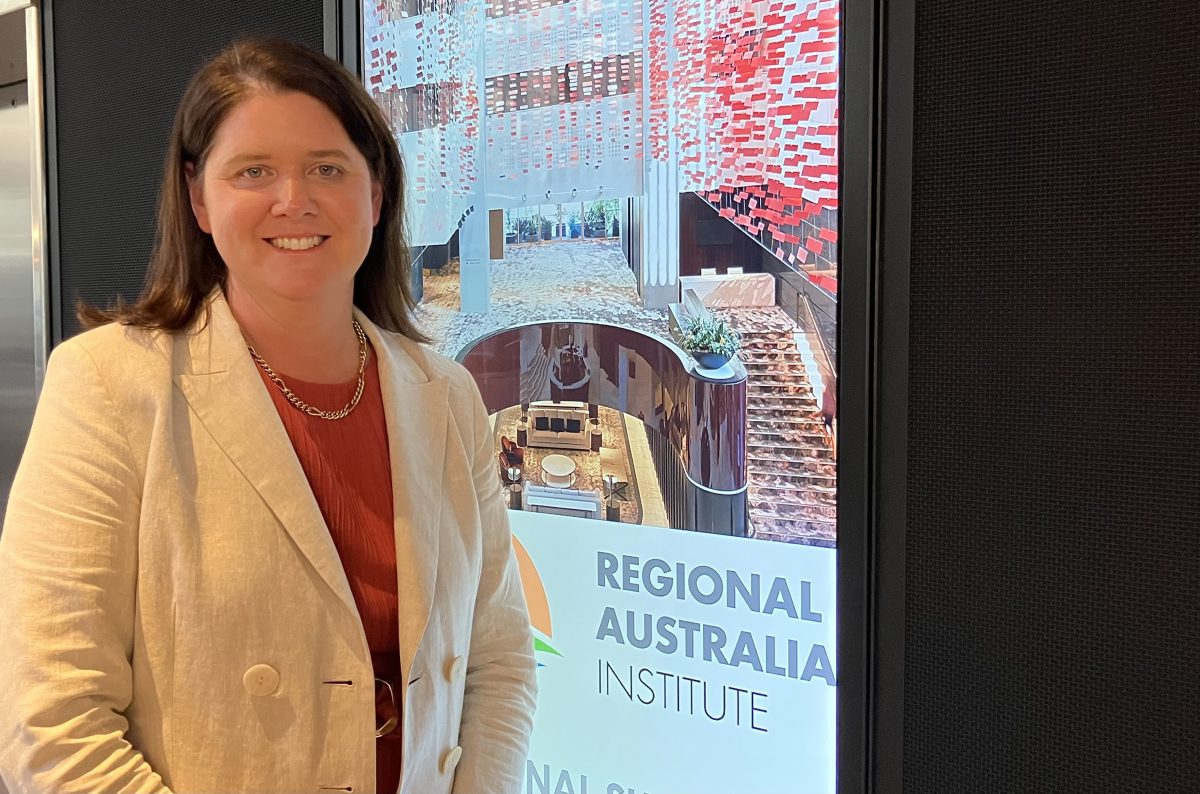
Regional Australia Institute CEO Liz Ritchie says Australia needs a National Population Plan. Photo: Region.
Younger Australians are increasingly moving to the regions in search of cheaper housing and a better lifestyle, and the government needs to plan for a potential mass migration of millions.
New survey results from the Regional Australia Institute (RAI) show that more than 5.3 million, or one in three (37 per cent) metropolitan Australians, have set their sights on regional Australia.
They say they would consider a future move, citing the cheaper cost of living, more affordable housing, and a desire to get back to nature.
Leading the charge is Generation Z, now the most likely cohort to consider moving out of metro areas.
Generation Z (18 to 29 years) has overtaken its older counterpart, Millennials (30 to 45 years), in having the highest desire to leave the city, with almost half (49 per cent) contemplating relocation.
More than one-third (34 per cent) of potential movers said they would be likely to make the change in the next three to five years, up from 25 per cent 12 months earlier.
While the younger cohorts are open to a life beyond the city limits, 64 per cent of Baby Boomers surveyed said they are staying put.
RAI first commissioned this market research in December 2020, and it found that concern about limited job opportunities (55 per cent) for themselves or their partner was the biggest barrier to moving out of the city.
But in 2025, only 27 per cent listed it as a barrier, with more than 64,000 roles available in December 2025.
RAI CEO Liz Ritchie said the regional dream was the new Australian dream and that a demographic shift was on the horizon.
“The cliche is that older metro-dwellers look to the regions when they retire, but in fact, the desire for the younger cohort to make the shift from our cities is increasing,” she said.
“The secret is out that regional Australia has a lot to offer younger people – this is why we say the future of Australia is regional.”
Ms Ritchie said this was a wake-up call for employers and policymakers.
“Young people are not just chasing a tree change, they’re looking for career opportunities, lifestyle benefits, and communities where they can thrive,” she said.
“Regional Australia is increasingly seen as a place where you can get ahead and enjoy a balanced life.”
Ms Ritchie said governments needed to plan for this coming shift and called for a National Population Plan, investment in regional infrastructure and a commitment to ensure that regional life was not ‘second tier’ in healthcare, childcare and education.
The market research commissioned by the RAI and undertaken by YouGov found that 61 per cent of Gen Z city workers said a salary increase was the number one factor that would persuade them to take a job outside metropolitan Australia.
A financial incentive, for example, a relocation payment (49 per cent), and faster career progression (45 per cent), rounded out the top three factors this cohort were chasing when considering a regional career.
Gen Z are also seeking flexible working arrangements, along with support to gain skills and training, suggesting these movers are keen to learn and get ahead while also achieving a positive work/life balance.
Founder of ViewJobs, Lewis Romano, said regional Australia now represents one of the most significant sources of workforce and economic opportunity in the country.
“Regional markets are actively seeking skilled and motivated workers, and the breadth of roles available today means people can build meaningful careers without compromising on ambition or earning potential,” he said.
“Regional employers are competing hard for talent, particularly across healthcare, education, trades and community services.
“We’re seeing strong salary growth and faster career progression in many regional markets compared to metropolitan equivalents, which is a powerful drawcard for younger workers considering the move.”
The main barrier to moving for younger people was fear of isolation from family and friends (Gen Z: 44 per cent) while, unsurprisingly, older generations were concerned about access to health care (Baby Boomers: 71 per cent).
For Millennials (born 1981 to 1996), their biggest worry is limiting their career (40 per cent) and taking a pay cut (equal to concerns about isolation, 39 per cent each). Access to healthcare comes in at fourth spot (37 per cent).
Sydneysiders are among the most likely metro dwellers to make the change, with 41 per cent saying they would consider a life in the regions, followed by Melbournians at 38 per cent.
“This is also important information for policy makers planning for growth in regional Australia. It supports our 40 for the Regions campaign – and, in particular, our call for 40 per cent of homes built under the National Housing Accord to be built in the regions,” Liz Ritchie said.