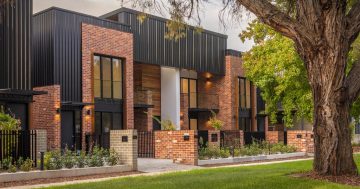
The budget aims to help Canberrans into their first home and deliver housing choice. Photo: Michelle Kroll.
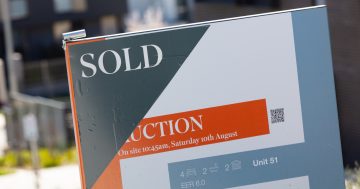
The 2026-27 ACT Budget will be a boon for all first home buyers who, from 1 July, will not pay stamp duty on their property purchase, no matter what the price or their income.
At present, the Home Buyer Concession Scheme’s property value limit is $1,020,000, after which duty starts to apply. Income thresholds start at $250,000 of assessable income without dependent children up to $273,000, depending on the number of children.
A 2024 Labor election commitment, the initiative will make the ACT the first jurisdiction in the country to abolish stamp duty for all first home buyers.
Stamp duty exemptions will also be expanded for pensioners, eligible National Disability Insurance Scheme (NDIS) participants and all home buyers who have not owned property in the last five years.
Cutting stamp duty has been part of the ACT’s tax reform program, now in its 14th year.
Chief Minister Andrew Barr said the budget marked a major milestone in the long‑term tax reform program, delivering a fairer system and improving housing affordability for Canberrans.
“At its core, there has been a sustained focus on removing barriers to home ownership, and today we announce the completion of a key element of this reform by abolishing stamp duty for all first home buyers,” he said.
The government has made housing the centrepiece of today’s budget to be handed down in the Legislative Assembly at 5 pm.
It will also include a package of tax cuts to support the development of ‘missing middle’ housing – walk-up apartments, townhouses, terraces and multiple-occupancy projects.
Stamp duty will be removed on all new unit-titled properties bought by owner-occupiers and the concession for owner-occupiers buying off-the-plan units will continue.
This concession will also be extended to all turn-key units – a newly constructed unit that was not sold off-the-plan.

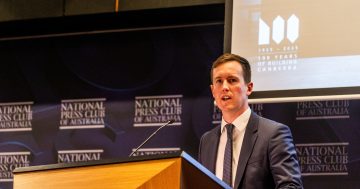
Chief Minister Andrew Barr says the stamp duty initiative marked a milestone in the ACT’s tax reform program. Photo: Ian Bushnell.
Mr Barr said extending stamp duty relief to pensioners and to people purchasing new unit‑titled homes would give older Canberrans more choice to downsize and better match their housing to their needs.
“That, in turn, frees up larger homes for growing families,” he said.
“Together, these reforms open the door for more renters to become owners, support younger households to build their future in Canberra, and ensure our tax system works better for the next generation.”
To encourage ‘missing middle’ development, the codified Lease Variation Charge for such proposals will be halved for a limited amount of time, lowering overall development costs while maintaining a return to the community.
The government will also help speed up approval times by delivering the Canberra House Pattern Book – a collection of pre-approved plans for ‘missing middle’ homes chosen through a design competition.
It says homeowners, developers and builders will be able to access these quality, validated, and ready-to-build designs for $1000; a fraction of the cost of commissioning custom architectural plans.
The pre-approved designs will enable projects to proceed without a development application, providing greater certainty and reducing project delivery timeframes.
The government’s ‘Missing Middle’ Housing Reforms aim to deliver more low-rise housing in most residential blocks in Canberra and provide more choice to home-buyers and renters.
Treasurer and Planning Minister Chris Steel has approved the proposed changes to the Territory Plan and they will come before the Legislative Assembly this week.
Mr Steel said the elimination of stamp duty for first home buyers complements the Federal Government’s tax reforms by supporting younger generations of Canberrans to own their own home.
He said the reduced LVC would lower overall development costs and encourage builders to bring forward more ‘missing middle’ housing projects sooner.
“Every Canberran who buys a new unit-titled ‘missing middle’ home to live in won’t pay a cent in stamp duty,” he said
Mr Steel said the Pattern Book would fast-track more low-rise ‘missing middle’ homes that were well-designed and would fit in well with Canberra’s streets and climate.
“Canberra has a long history of pattern book housing, and it’s a model that we are returning to again to speed up the development of new homes and boost supply,” he said.