


The ACT Greens have raised concerns that the Territory government is paving the way to allow for the legal culling of wombats. Photo: Mackenzie Watkins.
The ACT Greens have raised fears an under-development wombat management plan will pave the way for the animals to be legally shot and killed.
Questions from the annual reports period have resulted in the release of the October 2025 “managing wombats” draft technical report, which pointed out that the ACT doesn’t allow specific provisions for wombat populations to be controlled, and there is no guidance on non-lethal “conflict mitigation”.
“This has led to frustration among leaseholders managing wombat-related damages,” the report noted.
ACT Greens deputy leader Jo Clay said while some local farmers were concerned about wombat management, “humane and effective” solutions needed to be found.
“Farmers haven’t been supported by government to try non-lethal methods properly – that must be the first step,” she said.
“If the government is going to allow farmers to kill wombats, they need good and valid evidence that it’s necessary. At the moment, we don’t even have a clear idea of the wombat population levels, nor the extent of issues posed by wombats.
“This report in its current state paves a pathway for the ACT Labor Government to reclassify wombats as a controlled native species, which would legally allow for wombats to be shot and killed.”
Three of Canberra’s 381 farmers were consulted for the draft report, along with other stakeholders such as ACT Parks and Conservation, wombat care groups and Icon Water.
An ACT Government spokesperson said the final wombat management plan aimed to balance species conservation and population health while protecting infrastructure and landholders’ assets, and keeping in line with community values.
“Any suggestion that these changes would authorise the indiscriminate shooting of wombats is unequivocally false, and the protected native species status of wombats under the Nature Conservation Act would remain in place,” they said.
“The draft review also includes pathways to protect wombats and manage conflicting management concerns and provide education on non-lethal management tools.
“The protection status of wombats is not being revoked or changed.”
Environment Minister Suzanne Orr conceded in an answer to a question on notice that a management plan, similar to the one that allows for kangaroo culling, could be created for wombats.
“Whilst the government has no immediate plans to classify wombats as a controlled native species under the Nature Conservation Act 2014, it is one option that may be explored to support the holistic management of bare-nosed wombats in the ACT,” she said.
The ACT Government spokesperson clarified that while this could occur, the status of the wombat as a protected native species under the law wouldn’t change.
“All relevant offences under this act would continue to apply to it.”
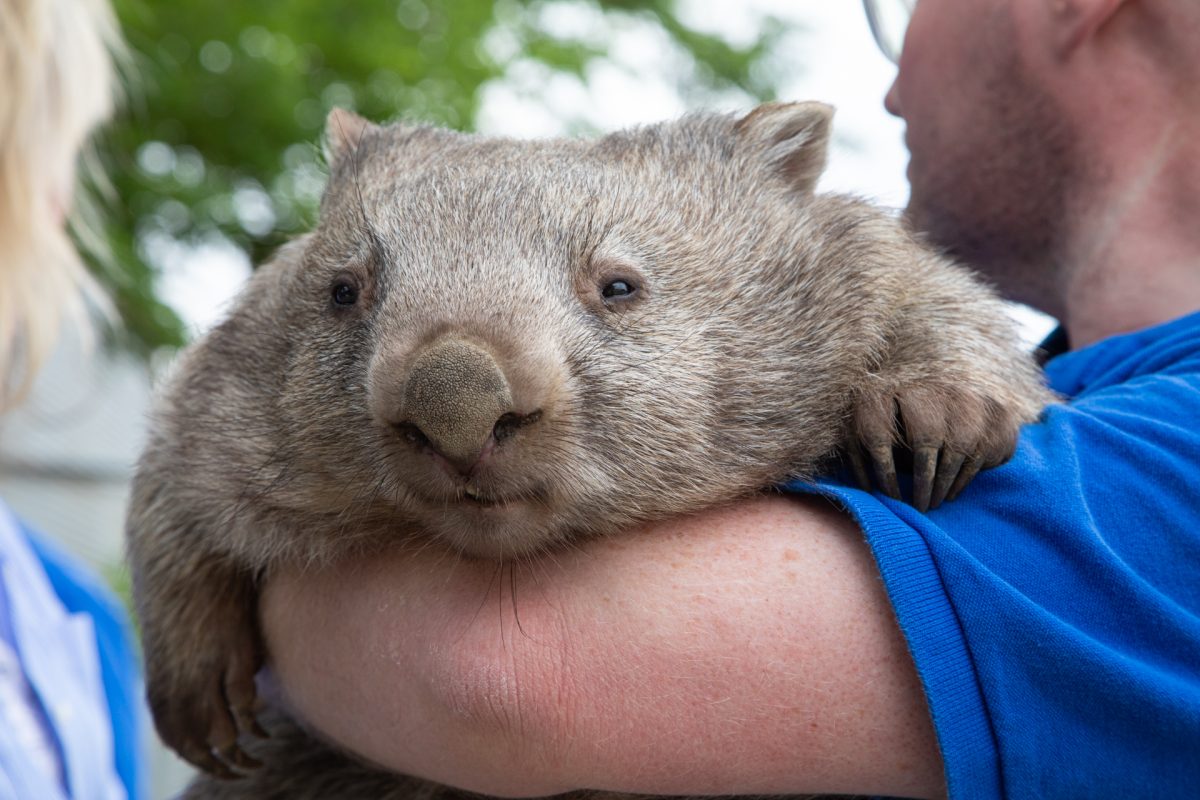
Hard data on the prevalence of wombats in the ACT is lacking, but it’s generally understood their population is increasing. Photo: Michelle Kroll.
The draft report noted there are a number of legislative gaps when it comes to the management of wombat populations in the ACT, including no clear mechanism for the government to limit the application of mange treatments, a lack of guidelines around the release of rehabilitated wombats, and an absence of identified release zones that are ecologically suitable.
Many fencing, burrow modification and other deterrents haven’t been trialled in the ACT, and they’re “often resource-intensive and may yield inconsistent results”.
In addition, there are currently “no reliable estimates” on the number of bare-nosed wombats (formerly known as common wombats) in the Territory.
“Rural leaseholders are frustrated by their current ability, or lack thereof, to manage bare-nosed wombats on their properties,” the draft report noted.
“Streambank erosion and reduced water quality as a result of wombat burrowing near waterways have been raised as a concern by landholders in correspondence with the ACT Government.
“Burrows and tunnels are becoming a big safety concern, with some paddocks described as ‘Swiss cheese’.”
Bare-nosed wombats have been fully protected in the ACT since 1918, and are also protected under Commonwealth law.
The draft report noted ACT Natural Resource Management would be “reluctant” to utilise lethal control methods.
“ACT NRM also highlighted the lack of resourcing for non-lethal options for managing conflict between landholders and bare-nosed wombats,” it noted.
“Conflicts with wombats have traditionally been resolved using lethal controls, but there is increasing advocacy for the development of alternative ‘non-lethal’ management options.
“Creating policy around alternative ‘non-lethal’ management options is hindered by a lack of quantitative evidence on their effectiveness and humaneness.”
The draft report made a number of recommendations with the aim to address key stakeholder concerns, including supporting non-lethal methods for wombat control by land managers, developing an appropriate mechanism for landholders to humanely euthanise wombats with severe mange, identifying areas within in the ACT where rehabilitated wombats can be released, and, over the longer term, exploring and evaluating options for the holistic management of the species through an “appropriate policy mechanism”.
The review is expected to be finalised in the first half of 2026.