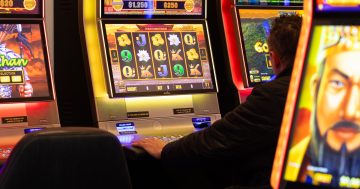
Poker machine gambling harm is the target of the new legislation – but not all at once. Photo: Michelle Kroll.
Canberrans will no longer be able to withdraw cash through EFTPOS at poker machine venues, ATMs will follow, and every machine will eventually require account-based gaming under a sweeping package of gambling reforms announced by the ACT Government.
The changes will also cut poker machine operating hours, simplify self-exclusion and progressively reduce authorised machines from just under 3500 to no more than 1000 by 2045.
But most changes will not happen immediately.
Gaming Reform Minister Marisa Paterson said reduced operating hours would begin on 1 July 2027, while legislation for the broader reforms would be introduced in October.
The EFTPOS withdrawal ban is expected to take effect within weeks of the legislation commencing; venues will have a year to remove ATMs, and mandatory account-based gaming will be rolled out over two years.
The government will also legislate a timetable requiring 500 poker machine authorisations to be removed every four years, reaching no more than 1000 across the Territory by 2045.
Dr Paterson said the package targeted gambling harm affecting more than 58,000 Canberrans, either directly or through a family member.
“We know that gambling harm, specifically from poker machines, is a major problem that our community faces,” she said.
Dr Paterson said multiple ATM withdrawals were the most commonly reported incidents on the Gambling and Racing Commissioner’s gambling incident register.
The existing deed-based self-exclusion process, which Dr Paterson described as “really onerous”, will also be replaced with a simpler legislative system, including an online option.
Poker machines will operate about 15 fewer hours each week, but gambling reform advocates say some safeguards in the package do not go far enough.
The Canberra Gambling Reform Alliance (CGRA) and ACT Council of Social Service (ACTCOSS) welcomed some measures, particularly the ban on cash withdrawals. But they warned the overall package was weaker than needed to adequately protect Canberrans from gambling harm.
They pointed to three major gaps: no legislated timeframes for breaks in play, no apparent mandatory loss limits, and shorter venue shutdown periods than previously promised.
ACTCOSS CEO Devin Bowles described removing ATMs and EFTPOS withdrawals as a “common-sense measure”, but said breaks in play were among the best-evidenced measures for reducing gambling harm.
“Canberrans are entitled to the protection they offer,” Dr Bowles said.
The organisations also want the government to release the technical advice behind its decision not to proceed with default load-up limits.

Relationships Australia lived experience advocate Markus Fischer with RA CEO Lauren Anthes and Gaming Reform Minister Marisa Paterson following the announcement of the ACT Government’s gambling reforms. Photo: Naziya Alvi.
CGRA co-chair Kate Seselja called the absence of loss limits an “enormous missed opportunity for better safeguarding”.
CGRA also wants the measures evaluated after 12 months.
“Some aspects of the proposed approach have not been implemented elsewhere so it is important we assess whether the interventions are actually working,” co-chair Jeremy Halcrow said.
The ACT Greens went further, accusing Labor of retreating from its previous commitment on poker machine operating hours.
Greens spokesperson for gambling harm Rebecca Vassarotti said Labor had promised in 2024 that venues would close between 2 am and 10 am, but the new plan would allow six additional operating hours each week compared with that commitment.
“Let’s be clear: nothing good happens in a poker machine venue at 3 o’clock in the morning,” she said.
Ms Vassarotti also argued pre-commitments or daily loss limits should follow gamblers between venues.
“Simply put, a Canberran could pick themselves up from the Hellenic Club, walk down the road to the Southern Cross Club and keep on betting.”
ClubsACT accepted that gambling harm needed to be addressed but warned restrictions on cash withdrawals could also affect spending on meals, raffles and entertainment, with flow-on consequences for clubs and the community activities they support.
It also argued the industry needed a realistic transition plan.
“You can’t cut off venue cash flow today and expect clubs to magically transform their business models tomorrow without a realistic, funded transition plan,” it said.
Dr Paterson said an independent inquiry and a joint transition council would help clubs diversify income, better use their land and assets and develop business models less reliant on gambling revenue.
“Ultimately, the fact that we have a club sector that’s reliant on revenue from gambling harm is not sustainable,” she said.
The ACT is also engaging with the NSW Government as it works on its own gambling reforms, including account-based gaming. Dr Paterson rejected concerns that tighter ACT rules would simply push gamblers across the border to Queanbeyan, pointing to reforms underway in NSW.
“This is not prohibition,” she said.
“You’ll still be able to play a poker machine in the ACT.”