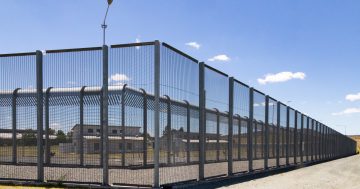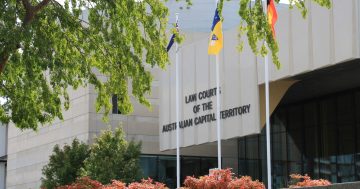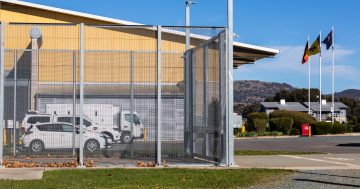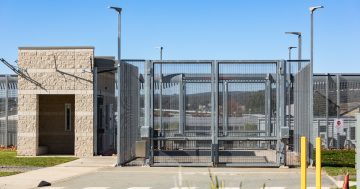

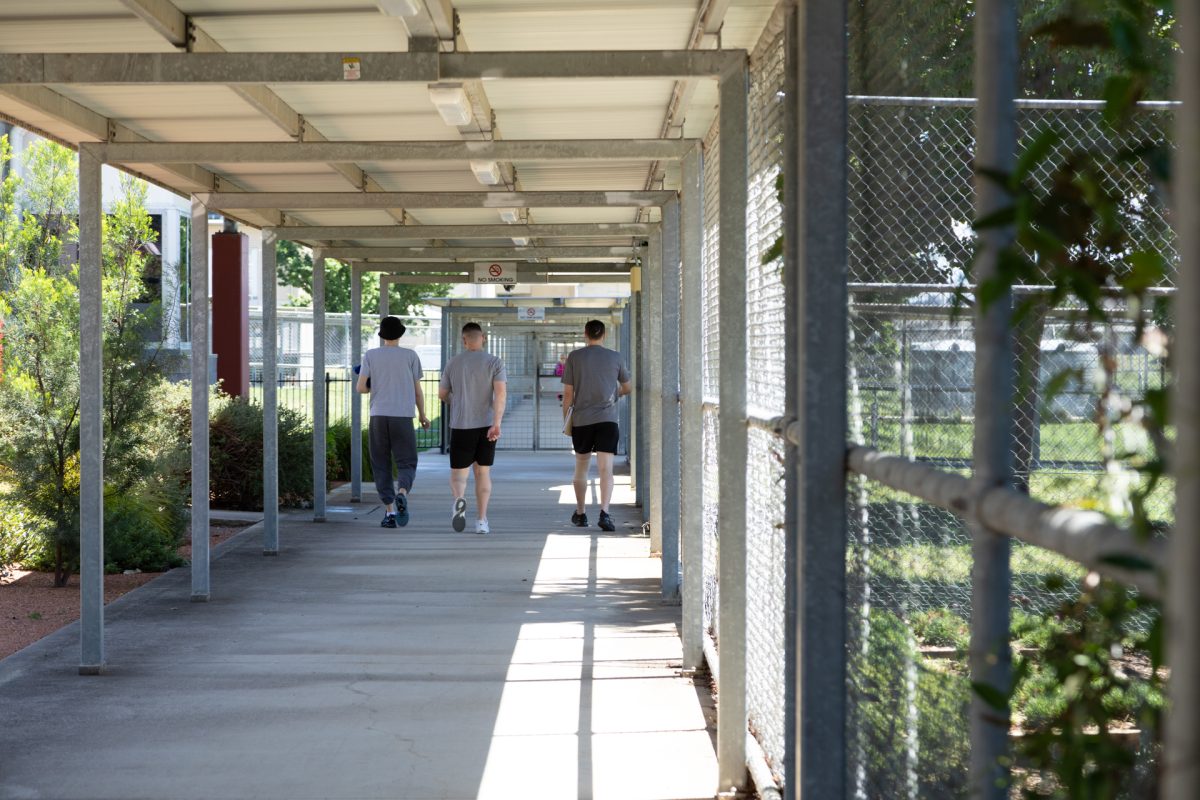
The ombudsman found that AMC detainees were overcharged for their phone calls for two years. Photo: Michelle Kroll.
ACT Corrective Services failed to apologise, alert oversight agencies or take reasonable steps to provide reimbursements when it discovered it had overcharged 980 detainees $123,235 over two years for phone calls.
That’s according to a report from the ACT Ombudsman, which showed 486 of these people are still collectively owed more than $46,000.
The ombudsman began investigating after receiving a complaint about “extortionate” new call charges that were introduced on 5 December 2024.
It found ACT Corrective Services (ACTCS) had failed to properly consider the appropriateness of the charges and that overcharging had occurred at the Alexander Maconochie Centre (AMC) in the two years before the new call charges began.
“Having access to phone calls is an important lifeline for people in detention to maintain connections with families, friends and other services,” ACT Ombudsman Iain Anderson said.
“If call charges are prohibitive, this affects the rehabilitative outcomes for people in detention.”
Detainee access to telephone facilities is a legislated entitlement in the ACT, rather than a privilege, and ACTCS is required to provide such facilities for people in detention to both make and receive phone calls.
People at the AMC were charged a connection fee and different rate-per-minute charges (between 10 and 44 cents) before 24 May 2024. Fees were waived from that date as part of preparation for the Detainee Telephone System upgrade.
From 5 December 2024, a new call charge was introduced with no connection fee, set at 18.7 cents per minute, applicable on all days.
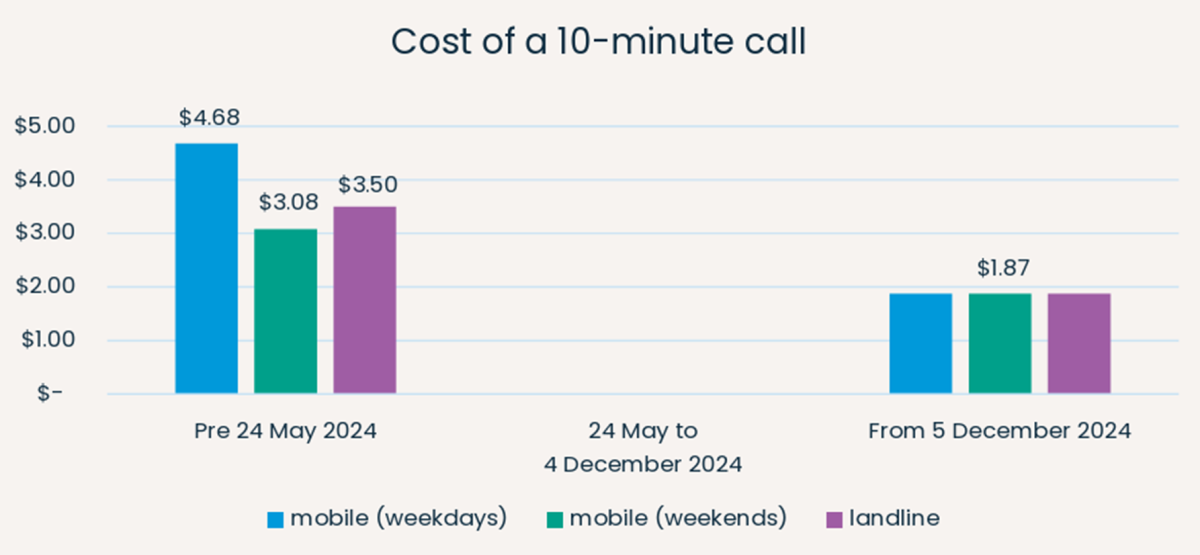
Call rates change over time at the AMC. Photo: ACT Ombudsman.
Detainees are meant to be charged at the same rate ACTCS is charged by the provider (as outlined in its policy under the legislation).
The ombudsman also found the service provider stopped charging ACTCS for all calls from the AMC to Australian landlines and mobile phones from April 2022.
“We consider it potentially unlawful, and certainly unfair, for ACTCS to have charged any higher charge rate than was incurred by ACTCS,” the report noted.
The overcharging was reported to the Corrections Minister on 19 June 2024, and a notice was posted on the ACTCS website on 10 July.
But, despite the notice promising that “every effort” would be made to contact those who were owed money, the notice “was, in fact, the sole attempt to contact people who had left AMC”.
“We consider this a wholly inadequate effort to contact individuals,” the report stated.
“Further, in our view, the notice obfuscated the extent of the over-charging issue … it did not clearly state that, for 25 months, people in detention were charged for calls when there should have been no charge at all.
“Neither the notice to people still in detention, nor the notice on the website, included an apology.”
Speaking with Region, Mr Anderson noted that those who were still detained at the time received reimbursements, but he was concerned about the 486 people who were still owed more than $46,000.
He also stressed that the apology was an important aspect of government accountability.
“Mistakes happen in government administration … [I’m of the view that] if you make a mistake, you apologise for it and you fix it,” Mr Anderson said.
The report recommended ACTCS review call costs, publicly apologise and reimburse those affected, establish facilities for people in detention to receive calls “as required by the law” and implement digital services to improve access to communication.
“These findings are an opportunity for ACTCS to ensure it is complying with the law and improve access to communications for people in detention to help strengthen positive and pro-social relationships with their friends, families and services,” Mr Anderson said.
ACTCS fully agreed to three recommendations, including issuing a public apology on its website.
“We regret the overcharging and any distress it caused. We’ve taken steps to return the funds by either reimbursing detainees or holding amounts in a separate trust account for former detainees,” a spokesperson said.
“We are making efforts to contact former detainees who are owed money, in order to issue refunds.”
The spokesperson said ACTCS meets its legislated obligations to ensure detainees can receive phone calls “to the extent possible and reasonable”, and is committed to operating the service on a cost-recovery model.
“In this instance, the service did not reflect that commitment, and ACT Corrective Services is taking comprehensive steps to address these issues,” they said.
“This includes reviewing call costs and documenting the basis for rates, refunding impacted individuals and progressing digital service improvements.”
The remaining two recommendations were agreed in principle, with ACTCS noting they would be subject to future budget processes.
Given a detainee’s access to phone calls is a legislated entitlement endorsed by the Legislative Assembly, Mr Anderson had this advice to the ACT Government: “[This issue] shouldn’t be dismissed lightly if there’s extra funding that’s required,” he said.
“Research suggests that maintaining connections improves a person’s rehabilitation and reduces the likelihood of reoffending … this is in the community interest.”