
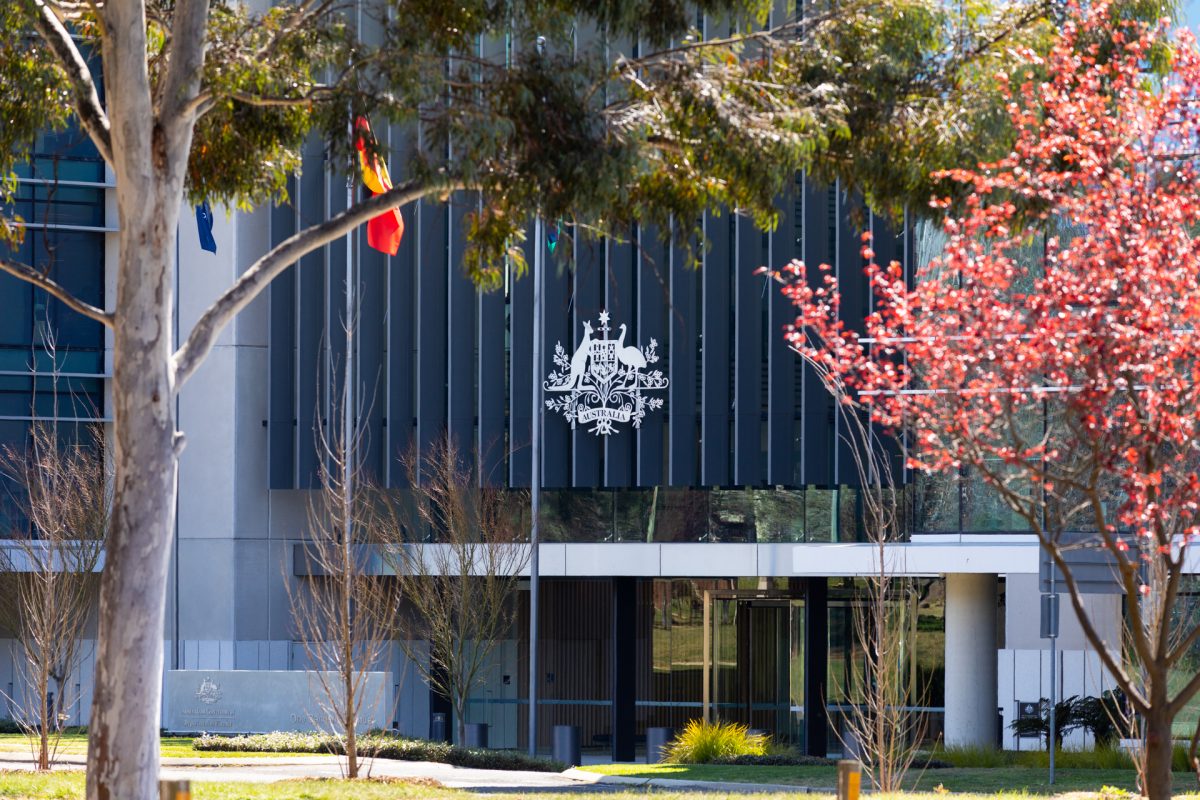
The Department of Finance has laid out Procurement Process Considerations, but are they being followed? Photo: Michelle Kroll.
Mounting procurement failures are costing the Commonwealth millions of dollars, and much of it is avoidable, industry experts say
Commonwealth agencies are repeatedly going to market for office leases, only to deliver suboptimal outcomes, according to Australian Strategic Property Advisers (ASPA).
“We are seeing procurements fail repeatedly, either through approaching the market multiple times with the same requirement, or not getting an outcome from the procurement process and having them eventually cancelled,” ASPA managing director Stephen Oxford said.
“Procurement failure takes many other forms. If you’ve run an open-market approach and then go with someone on the side, procurement has failed. If you limit the tender when there’s a heap of competition out there, you’ve missed out on the competitive tension that could have driven the price down.
“All of it can come at great financial or efficiency cost. For reference, when a procurement takes six years or more, with examples of this really prominent in our market, your internal costs conservatively are going to be over $5 million to manage that project or transaction.”
Mr Oxford said the heart of the problem is breakdowns in the planning and governance phase that occur before a tender reaches the market, as outlined in the Department of Finance’s Procurement Process Considerations.
It outlines seven steps, including planning, scoping and evaluating submissions.
“Done properly, that groundwork should clarify what an agency actually needs, what risks it is prepared to take on and, critically, what it can afford,” Mr Oxford said.
“It should all be thoroughly examined before advertising or going to tender, but from what we can observe, processes within steps one to four are often overlooked, resulting in poorly designed procurement.
“Perhaps most commonly, entities are taken by surprise when the costs come back much higher than expected, and they realise they can’t afford it, when that should have been identified before going to market.”
He also pointed to scenarios where agencies dramatically change their requirements mid-tender — for example, reducing a 10,000 sqm need to 5000 sqm after shortlisting — but still selecting from the original pool.
“You’re effectively precluding a wider pool of applicants who could have responded to that smaller square metre requirement, and among them might be a superior choice,” he said.

Procurement expert Stephen Oxford said better planning can save millions in government property procurement. Photo: Michelle Kroll.
Unlike many high-value Commonwealth procurements, leases are exempt from mandatory open-market approaches due to their unique constraints. Defence facilities, for example, may need to be located near existing infrastructure, limiting the pool of viable options.
But Mr Oxford warned that flexibility in the rules can sometimes be misused.
“There have been examples where open approaches to market have been ongoing, yet the entity negotiates a lease with providers that are not participating in that tender process,” he said.
“It is difficult to say that a solution sourced in this way complies with the procurement rules, as while core to these rules is achieving value for money, it is also about fairness and transparency.”
Even when agencies act in good faith, the sheer complexity of Commonwealth procurement creates risk.
Mr Oxford said there were hundreds of requirements addressing accountability, governance, risk, probity, due diligence, conflicts of interest, and more.
“It is likely that every single lease procurement the Commonwealth has ever taken would fail one or more of these tests under scrutiny. There are literally hundreds of pages of compliance requirements that no delegate could ever get across,” he said.
Some failures are trivial; others are not. One of the biggest missed opportunities, he said, is a failure to challenge long-held assumptions about how much space government actually needs, resulting in missed opportunities to significantly reduce an entity’s footprint and realise major savings through flexible work arrangements.
The same principle applies to lease length. While shorter leases can cost more upfront, they often deliver better long-term value through greater flexibility than a 20-year lease that may not align with rapidly changing technology and workforce needs.
With the government under pressure to reduce costs, Mr Oxford said property was one of the greatest opportunities for potential savings.
“Government has to make every dollar work hard, and that means spending the minimum they need to on accommodation so that money can be diverted to other things,” he said.
Despite the complexity, Mr Oxford said procurement failure is not inevitable, but a risk that can be significantly reduced by getting those early procurement stages right.
“We don’t have to accept that procurements fail because it is hard,” he said, “The processes exist to get these procurements right.
“We’re talking about commitment of Commonwealth money, generally in the hundreds of millions of dollars. By investing time early in the process to design the procurement appropriately, we can avoid these failures and get better outcomes.”
For more information, contact ASPA.