
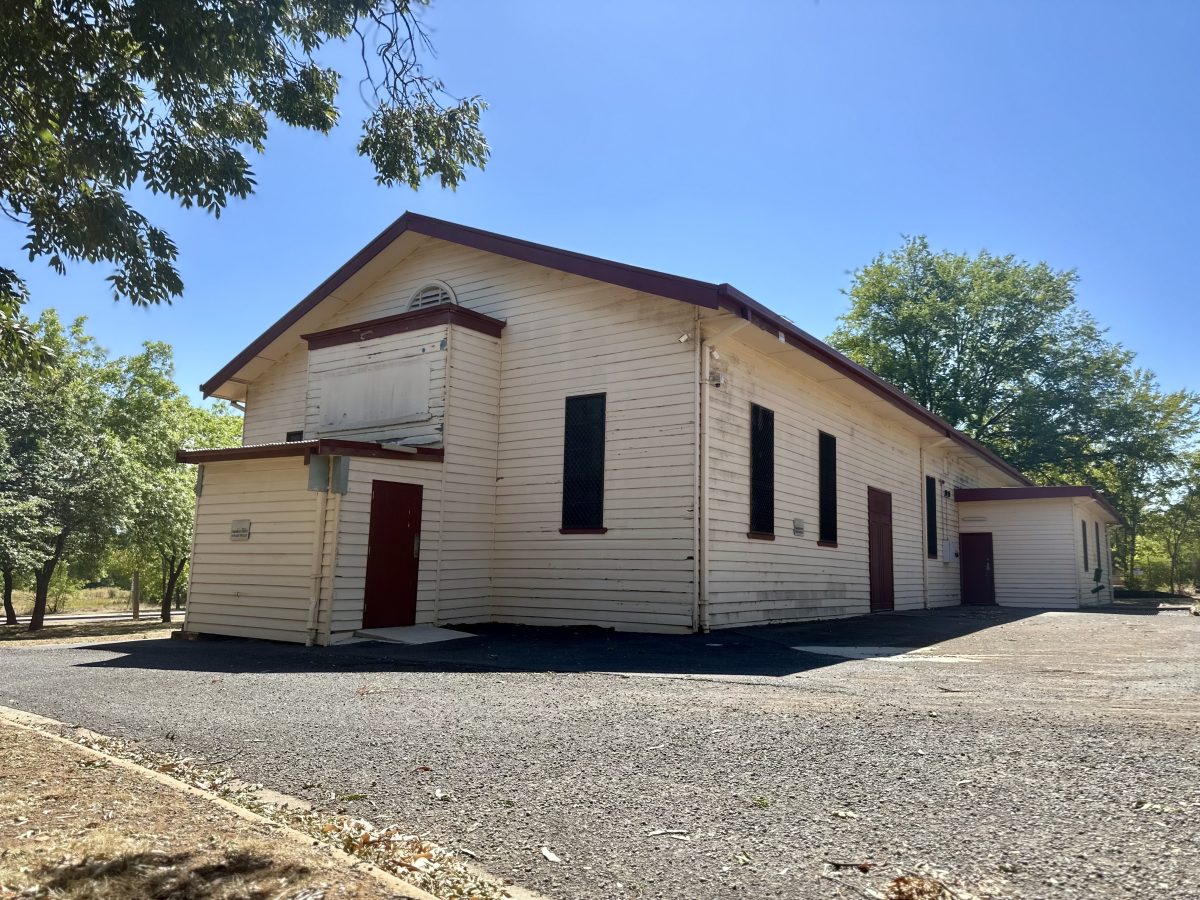
Causeway Hall opened in 1926. Photo: James Coleman.
Chances are, you’ve never heard of it – tucked away as it is near the Kingston Railway Station. But 100 years ago, the Causeway Hall was where it all happened for Canberra.
Working by day to build the city, residents of the so-called ‘Causeway’ district would gather inside this wooden hall on Spinifex Street in their spare time for theatre, concerts, dances, church services, even boxing matches, and just about everything else.
And this year, Canberra’s first community hall turns 100.
A hub of early Canberra life
“It was opened in 1926, built by the local people who were also, in fact, the builders of Canberra,” says Karen Vickery, founding member of ACT Hub, the hall’s current tenants.
“They had a settlement here in the Causeway, where they lived with their families, and they set to work every day building Canberra. So they lobbied the government, which said, ‘Yes, you can build a hall. We’ll give you the materials, and you work out of hours, and that’s what they did.”
About 120 portable wooden cottages were built for construction workers at the Causeway between 1925 and 1926.
The hall was completed using voluntary labour, with materials supplied by the Federal Capital Commission, to create the fledgling capital’s first purpose-built space for community gatherings and entertainment.
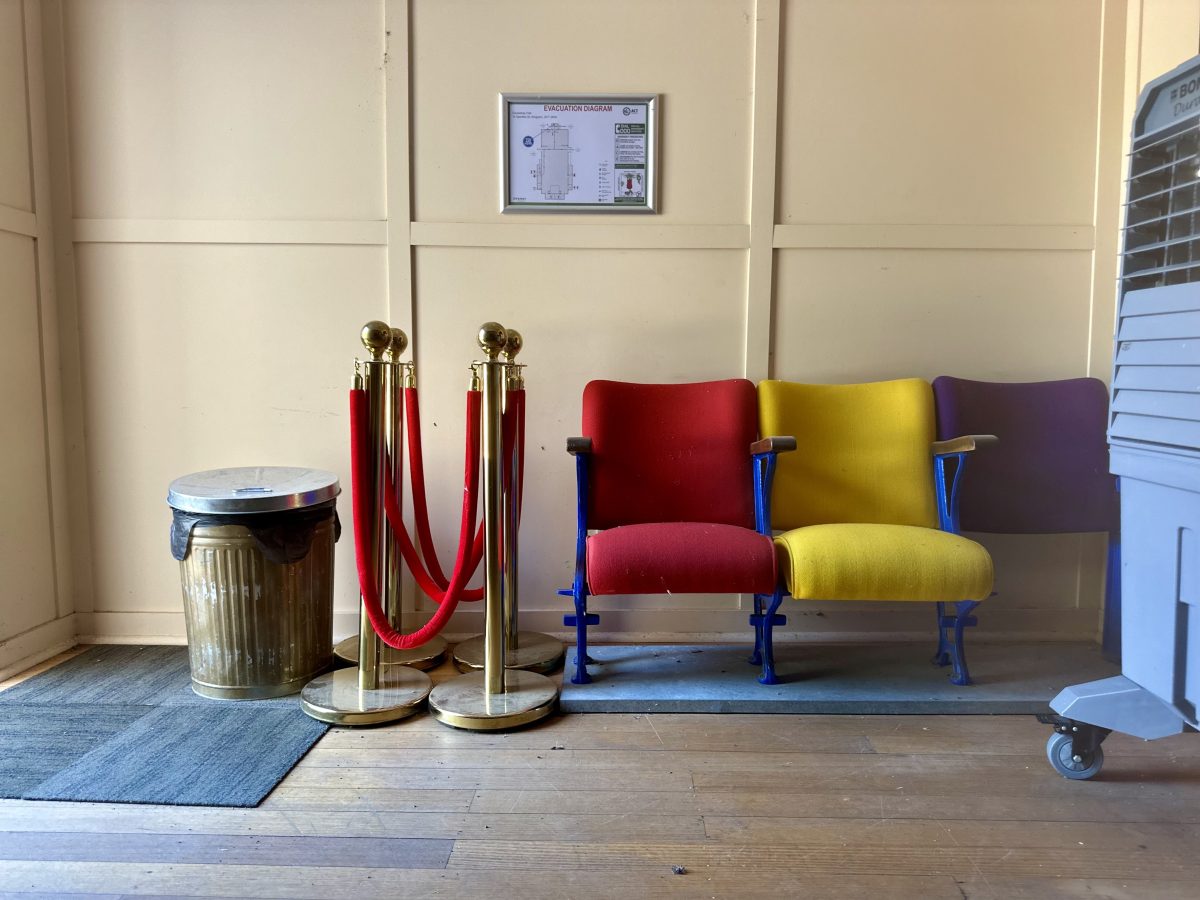
The entrance way. Photo: James Coleman.
Over the following decades, it served as Canberra’s main place for social life. Boxing matches, musical performances, pantomimes, dances, soirees, and even early Boy Scouts meetings were all held there. During the Second World War, it also acted as a staging point for local military personnel.
“For many years, it was a picture theatre, dance hall, and the venue for concerts and boxing matches,” Vickery adds.
“It’s a beautiful story of community spirit.”
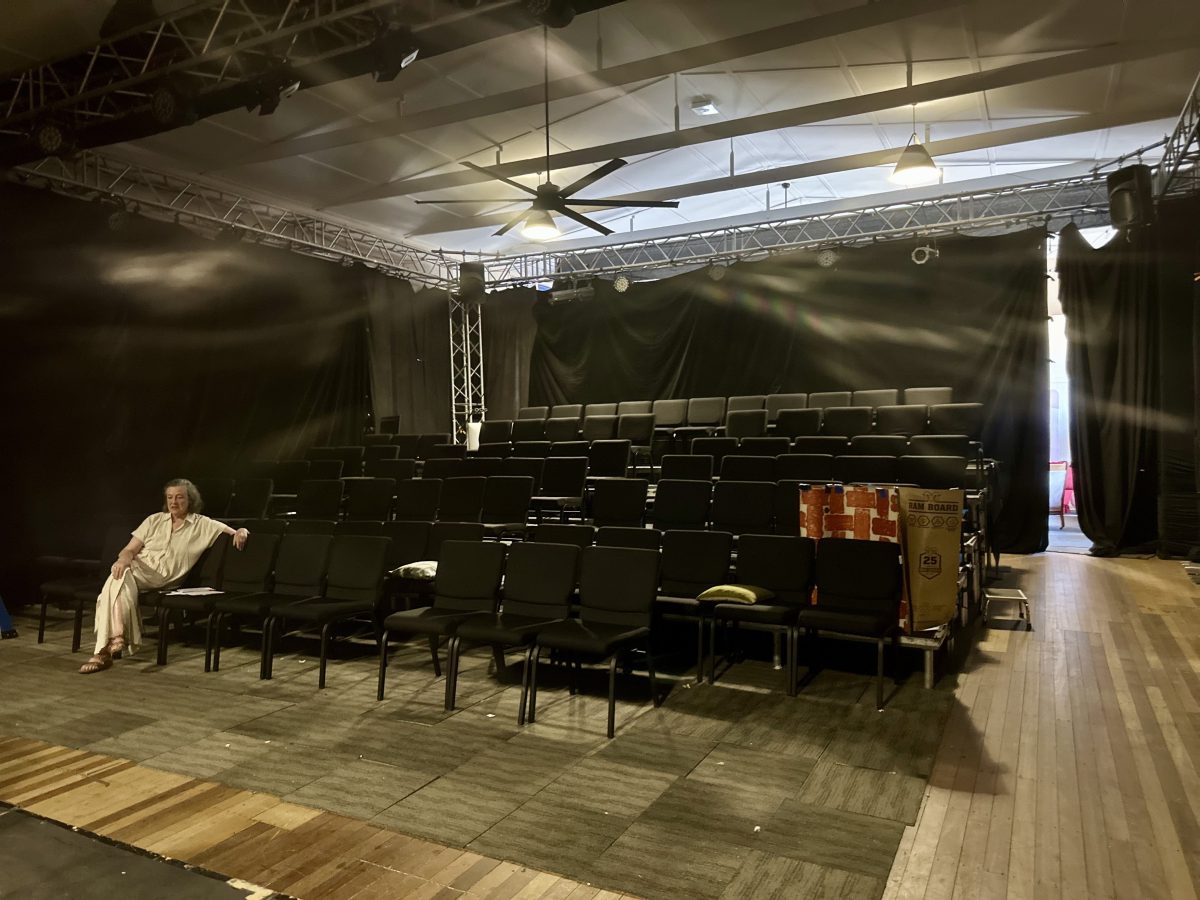
ACT Hub has kitted the hall out for theatre productions. Photo: James Coleman.
After the war, the wooden cottages in the Causeway gradually made way for today’s brick homes – but the hall survived.
Today, it’s listed on the ACT’s Heritage Register for its significance as “the last substantial building dating from the original 1920s Causeway settlement”, according to the heritage documents.
“The building is in very good condition and retains its landscape setting and much of its original fabric and form, including the entrance vestibule, high windows, ticket room, and the projection room with stairway access,” the statement of significance continues.
Still a theatre today
It’s also still in use.
The Causeway Hall is now home to ACT Hub, a collaboration of three independent theatre companies – Everyman Theatre, Chaika Theatre, and Free-Rain Theatre.
Since 2022, they’ve used the space to stage plays, chamber musicals, and other performances, earning critical acclaim and several Canberra Critics Circle Awards.
“We are about to embark on our fifth year of operation out of the Causeway Hall. It’s been a wonderful ride,” Vickery says.

ACT Hub co-founder Karen Vickery. Photo: James Coleman.
ACT Hub is marking the centenary in the best possible way – with a concert and celebration on 7 March featuring the very same band that played at the hall’s opening in 1926.
The Canberra City Band will cycle through a variety of show tunes and old favourites, alongside a “micro-exhibition” of archival photographs tracing the hall’s construction and history.
Vickery says experts will be on hand to guide visitors through the images.
“It’s a wonderful way to look back at a century of shared experiences and to celebrate what this space still means to artists and audiences today.”
Visit ACT Hub for more information about the Causeway Hall centenary celebration.