
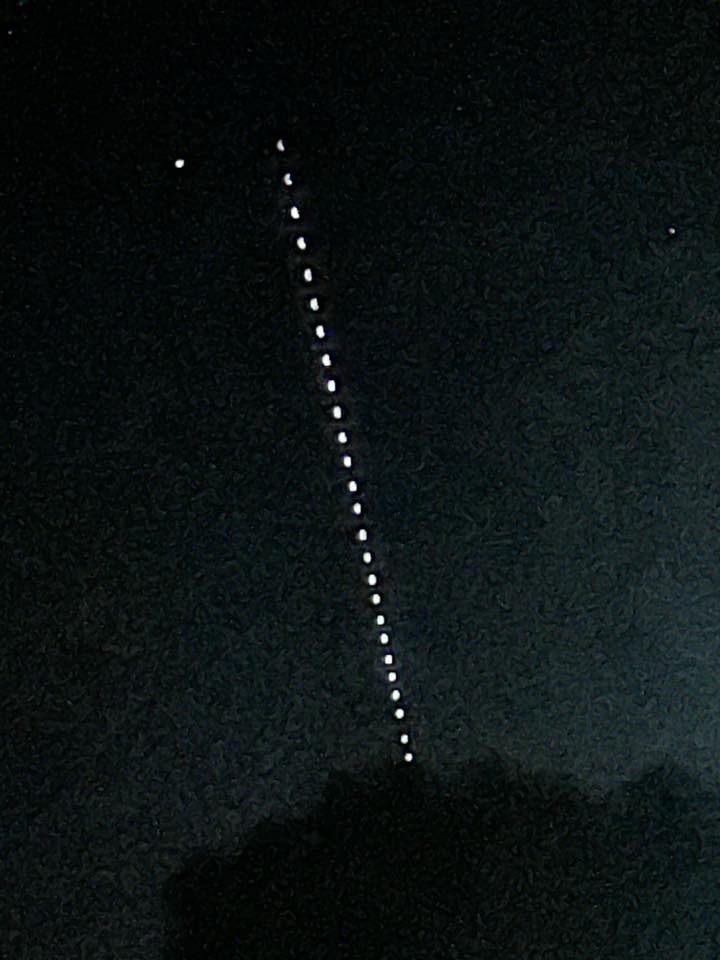
A ‘train’ of Starlink satellites spotted over Canberra. Photo: Kristy Collins, Canberra Notice Board Group, Facebook.
No, that isn’t Santa and his sleigh careening across Canberra’s night sky. It’s definitely not a “space centipede” either.
The latest local to spot a string of tiny lights moving in perfect formation after dark took to the Canberra Notice Board Group on Facebook to share their bewilderment.
“Okay, so I was outside taking the bins out, and I swear to God I see a line of about 30 tiny little lights moving in perfect formation like some kind of space centipede,” the user posted on 9 December.
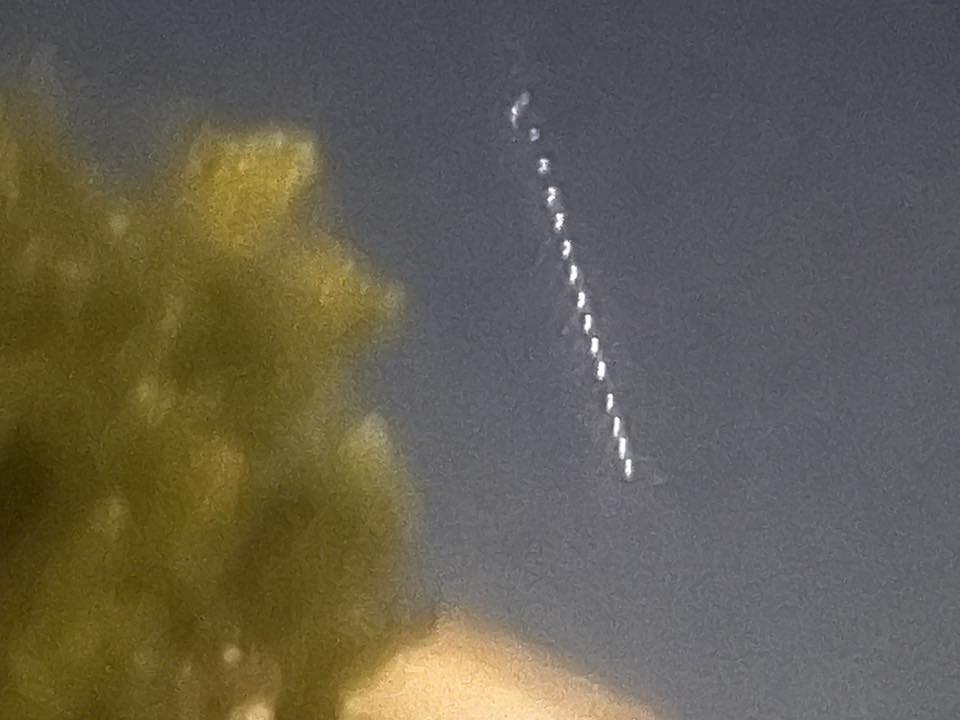
Others captured the lights on the same night, 9 December. Photo: Joshua Smith, Canberra Notice Board Group, Facebook.
“Planes don’t move like that. Drones don’t move like that. My ex definitely doesn’t move like that. Is this… I don’t want to say it… but is this the aliens finally coming to take us?
“Please tell me someone else saw this. Or at least lie to me – I’m fragile.”
It turns out there’s a much more down-to-earth explanation.
Australian National University astrophysicist Dr Brad Tucker also saw the lights, describing them as “very visible” just after 10 pm on 9 December.
“That was a new batch of Starlink satellites launched,” he told Region.
“When newly launched, they are close together in formation, so they look like lights moving across the sky.”
A satellite internet service operated by Elon Musk’s US aerospace company SpaceX, Starlink’s first satellites launched in 2019. As of May 2025, more than 7600 travel in a low Earth orbit, communicating with ground receivers all around the world.
Currently, Starlink accounts for about 65 per cent of all active satellites, with plans to eventually reach 12,000 – possibly as many as 34,400.
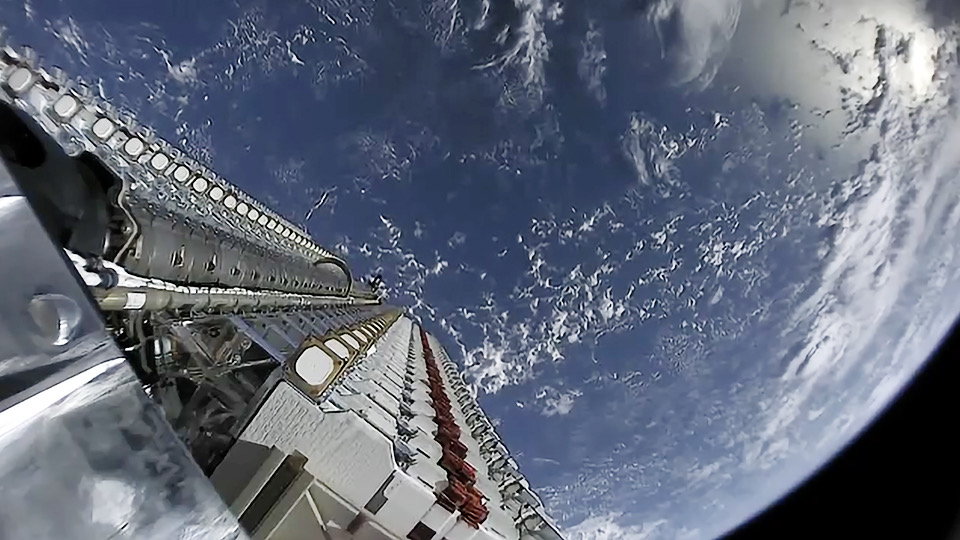
Sixty Starlink satellites stack together before deployment on 24 May, 2019. Photo: Starlink, Wikimedia Commons.
Australia has been connected since April 2021, initially in parts of Victoria and NSW. More than 20 ground stations are now scattered across NSW, Queensland, South Australia, Victoria and Western Australia.
These satellites are launched in batches of 20 to 60 aboard Falcon 9 rockets. Right after launch, they’ll appear as bright, moving lines in the night sky – often described as a “train of pearls” or a “string of stars”.
The formation is visible for one to five days, while the satellites remain clustered about 550 km above Earth.
They’re best seen during twilight, just after sunset or before sunrise, when sunlight reflects off them. Over time, the satellites use thrusters to reach their final orbits, gradually dispersing and fading into the sky.
Unsurprisingly, the Facebook comments were full of theories. Locals compared the lights to a “satellite train”, “Santa and his sleigh”, and even “new radars that’ll zap phones if anyone under 16 is on social media”.
It’s far from the first time Starlink sightings have sparked debate, with one commenter noting questions about the satellites are “right up there with, ‘did anyone hear that loud bang?'”
There’ll certainly be many more in coming months and years.