
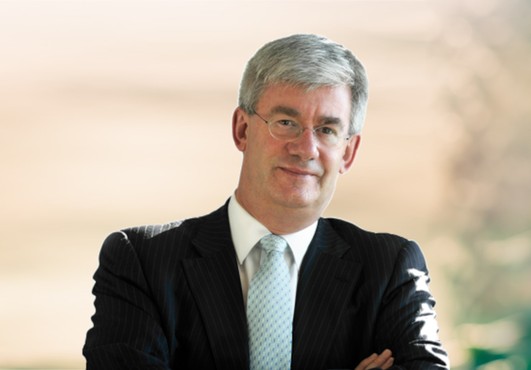
Saul Eslake reported on Tasmania’s finances in 2024. Photo: sauleslake.info.
The Legislative Assembly has hired respected independent economist Saul Eslake to conduct a review of the Territory’s finances to assist the Select Committee inquiring into the fiscal sustainability of the ACT.
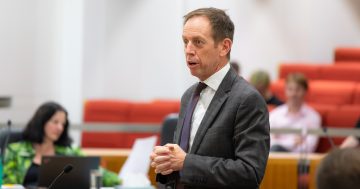
Canberra Liberals leader Mark Parton and ACT Greens leader Shane Rattenbury joined forces to have the inquiry established on the last sitting day of the Assembly for 2025 in an attempt to understand how the Territory came to be in its financial situation, and where it could go from here.
The move for an inquiry came after the government posted a record $1 billion deficit last year, along with increasing debt levels.
Mr Eslake was selected through an arm’s-length procurement process, but he had already conducted a similar review for the Tasmanian Government in 2024.
He is due to provide an Interim Report in March and a Final Report in July.
The contract says Mr Eslake’s Interim Report will include proposals that could be taken up in the 2025-26 Budget to be handed down in June, including those that are urgently required.
The Final Report will cover fiscal sustainability; projections to 2035-2036, or later; comparisons across jurisdictions; the ACT’s special circumstances; Commonwealth revenue; what is driving the ACT’s fiscal position; any changes that should be made in how information in the government’s key financial documents should be analysed and presented; and what can be done to remedy the current situation.
Committee chair Jo Clay (Greens) said it was hoped Mr Eslake would provide an accurate picture of the Territory’s finances, given the government’s view differed from others’.
“There’s been a lot of concerns raised about the Budget, but I think the decision [to set up a committee inquiry] has been reconfirmed by things like the Auditor-General report that landed on the 18th of December, which paints a pretty different picture of the ACT’s fiscal position than perhaps the Treasurer has painted,” she said.
The audit report that warned that the Territory’s persistent deficits and growing debt highlighted structural fiscal challenges.
“Careful management of expenditure and borrowing will be critical to maintaining financial sustainability over the long term,” it said.
Mr Eslake’s Tasmanian report focused on revenue-raising ahead of cutting services and proposed a raft of tax increases, which the government promptly rejected.
Ms Clay said the ACT Government was not obliged to accept his recommendations, but, with Labor governing in a minority in the Assembly, it could not so easily dismiss Mr Eslake’s findings, particularly as they stemmed from a parliamentary inquiry rather than a consultancy.
“What’s going to happen if we get a parliamentary set of recommendations that are backed by the majority of parliamentarians?” she said.
“It’s going to be quite difficult for the ACT Government to completely dismiss that out of hand.”
But she believed getting an accurate depiction of the ACT’s finances from Mr Eslake had enormous benefits in its own right.
“I would say the Tasmanian report is a great way to look at his general approach, but I would expect he’ll probably come up with different recommendations because we’re in a different situation,” he said.
Ms Clay said the committee’s recommendations were likely to cover the long term, not just one year or the parliamentary term.
The committee is due to submit an Interim Report in March and a Final Report in July, after Mr Eslake provides his respective reports.
There is scope in the committee system to acquire expert advice. Mr Eslake’s contract is worth $121,000.
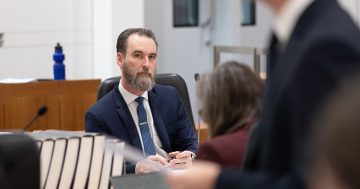
Ms Clay’s committee colleagues are deputy chair Ed Cocks (Liberal), Fiona Carrick (Independent) and Caitlin Tough (Labor).