
Lake George is slowly drying out. Photo: James Coleman.
We might be getting used to seeing water in Lake George after a few good years, but one of Canberra’s most watched inland lakes is slipping away again.
After months of little rain, one researcher – who’s been keeping a very close eye on it for years – says the shallow lake northeast of the ACT could be just one more dry summer away from running empty.
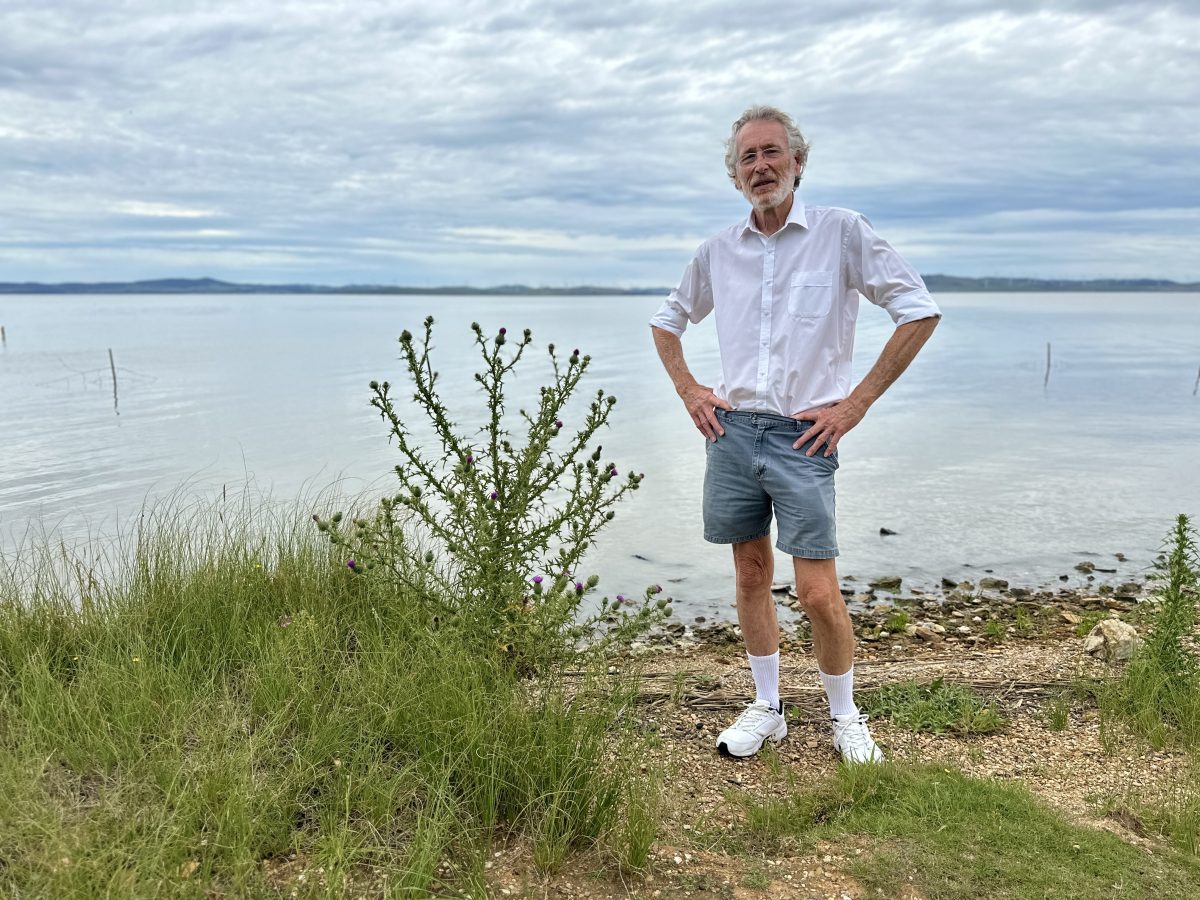
Professor Brad Pillans at Lake George, close to its peak in November 2022. Photo: James Coleman.
Watching the drop in real time
For years, Professor Brad Pillans of Australian National University (ANU) has been monitoring Lake George’s water level as part of a research project.
Every couple of weeks, he pulls over near the Haydon Drive rest area, takes off his socks and shoes, and wades in to measure it.
“I try to go out every second week – the lake level, it doesn’t change a great deal in a day or two,” he says.
Only a few small creeks feed the lake on its eastern edge, so unless there’s major rain and flooding in the catchment, there’s little point checking more often.
And lately, the major rain has been very scant.
“So in the last two months, it’s fallen significantly, something like 40 centimetres,” Professor Pillans says.
“That mightn’t sound like much, but when the lake’s only two metres deep at the maximum, that’s a big change.”
The 25 x 10 km lake reached its maximum depth of 3.1 metres in November 2022. Or put another way, it contained 300 gigalitres of water – or about 60 per cent of the amount in Sydney Harbour.
But go back to the 1960s, when Professor Pillans learnt to water ski on it, and the volume was on par with Sydney Harbour.
“And historical records show it has been as high as seven metres around 1820 and 1875.”
The fall began only recently, in late spring, but the trend has continued through summer. Even the recent rain has barely made a dent.
“It stopped the fall for a week,” he says, “but there was not enough runoff – that’s the problem.”
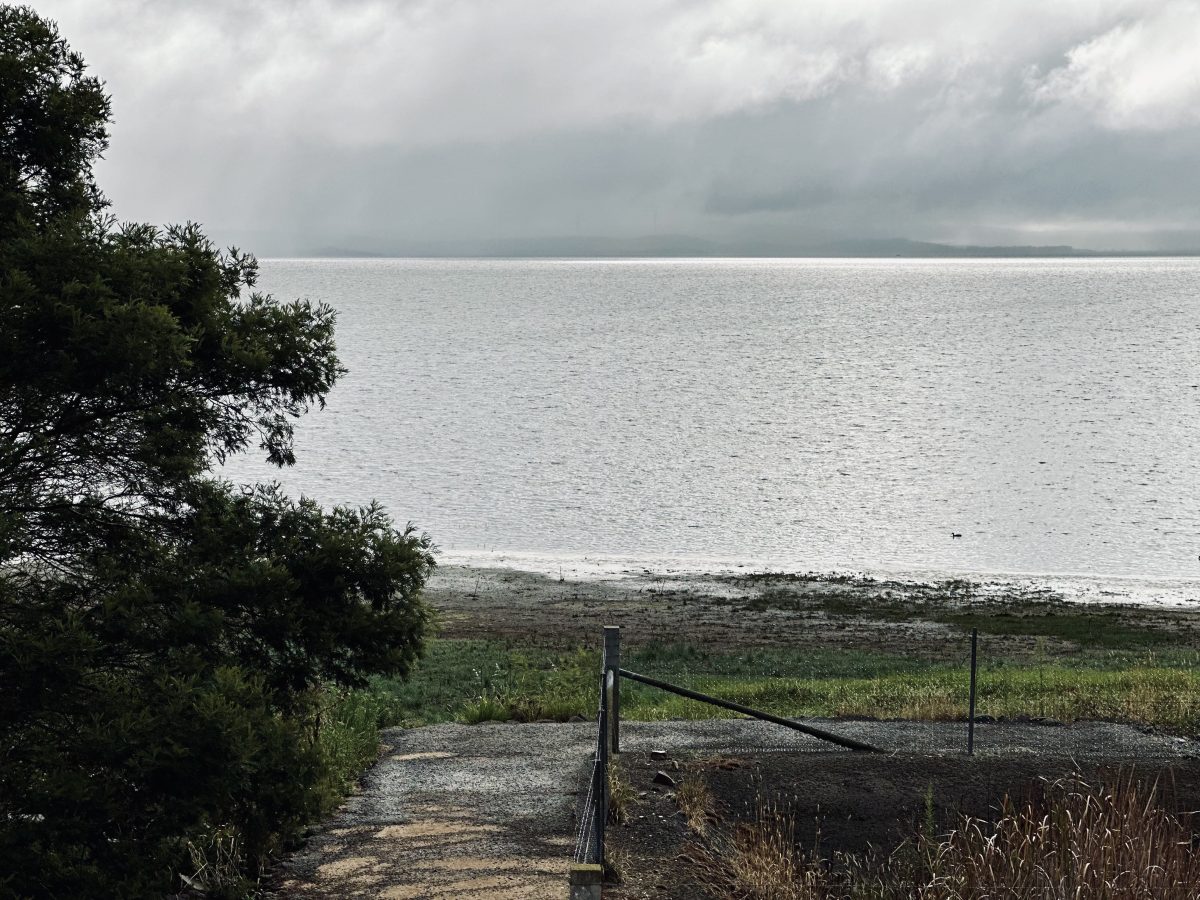
Lake George, as it appears now (February 2026). Photo: James Coleman.
Why rain isn’t refilling it
Because the lake is so wide and shallow, Professor Pillans says it’s highly vulnerable to evaporation – and it relies heavily on runoff from surrounding land to rise.
“We’re getting rain, but not often enough to really soak the catchment,” Professor Pillans says.
“The sort of rain we’ve been having is simply infiltrating the soil, and there’s very little runoff. At the moment, the only way the lake level can rise is direct rainfall on the lake surface, which can be significant, but you really need the runoff from the catchment to make the difference.”
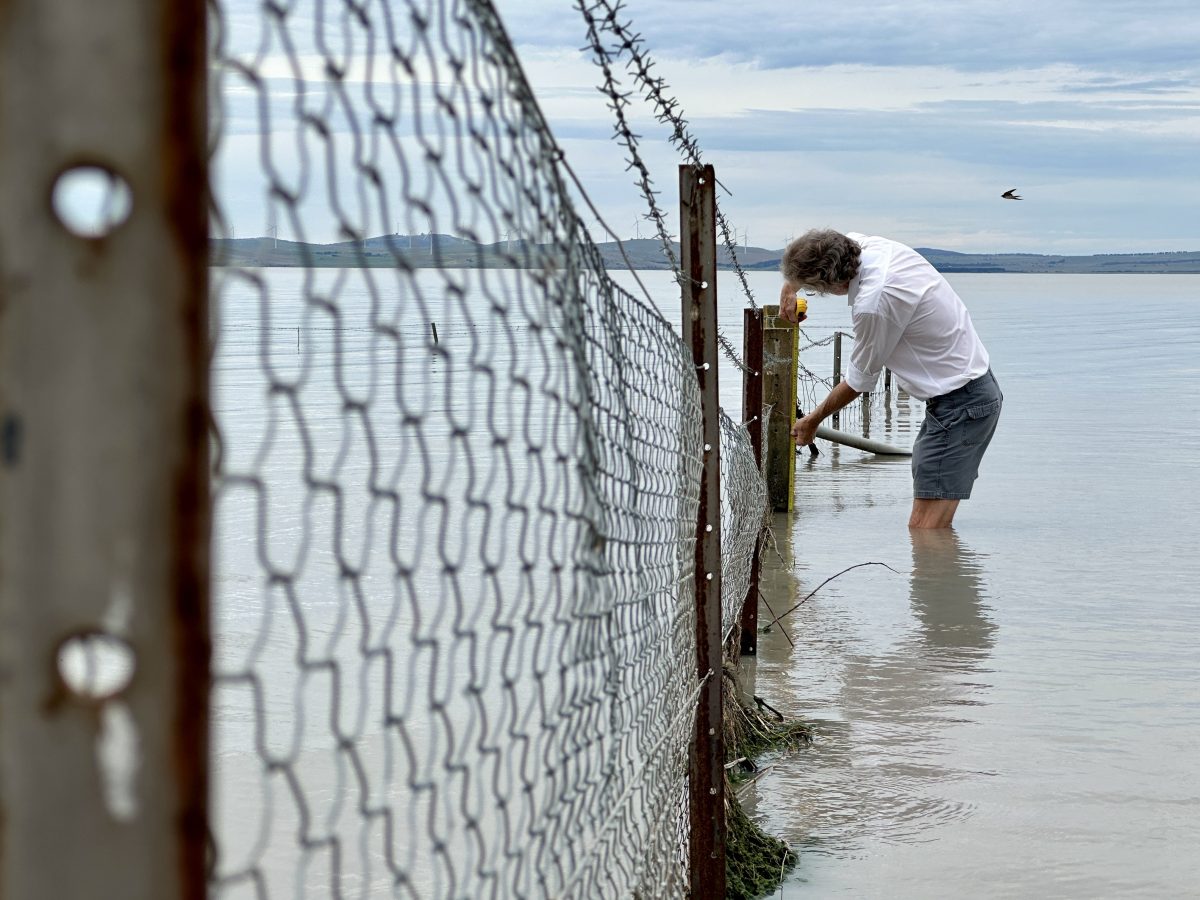
Professor Brad Pillans measures the water level at the lake every couple of weeks. Photo: James Coleman.
There’s little comfort in the short-term forecast. The Bureau of Meteorology has predicted a weak El Niño this year – typically linked with below-average rainfall.
“If it is a weak El Niño and rainfall is below average, then the lake level will continue to fall,” Professor Pillans says.
Evaporation usually slows in cooler months, which may cause the lake to stabilise over winter. But that doesn’t mean recovery.
“The next critical period will be spring – September, October – because that’s typically when you get the most runoff,” he says.
“But in the last couple of years, that spring rain has been very low.”
How long do we have?
“You’re going to see a significant change in the shoreline,” Professor Pillans says.
“For most people just driving past along the Federal Highway, they see the water there, and they think, ‘Oh yeah, it’s all okay’. But it’s disappearing.
“Whether it will be completely dry this time next year, I can’t say – and I don’t think anyone can – but I think the probabilities are that it’s going to continue to fall this year. The shoreline will retreat, and people will notice.”
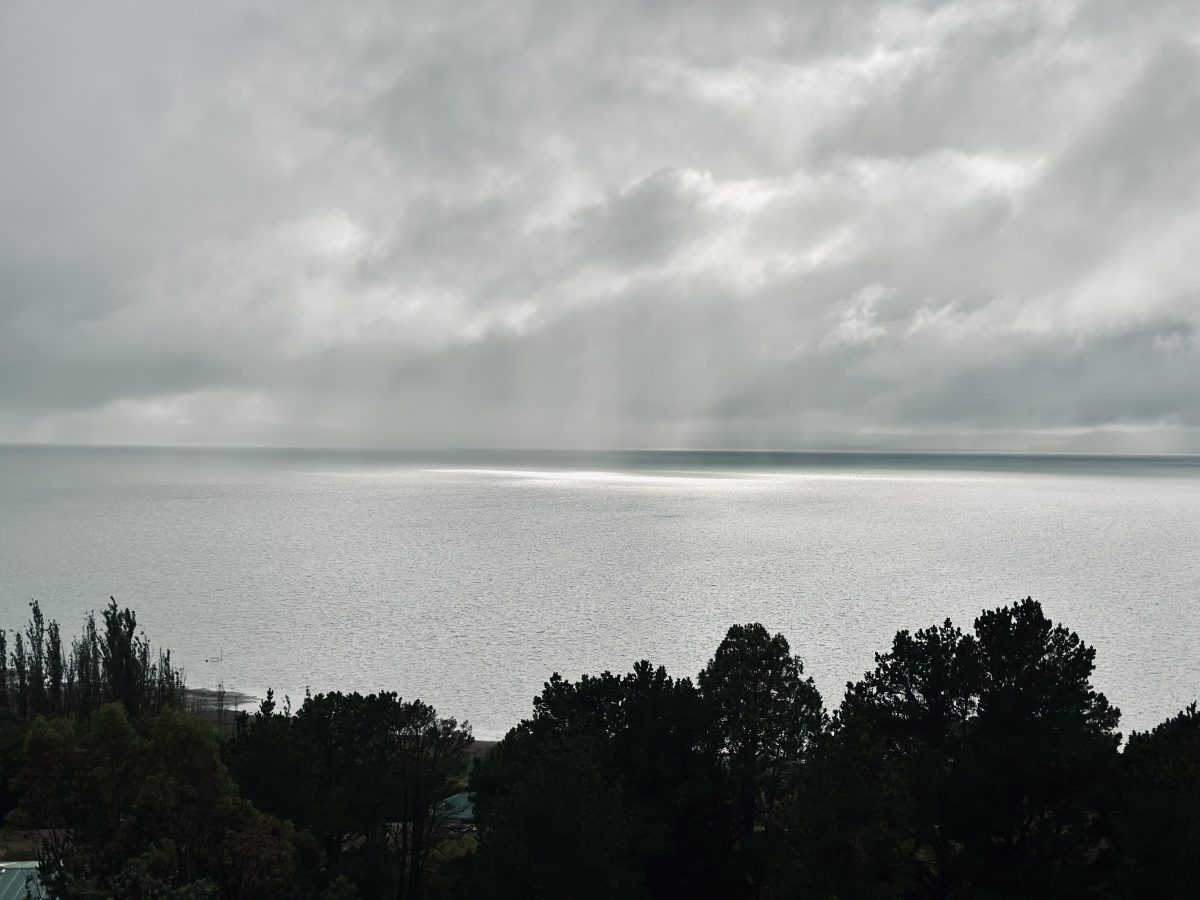
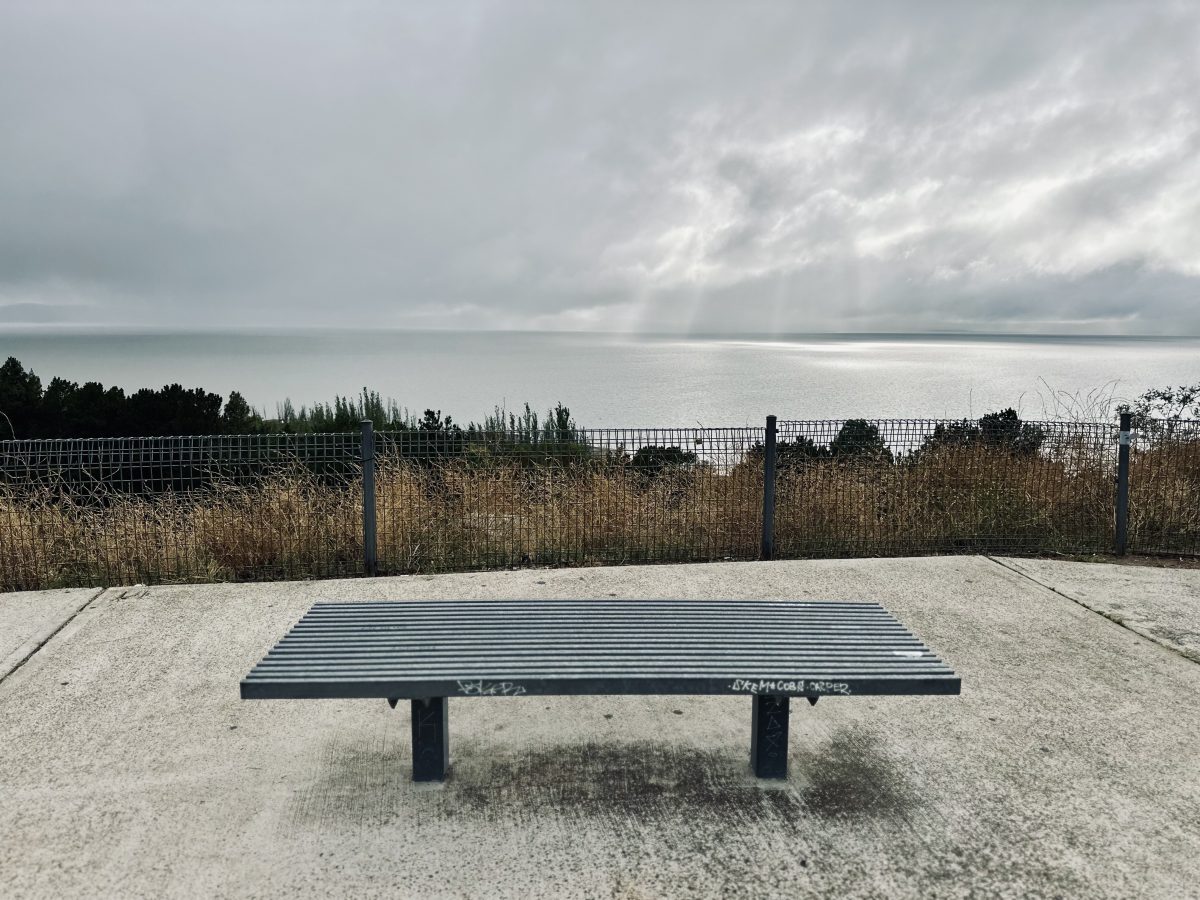
Enjoy the views while they last. Photo: James Coleman.
The lakebed is technically Crown land, but leased out to local farmers for livestock grazing when it’s empty. So, even if water skiiers – and motorists, taking in the view – stand to lose from a dry Lake George, at least the cows and sheep will win.
Professor Pillans says his research project – which included collecting sediment samples from the lake – is drawing to a close, and locals should expect some answers to the lake’s quirks soon.
“We’ve got a number of publications in the pipeline, and I’m still supervising a couple of PhD students who are working on various aspects of the long history of the lake,” he says.
“They’re writing up their theses as we speak, and there’ll be more publications coming from those, too.”