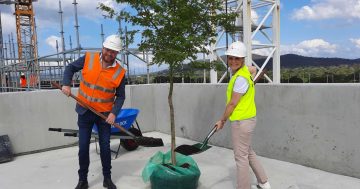
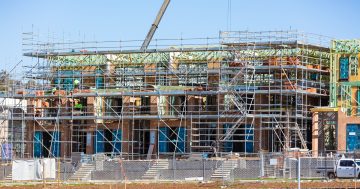
The surging cost of fuel and materials is another perfect storm for the industry. Photo: ACT Government.
The cost of building a new home is rising as the Middle East war shock wave hits supply chains and materials, blowing out time lines and threatening the ACT’s housing targets.
Just when the building industry thought it was safe after the tumult of COVID, another global crisis has builders rattled.
Master Builders ACT CEO Anna Neelagama said the industry was only just getting back on its feet and seeing some positivity with the upturn in home approval numbers.
But the spike in fuel prices (the building and construction industry is the fifth largest user of diesel in the country), rapid increases in cement, asphalt, plumbing supplies and an expected increase in materials such as steel, were all forming into another perfect storm for the industry and it would need support to survive it.
“So there’s price, there’s volatility, but then there’s also supply chain availability and scarcity, and scarcity of materials, ” Ms Anna Neelagama said.
“I would anticipate that there will be delays because some of the inventory required will be hard to source.”
Ms Neelagama was not hearing local reports of stockpiling yet but builders had contracts to comply with and wanted to be able to deliver housing projects in particular in an affordable way, so they would be looking to secure their materials.
Master Builders was urging members to look at their contracts and talk to clients to see what variations could be put in place to manage projects.
Many had learnt the hard way during COVID about the perils of fixed price contracts and MBA contracts now allowed for a global supply chain shock.
“It’s really about good communication and having that conversation with the client,” Ms Neelagama.

Master Builders ACT CEO Anna Neelagama says there is a lot uncertainty. Photo: Ian Bushnell.
New MBA forecasts out on Friday already had the ACT falling short of its housing target by about 1200 and that was based on assumptions before the latest interest rate rise, the Iran war and pricing volatility.
“The outlook is now a lot more severe and a lot more hampered,” Ms Neelagama said.
“Focus needs to turn to supporting businesses through this because we don’t want to lose capability in residential building in particular because we still have this major undersupply of homes in Canberra. Regardless of global events, we need to continue to deliver.”
Ms Neelagama said government could help with revisiting the COVID cash-flow boost measures, support to retain apprentices and essential staff and eliminating red tape, regulation and new fees and charges.
“Businesses need to preserve liquidity, so they can continue to deliver homes and other vital public infrastructure.”
Master Builders ACT was also talking with Infrastructure Canberra about affected contractors working on major projects, which will face their own cost pressures for which taxpayers will have to pick up the bill.
“There’s a lot of uncertainty, but what we do know is the industry must continue to build, so all things must be on the table,” Ms Neelagama said.
The MBA says new dwelling starts in the ACT are forecast to drop -16.6 per cent in 2026-27 after a surge driven by apartments in 2025-26 (+145.7 per cent), then rise marginally in 2027-28 (0.4 per cent), but fall away again in 2028-29 (-5.7 per cent) and 2029-30 (-4.2 per cent).
Detached house starts are expected to continue rising for the next couple of years before declining, while apartments will start falling in 2027-28.
But the war may have blown up these numbers.