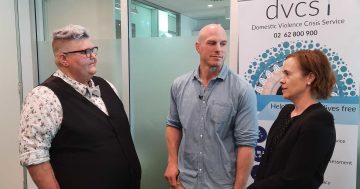
Years of increased investment have not made homes safer for Canberra women. Photo: South Agency.
Four in 10 ACT women have experienced sexual violence in their lifetime, while one of Canberra’s key women’s legal services says requests for help jumped 40 per cent last year – without any increase in its capacity to assist them.
The figures give a Canberra dimension to a national warning this week that years of reform and investment in domestic, family and sexual violence are still not consistently delivering safer outcomes.
The Domestic, Family and Sexual Violence Commission says Australia now needs to move beyond simply building its response and focus on whether it is working – intervening earlier, strengthening accountability and investing in the conditions people need to reach safety and recover.
Its report singles out two persistent problems: sexual violence still requires dedicated and sustained investment, while justice and family law systems can continue to cause harm to people and families experiencing violence.
In Canberra, frontline organisations say many of those problems are already evident.
Women’s Legal Centre ACT CEO Elena Rosenman said requests for assistance from women, trans and gender-diverse people subjected to gender-based violence had been increasing year-on-year for about five years.
Last year alone, requests rose 40 per cent.
“There are more people seeking assistance, but we don’t have any capacity to assist more people, so the number of people that we assist stays stable, but the number of people that need help continues to grow,” she told Region.
Ms Rosenman said similar pressures were being experienced across Canberra’s frontline legal, domestic violence and sexual violence services, with existing resources unable to keep pace with community need.
The Canberra Rape Crisis Centre (CRCC) is also dealing with significant demand.
In 2024-25, it provided specialist services to more than 5400 clients, responded to more than 7200 crisis text messages and 4300 crisis emails, attended 366 crisis call-outs and received more than 1000 referrals.
But both organisations say the answer cannot simply be providing more help once someone reaches crisis.
One of the Commission’s key recommendations is to direct new investment towards early intervention, stopping risks and patterns of violence from escalating.
For Ms Rosenman, that can start with something as fundamental as getting accurate information to a woman who is considering leaving a violent relationship.
She said women could be told that if they left, they would lose their children or receive nothing from a property settlement. Fear that their children could then be exposed to violence without them there to protect them could become a powerful reason to stay.
“If you think there is a risk that your children will be exposed to violence and you won’t be there to protect them, you will stay to make sure [they’re safe],” she said.
Early legal assistance could help women understand what separation would actually involve and make informed decisions about their safety and that of their children.
And that support may need to be repeated.
“It takes time for women to make the decision, and so they might need the same advice multiple times to help them really understand what’s happening, and build up the confidence and support they need to be able to leave safely,” Ms Rosenman said.
She also wants specialist expertise brought closer to places people already trust.
A playgroup, health service or local community organisation may be where someone first seeks help. Ms Rosenman said stronger partnerships would allow those services to recognise and respond to domestic violence while connecting people with specialist support earlier.
For CRCC, another of the Commission’s recommendations goes to a longstanding concern – treating sexual violence as a distinct issue rather than folding it into the broader domestic and family violence response.
CRCC director of communications, education and policy Ann-Elise Koerntjes said sexual violence occurred far beyond intimate partner relationships, including in families, workplaces, institutions and online.
That required specialist responses ranging from crisis intervention and trauma-informed counselling to forensic and legal advocacy and prevention.
“Sexual violence is often treated as a subset of family and domestic violence rather than as a distinct area requiring its own dedicated investment, workforce and specialist response,” she told Region.
CRCC supports people across the continuum from prevention and early intervention to crisis care and long-term recovery, including people whose experience of sexual violence occurred years earlier.
Ms Koerntjes said early specialist intervention could change outcomes and reduce the longer-term impact on victim-survivors, their families and the systems supporting them.
The national report also raises concerns about what happens after a victim-survivor enters the justice system.
Ms Koerntjes said lengthy and complex court proceedings could compound trauma and make it difficult for people to remain engaged.
“Canberra sees the same patterns the DFSV Commission has identified nationally,” she said.
One area where the ACT has moved ahead is CRCC’s Independent Sexual Violence Advisor program, which provides consistent specialist support and advocacy to help victim-survivors understand their options and navigate health, legal and other systems. The ACT has led the national implementation of the ISVA model.
The ACT Government has committed increased funding to CRCC for the next three years, but the organisation says sustainable funding from both levels of government remains important for early intervention, workforce stability and continuity of care.
Minister for Women and ACT Senator Katy Gallagher also emphasised that the Commission’s report challenged governments to look beyond responding to violence and towards preventing it.
“We must commit to ending violence, and we must act with the knowledge that it is possible to prevent violence, and with the imagination to see what a world without violence would mean for all of us.”
For Canberra’s frontline organisations, however, the immediate test is more practical: whether people can get specialist help early enough – and whether, when they finally ask for it, there is capacity to respond.