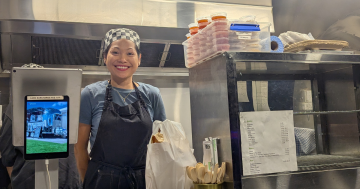
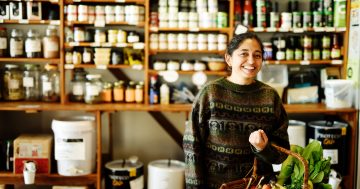
The number of registered home-based food businesses has almost doubled over the past decade – but should they be regulated? Photo: Baileys Table.
Every evening, Canberra’s South Asian Facebook and WhatsApp groups come alive with photographs of steaming biryanis, butter chicken, haleem, curries, samosas and homemade desserts.
They often sell out within hours.
Behind many of them are women trying to turn a lifelong skill into an income. Some are mothers unable to work because they have young children at home. Others cannot afford childcare or struggle to find work that fits around family responsibilities. Cooking offers them a way to contribute financially without leaving home.
The demand is obvious. So is the growth of home-based food businesses.
ACT Government figures show the number of registered home-based food businesses has almost doubled over the past decade, rising from 113 in 2016 to 222 in 2026. Over the same period, the total number of registered food businesses increased from 2984 to 3778.
At the same time, food safety remains a significant public health issue. Food Standards Australia New Zealand estimates foodborne illness costs Australia about $3 billion every year. Based on population, the ACT’s share is estimated at around $52 million annually.
Those figures explain why governments regulate food businesses.
The question isn’t whether food should be regulated. It’s whether there is a practical pathway for talented home cooks to operate legally while maintaining those same food safety standards.
For many home cooks, the issue isn’t a lack of customers. It’s finding a legal way to serve them.
One Canberra baker, who asked not to be identified, said she regularly advertised homemade cakes through community Facebook groups but became nervous when approached by an unfamiliar customer.
“I was sceptical,” she told Region.”I thought maybe it was a way to catch my business.”
Another woman, well known in Canberra’s South Asian community for preparing catering orders from home, said she wanted to register her business and operate legally. But after looking into the requirements, she decided the process was simply beyond her means and abandoned the idea.
An Indian couple shared a similar experience. After building a loyal customer base selling homemade meals, they decided to formalise their business. They went through the approval process hoping to operate legally but failed the required inspection and were unable to secure approval.
Rather than continue selling food from home, they shut the business altogether, fearing they were now under greater regulatory scrutiny.
Together, the three stories highlight a growing dilemma. Canberra’s multicultural communities have embraced home-cooked meals, yet many of the foods most commonly advertised—including butter chicken, biryani, curries and other ready-to-eat meals—cannot legally be prepared in a domestic kitchen under current ACT regulations.
Under the Food Act, residential kitchens may only be approved to prepare low-risk, shelf-stable foods such as biscuits, cakes and jams.
Higher-risk foods—including meat dishes, cooked rice, cooked pasta and ready-to-eat meals—must be prepared in an approved commercial kitchen. Businesses preparing and selling these foods must also meet registration, food safety training and other regulatory requirements.
The ACT Government says domestic kitchens are generally not designed to maintain the same level of temperature control, cleaning and sanitising as commercial premises. Increased food production from homes can also affect neighbours through cooking odours, while businesses may also need to comply with planning, environmental and consumer protection laws.
Environmental Health Officers investigate complaints involving unregistered food businesses. The government says education is generally the first response, but food has also been seized and destroyed and enforcement notices issued where businesses continue operating unlawfully.
Yet it is difficult to know how widespread the problem is.
The ACT Government says complaint and investigation data does not distinguish between commercial businesses and home-based operators, meaning it cannot say how many complaints or enforcement actions involve home kitchens.
Region asked the ACT Government whether there was scope to create a simpler pathway for small home-based food businesses preparing culturally diverse meals, or whether the current regulatory framework could be adapted to better support people wanting to operate legally while maintaining food safety.
The government did not directly address those questions. Instead, it outlined the existing regulatory framework and encouraged prospective operators to seek advice before starting a food business.
The growth in registered home-based food businesses suggests more people are choosing to operate within the system.
But the experiences shared with Region also point to another reality: many talented home cooks either decide the process is too difficult, become fearful of attracting attention or abandon the idea altogether after trying to comply.
For a city that prides itself on supporting small business and celebrating its multicultural communities, the question may no longer be whether food safety rules are necessary.
It is whether the current system strikes the right balance between protecting consumers and giving aspiring home-based food entrepreneurs a realistic pathway to build a legitimate business. For now, that question remains unanswered.