
12 December 2025

Canopy cover falling as trees age and densification gathers pace, report shows

| By Ian Bushnell
Join the conversation
19
Street trees

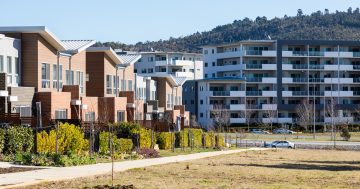
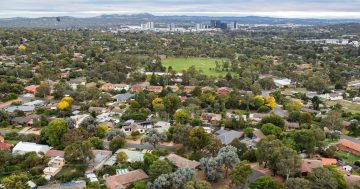
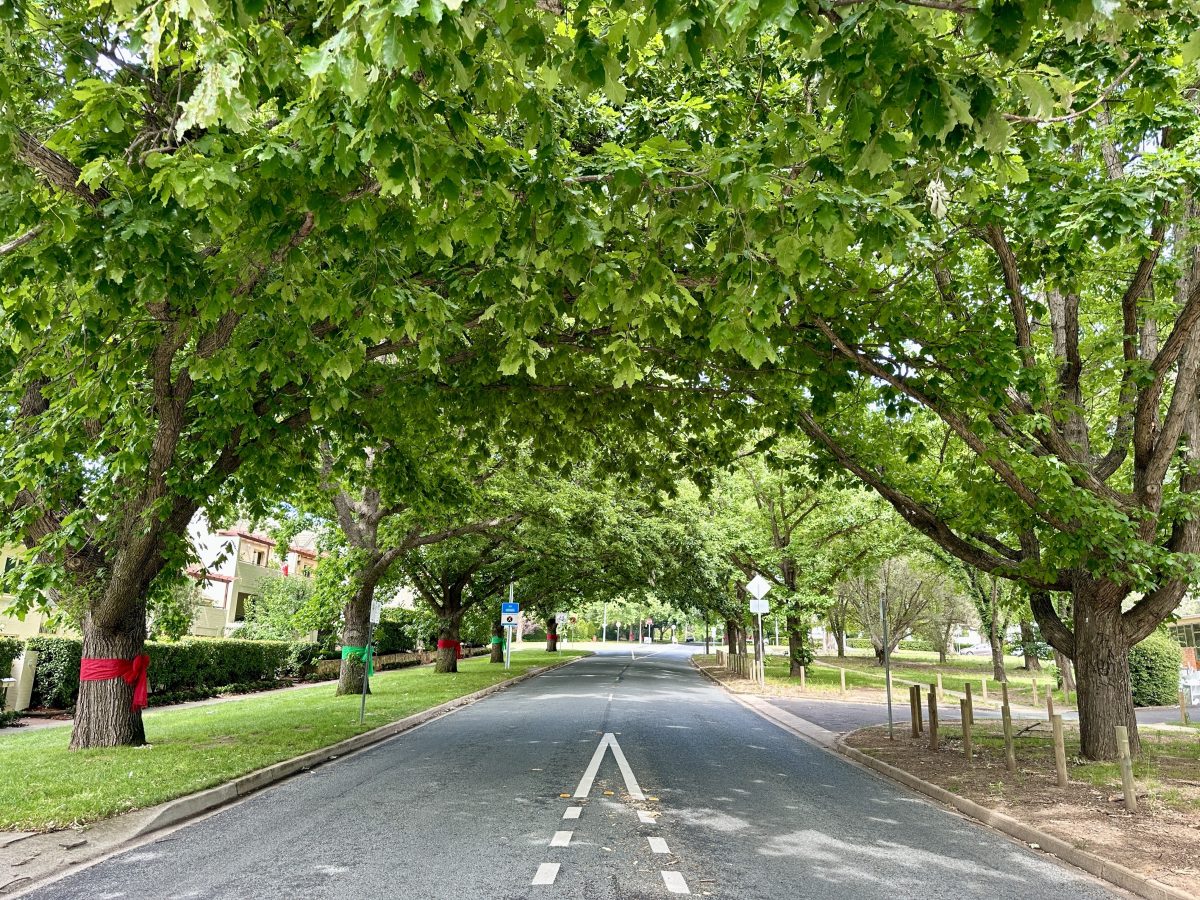
Older suburbs have ageing trees and face infill pressures. Photo: James Coleman.

A combination of ageing trees, densification in older suburbs and new suburbs not having as much space for plantings means the ACT is falling behind in its bid to achieve a 30 per cent tree canopy cover (TCC) by 2045.

In the fifth update to the Legislative Assembly on the Urban Forest Strategy since it was released in 2021, TCC was found to have fallen from 22.7 per cent in 2020 to 21.8 per cent in 2025 across the urban footprint.

But the government is pinning its hopes on thousands of new plantings to reach the three-metre height threshold to be included in the canopy by the time the next count is taken in 2030, although infill development is expected to increase as a result of planning reforms to meet government housing targets.

TCC is monitored every five years as part of the strategy to achieve the canopy cover target, with 2020 data providing the baseline.

The update, which covers actions taken during 2024-25, says that of Canberra’s 121 suburbs, 92 experienced a fall in canopy cover from 2020 to 2025, with a median loss of 1.59 per cent across these.

Significant reductions were seen in Denman Prospect (8.7%), Weetangera (4.15%), Fisher (3.45%), with further reductions of 2.4-2.89 per cent in Torrens, Ainslie, Hackett, Downer, Hawker, Jacka, Flynn, Scullin and Fadden.

Just 24 of Canberra’s 121 suburbs have a tree canopy coverage higher than the 30 per cent target, with 59 suburbs hosting a canopy cover between 20 and 30 per cent.

READ ALSO ‘I hate seeing the ACT continually missing out’: Pocock pushes for Feds to back a new Canberra multicultural centre

The districts with the highest canopy cover are Hall Village (38.84%), Woden Valley (30.16%), Canberra Central(27.19%), Weston Creek (25.07%), Tuggeranong (23.81%) and Belconnen (23.43%).

The districts with the lowest canopy cover are Gungahlin (14.53%), Coree (11.13%), Majura (9.21%), and Molonglo Valley (6.16%).

Canopy cover increased on unleased land from 23 per cent in 2020 to 24 per cent in 2025, while canopy cover on leased land decreased from 21 per cent to 19 per cent.

The report says that the increase on public land may be attributed to the growth of young trees planted in streets and parks in newly established suburbs.

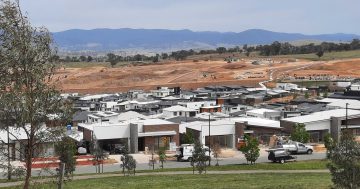
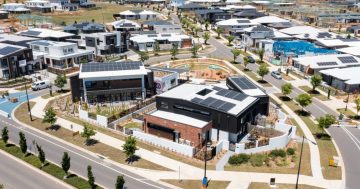
The decline of TCC on leased land, and also observed across older suburbs, may reflect the impacts of urban densification and the lack of tree planting space available on smaller blocks typical in more newly established suburbs in the Gungahlin, Molonglo Valley and West Belconnen districts, it says.

The report says TCC in Canberra’s older leafy suburbs is generally declining, likely as a result of trees being removed to enable urban densification.

A significant number of trees have also been identified as being in decline and will require removal and replacement in the coming decades.

“Canopy cover in these areas may also be significantly affected by planning decisions that enable urban infill, resulting in a loss of mature trees on leased land and adverse impacts to street trees on public land,” the report says.
TCCS worker planting trees

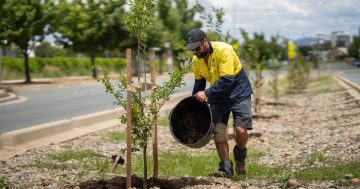
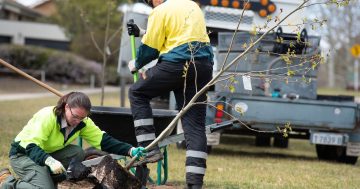
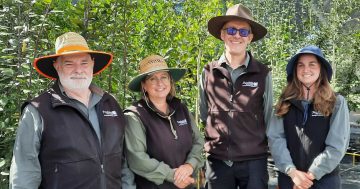
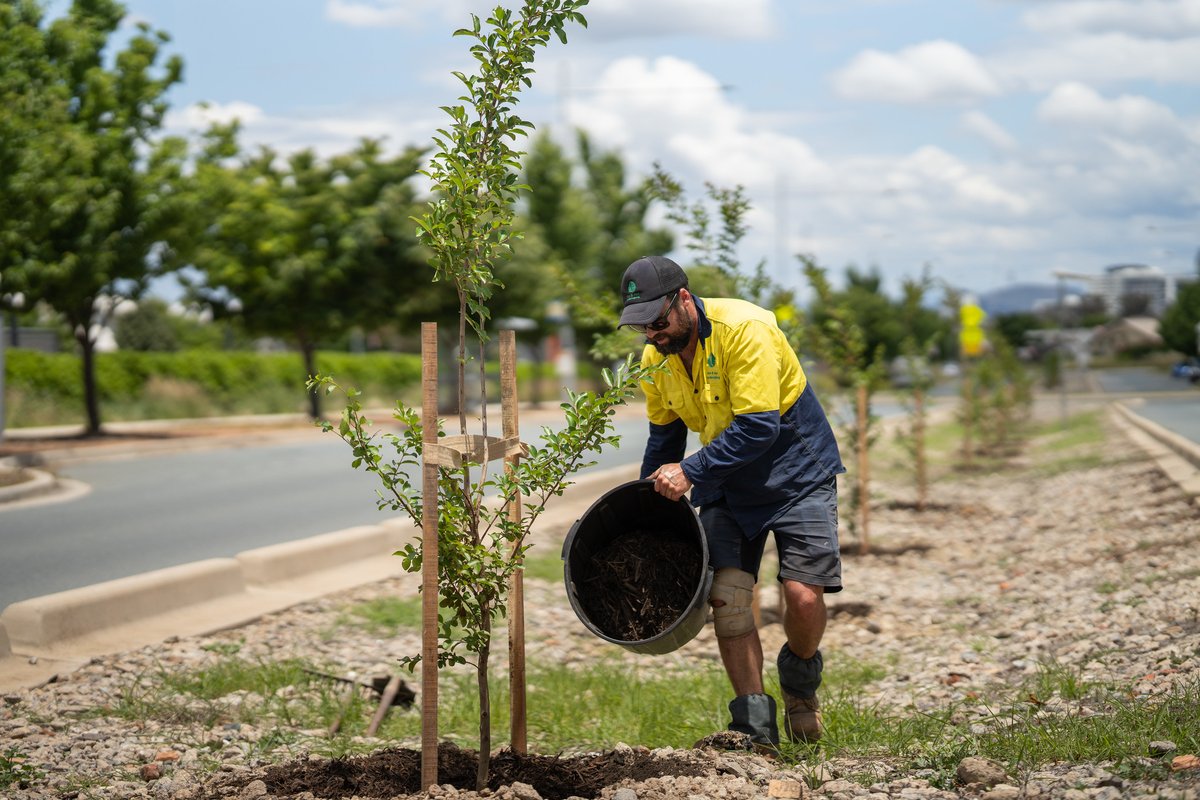
The ACT Government planted 12,730 trees in 2024-25. Photo: ACT Government.

The report recommends that the government should look at plantings in open spaces, such as major and secondary road medians and verges, to offset predicted canopy loss from the removal of ageing street trees and other trees for infill development.

The suburbs with the highest TCC showed some of the greatest decreases in TCC.

Isaacs, O’Connor, Reid and Red Hill all have a TCC above 39 per cent and respectively showed a reduction of 2.15, 2.17, 2.39 and 2.03 per cent.

Weetangera showed the largest decrease in TCC of established suburbs, with a TCC decrease of 4.15 per cent to 27.23 per cent.

Only three suburbs with a TCC greater than 25 per cent showed an increase in canopy over the past five years: Oaks Estate (2.17%), Duffy (0.84%), and Capital Hill (0.53%).

Twenty-seven suburbs have a canopy cover of less than 15 per cent.

“Over half of these suburbs were developed within the last 15 years and canopy cover is expected to increase as the trees planted at development reach maturity,” the report says.

This was the case in suburbs developed over the past 15 years such as Franklin, Crace, Forde, Bonner, Wright and Coombs.

READ ALSO Woden Town Centre in danger of becoming a ‘high-density dormitory’ if a solid vision isn’t followed

In 2024-25, City Services planted 12,730 trees on unleased land. This followed 65,240 trees being planted from July 2020 to June 2024.

Resident resistance to street plantings continues to be a challenge.

The program received 537 refusals from residents, with 284 in spring 2024, and 253 in autumn 2025.

The refusals occur particularly in suburbs with low canopy cover and vulnerability to urban heat.

This can be due to narrow streets and verges, cul de sacs or steep and smaller blocks or dual occupancies where space for resident parking is limited.

In 2024-25, more than 48,000 trees were watered across Canberra with most of those remulched, weeded, pruned, and tree stakes and guards re-installed or removed through the inhouse watering and young tree care programs.


Free Daily Digest

Want the best Canberra news delivered daily? We package the most-read Canberra stories and send them to your inbox. Sign-up now for trusted local news that will never be behind a paywall.
Loading
By submitting your email address you are agreeing to Region Group's terms and conditions and privacy policy.

Join the conversation

19
All Comments
  • All Comments
  • Website Comments
LatestOldest

A larger problem is TCCS’s inaction on the useful life expectancy (ULE) of the existing street canopy in Canberra.
Some trees live longer than others, but all trees will eventyually die. Every species of tree that has ever been planted in Canberra has a know ULE or “senesence”.
Fifteen years ago the government assessed the ULE of all the mature trees in Canberra. The results indicated that tens of thousands of mature trees (in our older suburbs) would approach their ULE in the 2030’s and 2040’s. The report recommended a major replanting program, staggered over 25 years. This would prevent whole streets / suburbs becoming treeless when the dead / dying / dangerous trees would all have to be removed at about the same time.
Unfortunately the cost associated with this program was several million dollars more than was allowed in the budget. Other more immediate government problems were funded (guess which ones!) and once again, forward planning and investment in our tree canopy was not.
Sad.

The older suburbs look a lot nicer with their canopies of maple, elm and oak trees. Though they aren’t native species they do make for good shade and help cool down the neighborhood. But with the new suburbs being so compact, this would limit any green space.

Hello Karl,
There are groups that oppose anything other than gum trees.

Introduced deciduous trees, in my opinion are more attractive, and importantly allow the winter sun into our backyards and homes.
People get fired up about their leave drop, however, it’s only for a month or 6 weeks, whereas gums are dropping leaves all year round! These trees however are generally large and with smaller block sizes, not practical.

As a guy who has spent many years on the roof cleaning out leaves from the gutters, and cleaning driveway drains, to prevent our house from flooding, I’m not a fan trees that continually drop their leaves. Give me a deciduous tree any day!

When the government offered us an additional street tree, I lost no time in declining their offer. The silliness of the scheme was that there didn’t seem any real options. It was a massive big gum tree or nothing. In our case, the proposed planting site would have denied us trailer access to our rear yard. A few of our neighbours who didn’t object, now have trees that in time will shade out their existing gardens and outcompete for water.

I love trees, however, not gum trees near houses. How many driveways are destroyed by tree roots?

At a minimum, or at least the government should be considering

All trees drop leaves. The gum does it mostly in the dry seasons and it brings the branch or tree with it.

BTW I think the tree planting and management program in the ACT is something to be super proud of in Canberra. But I think there are a lot of headwinds from competing contradictory policies, social factors and environmental issues that the program needs to overcome to just to standstill.

I agree! Though I don’t speak highly of Canberra (I’ve given up and told my relatives overseas that Sydney is the capital of Australia) I do appreciate our combination of city, suburb and rural.

So I reckon there would be a relationship between tree refusal and tree destruction by residents living in more dense suburbs that have been developed in last 15 years or so. Small garages, small streets, small blocks, small gardens mean that cars, boats, caravan compete for space with trees on the verge. And there typically is not room on others of the block for trees. I would be surprised if they ever develop a tree canopy like in older suburbs.

Secondly, blocks that have been scraped by a bulldozer prior to building duplexes, apartments and other higher density rarely keep existing trees or allow for new large trees.

I suspect the trend for the ACT tree canopy will continue to decline with current policy settings.

I don’t know who wrote this but if they have anything to do with the ACT government then it’s just hypocrisy. Take my street in Conder for example, When the Defence Housing contractors arrived 15 years ago, no one policed them and protected the newly planted street trees. The contractors wiped them out. Last year Urban Services embarked on an ambitious tree planting renewal scheme. Sounded good on paper byt Tara Shayne thought it was better to ask anyone without a street tree if they wanted one? 40% said no, coz they wanted to park their 4 cars on the nature strip or thought the trees would block their views. Whatever trees that did get planted most were ripped out or ran over. Urban Services had the power to fine people but Shayne wasn’t interested, thinking votes count at the next election, can’t be upsetting anyone. The Minister for the Environment was Vasarotti a Green, she wasn’t interested when written to about fight global warming and renewing the tree canopy, The opposition MLA Parton was written to but he’s just copy paste, “I wrote a letter to the minister and no follow up. So there you have it from all 3 parties, talk the talk and do jack! How many trees did my street gain? Out of 9 possibles 3!

Capital Retro3:01 pm 12 Dec 25

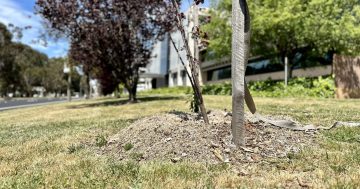
Some of those trees in the first image appear to have been ring-barked.

What are you on about?

Capital Retro10:56 am 13 Dec 25

They have cloth around them to hide the damage.

They are Christmas bows on the trees. This is the latest in Christmas decorations.

Capital Retro8:53 am 15 Dec 25

What a dumb idea.

Daily Digest

Want the best Canberra news delivered daily? Every day we package the most popular Region Canberra stories and send them straight to your inbox. Sign-up now for trusted local news that will never be behind a paywall.

By submitting your email address you are agreeing to Region Group's terms and conditions and privacy policy.