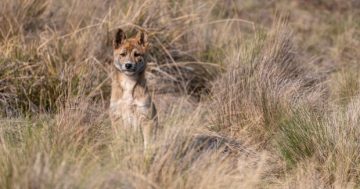
Population data for wombats is unreliable and outdated, the Conservation Council says. Photo: Ian Fraser.
Wombat culling to prevent damage to farm property and infrastructure could not be justified by the complaints of the few rural lease holders consulted and unreliable population data, according to the Conservation Council ACT Region.
In its formal response to the ACT Government’s Draft Technical Report on wombat management released last December, the council has urged the government to adopt a non-lethal, evidence-based framework for managing the region’s bare-nosed wombat population.
It strongly rejects the need for a Controlled Native Species Management Plan for the animal, a protected species.
Council executive director Simon Copland said active management and lethal control of wombats as set out in the draft paper were unjustified due to a profound lack of reliable data.
Dr Copland said the government’s report acknowledged a lack of reliable population estimates and relied instead on anecdotal evidence and 51-year-old reports to suggest population increases.
The council response says accurate population estimates are critical to understanding the true distribution and density of wombats, the number of active burrows and the prevalence of disease such as mange.
Traditional survey methods, including walking transects and incidental sightings, underestimate populations due to the nocturnal and burrow-dependent nature of the species.
The council says camera traps, drone-based aerial surveys and automated motion detection systems allow researchers to capture more reliable activity data while minimising disturbance to the animals.
Also, GPS collars or RFID (Radio Frequency Identification) tagging of select individuals provides insight into movement patterns, habitat use and social interactions, which is particularly paramount for planning non-lethal mitigation strategies on private land.
Dr Copland said the consultation process was flawed, with less than one per cent of rural landholders consulted and community members, developers and traditional custodians entirely excluded from the discussion.
“While we recognise that the concerns of many landholders about wombat management are real, we believe we need a much stronger evidence base to justify such a significant shift in policy,” Dr Copland said.
“Given these significant concerns, we do not believe there is a current evidence base to identify any need for the creation of a Controlled Native Species Management Plan for wombats, nor to allow for any form of lethal control of the species.”
The council recognised concerns about wombats’ impacts on land – although there were also environmental benefits – and of the impact of mange on species health, but Dr Copland said there were a variety of other non-lethal alternatives available to manage wombats.
The council urged the government to commit to and support landholders in non-lethal management such as the installation of wombat gates, burrow flaps (which deliver anti-parasite medication as wombats enter their burrows to treat mange) and fencing.
It recommends the expansion of pilot programs that involve farmers, wildlife carers and community volunteers to monitor and manage wombat populations, for example, the Community Mange Treatment Program.
Policy decisions should not be based on anecdotal reports but guided by accurate scientific evidence.
There should also be public awareness campaigns to build community understanding of wombat ecology, reproductive cycles and the consequences of lethal control.
Dr Copland said wombats acted as essential “ecosystem engineers” whose burrows enhanced soil health and provided critical refuge for other animals during bushfires and floods.
“By prioritising collaboration and evidence-based strategies, the ACT can mitigate landholder conflicts fairly while ensuring wombats continue to support the region’s biodiversity,” he said.