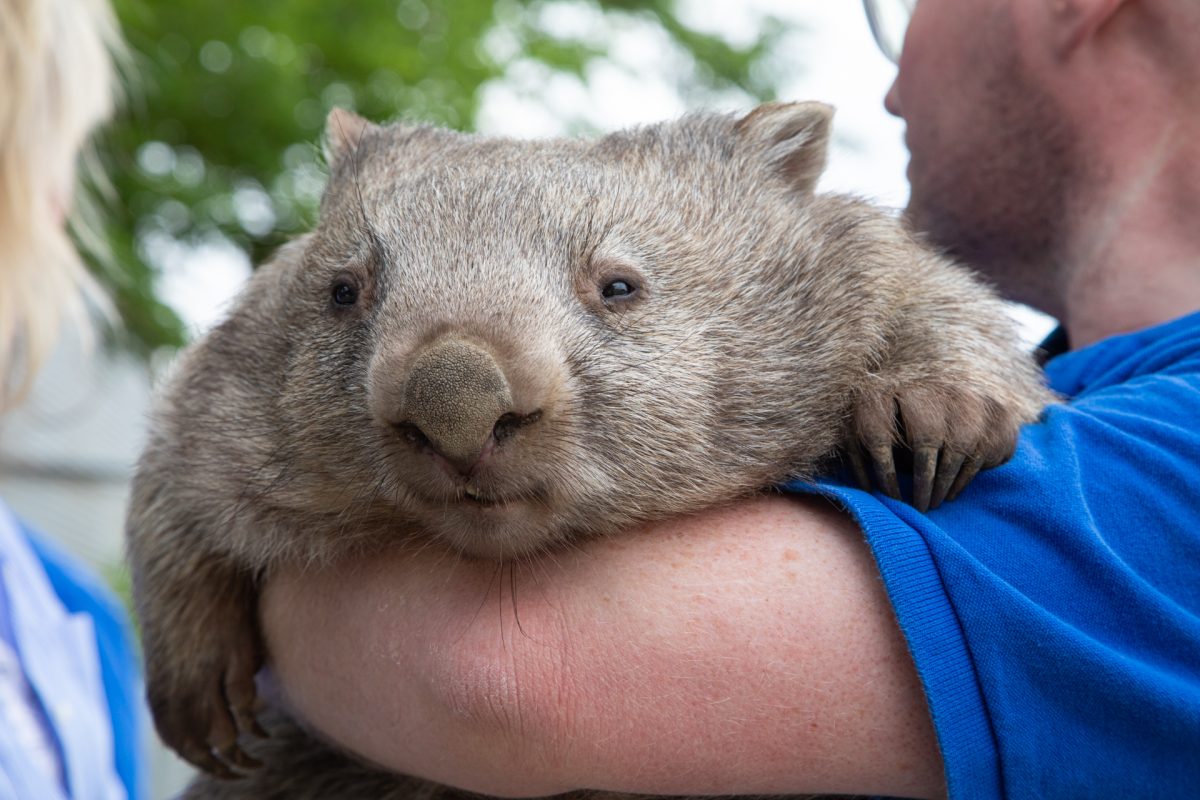
A draft technical report into the management of bare-nosed wombats suggests making them a controlled native species. Photo: Michelle Kroll.
Questions have been raised around how recommendations appeared in a draft technical report to look at re-classifying bare-nosed wombats as a controlled native species.
The suggestion to create a Controlled Native Species Management Plan (similar to what exists for eastern grey kangaroos) has drawn ire from conservation groups and led to fears there will come a day that wombats can be legally shot and killed in the Territory.
Now documents released under Freedom of Information requests by Kurrajong independent MLA Thomas Emerson have shown creating such a plan for wombats was not originally recommended.
He questioned how such a move appeared in the documents.
“[The documents state] ‘currently there is not enough information on the abundance or distribution of wombats within the ACT on which to base [such a] management decision’,” Mr Emerson said.
“There was no explicit mention of a culling program in the [early version’s] concluding recommendations.”
The early iterations of the report noted more research was needed to fill policy gaps to address wombat management in urban and agricultural areas, given “conflicts with wombats have traditionally been resolved using lethal controls”, particularly by land owners.
It also noted that creating policy around non-lethal management options was “hindered by a lack of quantitative evidence on their effectiveness and humaneness”.
Given this lack of evidence and that the ACT Government doesn’t have an estimate for the number of wombats either on public or private land, Mr Emerson questioned why it was included for consideration in the draft report.
“How we got from that early draft to a final draft technical review that made no reference to developing more evidence-based population estimates in the recommended section and instead suggested exploring options for culling, is an interesting question and quite concerning,” he said.
“The answer to an under-resourced conservation issue is not to jump to culling, it’s obviously to fund more research and more consultation so we can have the evidence base to make sound decisions.
“[Any actions] must be evidence-based … it’s not clear that’s actually happening at this point in time.”
Three of Canberra’s 381 farmers were consulted for the draft report, along with other stakeholders such as ACT Parks and Conservation, wombat care groups and Icon Water.
The only scientist consulted was Dr Scott Carver, a wildlife disease ecology researcher and a member of the City and Environment Directorate’s wombat working group.
He noted there were disagreements among stakeholders about best practice treatment methods of mange in wombats and whether euthanasia was more appropriate and that more research was needed.
“Dr Carver acknowledged leaseholders had conflicts with bare-nosed wombats and more research was necessary in this space, but it was outside his area of expertise,” the FOI documents noted.
No First Nations groups were consulted.
An ACT Government spokesperson has previously stressed that the final wombat management plan – informed by the current consultation and submissions to the draft report – would keep in line with community values.
“Any suggestion that these changes would authorise the indiscriminate shooting of wombats is unequivocally false and the protected native species status of wombats under the Nature Conservation Act would remain in place,” the spokesperson said.
“The draft review also includes pathways to protect wombats and manage conflicting management concerns and provide education on non-lethal management tools.
“The protection status of wombats is not being revoked or changed.”
Murrumbidgee MLA Dr Marisa Paterson took the chance during the debate on Mr Emerson’s comments to voice her support to continuing protecting wombats in the ACT.
Bare-nosed wombats have been fully protected in the ACT since 1918 and are also protected under Commonwealth law.
The ACT Greens have sponsored a petition, now tabled in the Legislative Assembly, calling for the government to rule out declaring bare-nosed wombats as a controlled native species, reject any policy “promoting the killing of wombats by landholders” and for all wombat-related policies to be required to use non-lethal, evidence-based “coexistence strategies”.