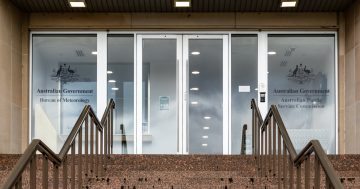
The Australian Public Service Commission says core APS work should still be mostly undertaken in-house, even though targets have been removed. Photo: Michelle Kroll.
The Federal Government has removed accountability targets aimed at limiting Australian Public Service agencies’ outsourcing of key public sector work, and the union is crying foul.
As negotiations begin over the next rounds of APS wages, the Community and Public Sector Union (CPSU) has warned that removing targets to reduce inappropriate outsourcing under the APS Strategic Commissioning Framework (SCF) is a bad move.
The union says the concerning development will let agencies off the hook and could drive even greater outsourcing of public sector work and reduce accountability.
There has already been a spike in the spending on temporary personnel and external procurement.
According to AusTender data, the value of temporary personnel services contracts — namely, labour hire and contract jobs — rose by $1.2 billion, from $2.33 billion to $3.53 billion, between 2024-25 and 2025-26.
CPSU deputy secretary Rebecca Fawcett said agencies increased their wasteful spending on temporary personnel services contracts by more than 50 per cent in the financial year timeframe even though they reported in 2025 that they outsourced little or no core work.
She said the union was concerned the government was rewarding agencies for failing to meet their targets. By removing targets, the government would give agencies the green light to engage labour hire and contracting firms instead of investing taxpayer dollars in trained and trusted public sector employees.
“Removing clear targets to reduce wasteful and ineffective outsourcing lets agencies off the hook at a time when we should be strengthening obligations to bring core public service work back in-house,” Ms Fawcett said.
“There are still around 1200 labour hire workers performing frontline contact centre roles at the NDIA, around 1800 outsourced call centre workers doing ATO work, and agencies are continuing to shift work in areas like the National Marine Unit to contractors.
“When agencies can look at those numbers and conclude there is little or no outsourced core work left to address, it is clear we cannot simply rely on agencies to mark their own homework.
“The Strategic Commissioning Framework was designed to drive transparency and accountability.
“Removing targets weakens both, at exactly the time we need stronger safeguards to ensure public sector work is done by public sector workers.”
The CPSU has given several examples of some APS agencies continuing to outsource core public service the union says should be insourced to public sector employees.
These include:
• 1800 call centre workers employed by multinationals Probe, Concentrix and Serco are still performing core service delivery work for the Australian Taxation Office;
• the Department of Home Affairs has outsourced more than 100 APS seagoing roles in the National Marine Unit to private contractors; and
• About 1180 labour hire workers remain at the National Disability Insurance Agency as at 30 April, 2026, many of whom are employed by Serco as the first point of contact in contact centres.
Last month, the CPSU made a submission to the Australian National Audit Office on ways to strengthen the effectiveness of the SCF so public sector work is performed by public sector workers wherever possible.
The CPSU is calling on the Albanese Government to investigate why the removal of targets to the APS SCF was made when spending on contractors and labour hire firms is increasing.
The Australian Public Service Commission recently updated the SCF and removed the targets, after many agencies reported minimal outsourcing.
The framework’s principles state keeping core work internal should remain a focus, with some exceptions.
“Procurement of the external workforce to deliver core work is appropriate in limited circumstances,” it states.
“Such as, where agencies are genuinely unable to fill a capability gap through recruitment and are unable to access expertise within the APS; or where there is a need for independent advice (for example, due to requirements in legislation or an assurance need) and it cannot be sourced from within the APS.
“This should be used on a one-off or limited basis.”