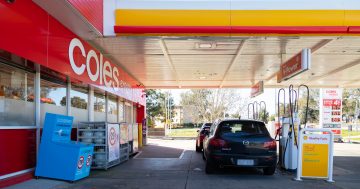
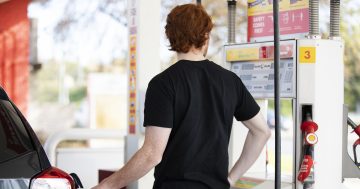
Wholesale petrol prices have jumped 4 cents per litre since the weekend. Photo: Michelle Kroll.
Motorists worried about a spike in petrol prices after the weekend’s US strikes on Iran are being told to take a breath.
Global oil prices did jump after the recent military escalation in the Middle East and the effective closure of the Strait of Hormuz – one of the world’s most important shipping lanes for oil.
But the NRMA says early signs suggest Australian drivers are unlikely to see record prices at the bowser.
NRMA spokesperson Peter Khoury said the key message for motorists right now is simple: “We just don’t want people to panic.”
“It has gone up, but it’s clearly not the record levels we were seeing in 2022 when the war on Ukraine began, and also the supply chain issues coming out of COVID.”
Diesel, however, could be a different story.
How serious is the situation for global oil supply?
The crisis has focused attention on the Strait of Hormuz, a narrow shipping route between Iran and Oman that acts as a gateway for much of the world’s oil.
Under normal conditions, about 20 million barrels of oil pass through the strait every day – roughly 20 per cent of global oil consumption and more than a quarter of all seaborne oil trade.
Most of that oil comes from major exporters in the Gulf such as Saudi Arabia, the United Arab Emirates, Iraq, Kuwait and Qatar.
Iran itself is also a significant exporter, shipping about 1.6 million barrels per day despite ongoing sanctions (even if it’s dwarfed by Saudi Arabia at around 6 million barrels, Russia at around 4.5 million, and the US at around 4.1 million).
While the strait isn’t formally blocked, Iranian Revolutionary Guard officials have threatened ships attempting to pass through, prompting shipping and insurance companies to pull back and find alternative routes.
Tanker traffic through the strait has reportedly dropped by around 70 per cent.
Because oil markets are global, disruptions in the Middle East quickly affect prices worldwide.
“What happens in the Middle East affects crude prices around the world,” Khoury said.
What’s happened to petrol prices so far?
Oil markets reacted quickly after the strikes.
The Asia-Pacific benchmark crude known as ‘Tapis’ rose $6 per barrel overnight, reaching about $80 per barrel – an increase of around 8 per cent.
Khoury said that’s the highest level since June last year, but still well below the peaks seen during the early stages of the Ukraine war in 2022.
The wholesale price for regular unleaded petrol has also climbed, but marginally – from US$1.53 US last week to US$1.57, or about 4 cents.
Changes in the global market typically take seven to 10 days to filter through to the bowser, so the ACT’s average price for regular unleaded is still sitting at $1.79 – roughly the same as last week. It was higher in December, at $1.86.

It seems some regional service stations are already bumping prices in preparation for Canberra’s long weekend. Photo: James Coleman.
Khoury said some regional towns like Braidwood and Bungendore may already be lifting prices, but this is more likely linked to the upcoming Canberra Day public holiday.
Comparisons with Sydney can also be misleading.
“We got a whole lot of panic here in Sydney because people saw $2.14,” Khoury said.
“But it was $2.14 at a bunch of service stations on Friday because Sydney’s at the top of the price cycle at the moment. Canberra doesn’t have a price cycle.”
What should drivers expect next?
Based on current wholesale figures, motorists may see a “modest” rise in petrol prices over the next week or two.
Khoury said the 4-cent jump in wholesale fuel is likely to translate to a similar increase at the bowser.
“If the wholesale price has gone up 4 cents, the general rule is you’ll see the same increase at the bowser,” he said.
“Some servos will go up by more than that, some will go up by less.”
He said a lot more would need to happen before prices approached anything like $2 per litre in Canberra.
“A lot would need to happen for it to crack $2 per litre at the bowser and go up another 18 cents on average,” he said.
Meanwhile, the benchmark price for diesel – known as gas oil – has jumped $22 per barrel to about $115. And Khoury said this surge could have much broader economic consequences if it continues.
“The economy runs on diesel,” he said.
“It’s transport, farming, agriculture, mining – it’s all diesel in Australia. And that has a flow-on effect. When the prices go up in the supermarket aisles, it’s normally because diesel’s gone up.”
For now, though, his message to Canberra drivers is to remain calm – and certainly not start “panic-buying” petrol.