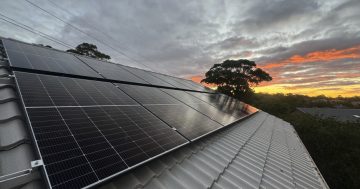


Canberra’s push towards fully electric buildings doesn’t have to be a drag. There are plenty of reasons why energy-efficiency upgrades make perfect sense for commercial owners. Photo: Michelle Kroll.
”Electrification” has become a bit of a buzzword in recent years.
It’s a daunting process for building owners staring down the upfront cost. But ”if it ain’t broke, don’t fix it” is no longer an option, especially when it comes to welcoming new tenants.
This isn’t about ticking a sustainability box, either.
The Commonwealth’s Net Zero in Government Operations Strategy sets out procurement and leasing standards for government office space. Since July 2025, ACT commercial premises over 1000 square metres must achieve a 5.5‑star NABERS score to secure government tenant leases of four years or more.
So, electrification is now a marker for whether lettable spaces will remain competitive.
Canberra’s commercial property market is heavily populated by government and corporate tenants — and they’re all looking for future-ready buildings.
When the new owners of a prominent Phillip address started lease negotiations with a high-profile government tenant, their first point of call was to bring the building in line with procurement standards.
This meant 100 per cent electrification, which is no small task for a 4000 sqm building.
While the building’s owners mapped out the long-term financial plan, property manager Civium actioned the electrification works.
Civium’s director of commercial property management Kym Lovett says bringing the building up to standard was fairly straightforward once the logistics were ironed out.
“We replaced the existing gas hot water with electric units, installed solar to power common areas and the anchor tenant office, overhauled basement lighting with brand-new LEDs and a sensor system, and also installed trickle EV chargers down there for extra value,” he says.
“The biggest challenge was minimising disruptions to current tenants while all this went on.”

Civium’s director of commercial property management Kym Lovett worked to source competitive quotes, coordinate contractors and suppliers, and supervise installations while keeping the day-to-day smooth for building tenants. Photo: Civium.
The upgrades took around 18 months from start to finish and cost the owners $121,300. That’s a significant investment — but rapid, tangible savings made these upgrades well worth the trouble.
“Combined gas and electricity costs for the building were around $40,000 per annum in 2023,” Kym says.
“This has since dropped to $21,500, delivering an immediate saving of $18,100.
“That’s a significant 14.9 per cent return on their investment.”
Beyond the immediate benefits, upgrades also strengthened the property’s long-term value by an implied $225,000, based on an 8 per cent capitalisation rate.
There are plenty of government-led incentives to help commercial building owners make the electrification switch.
They include the Sustainable Business Program, through which eligible businesses can access up to $10,000 to help with energy- and water-efficiency upgrades, plus an additional $3000 to go towards EV charging infrastructure.
Under the broader energy transition framework, the ACT Government promotes specific rebates to switch from fossil‑fuel gas to efficient electric appliances. Small and medium-sized businesses can access up to $10,000 specifically for gas‑to‑electric upgrades, and up to $5000 for electric‑to‑electric appliance upgrades.
Kym’s advice to new building owners is to start their cost-benefit analysis for electrification early.
“If you think serious upgrades are in order, don’t sit on the fence too long. Retrofitting will likely get more expensive as time goes on,” he says.
“Take advantage of government rebates to lower initial costs. If you’re not sure about the logistics side, don’t be afraid to engage an experienced property manager for help.”
For more information, visit Civium Canberra: Commercial.