Chief Minister Andrew Barr and Planning Minister Chris Steel believe the data centre issue can be resolved. Photo: Michelle Kroll.
More data centres are welcome in the ACT, but they will have to provide their own renewable energy sources, according to Chief Minister Andrew Barr.
The energy- and water-hungry sector is booming as artificial intelligence tools become more widely available and adopted by industry and the public sector, but it is clouded by environmental and supply concerns.
Answering a question for the floor after delivering his State of the Territory address last week, Mr Barr said managing AI development was a challenge for government, which could be one of AI’s main beneficiaries.
The Australian Energy Market Commission (AEMC) has released a draft rule proposing new technical standards for large data centres and similar facilities connecting to the National Electricity Market.
The new standards aim to ensure grid stability and prevent outages.
Mr Barr said the ACT’s current 100 per cent renewable energy supply status would survive as the data centre sector expanded in the ACT.
“We can work with data centre operators around their energy needs, essentially requiring any new large energy users to bring with them a renewable energy solution as part of their data centre proposition,” he said.
Mr Barr said the ACT’s current water supply could cope for another 10 to 15 years, but the government faced a decision after that, in part due to NSW local government making claims on the supply.
“We are very conscious of that water supply challenge,” Mr Barr said.
But Planning Minister Chris Steel told the same event that some of the ACT’s local data centre companies, such as Data Pod, were leading the way in technology, which meant data centres did not need much water to keep servers cool.
Data Pod had actually exported this tech to the Middle East.

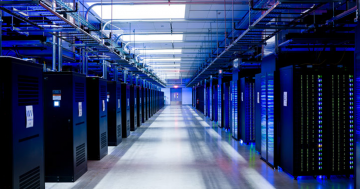
Data centres can use a lot of energy and water, but there are low-water-use options. Photo: Canberra Data Centres.
The other issue for the ACT was that it does not have a lot of land to spare for data centres.
Mr Steel said the real opportunity in the ACT was the export of high-level skills in this area.
“I expect we’ll have more as time goes on and we’ll work with the Commonwealth and the other states and territories on the appropriate planning and environmental approval processes that might support these nationally significant projects, within reason, of course, and in an environmentally sensitive way,” he said.
Mr Steel said the roundtable that Federal Treasurer Jim Chalmers held last year with data centre companies and investors looked at ways to streamline the ability of firms to take up these opportunities in Australia, so the nation was not left behind “in this massive AI transformation”.
He said other states were also working on rules to ensure data centres contributed to energy supply, moved to sustainable sources and how that related to the broader climate change challenge.
“These things can be resolved, and there’s significant joined up work that’s occurring across the states and territories to ensure that that’s the case,” Mr Steel said.
A cautiously optimistic Mr Barr said AI offered government a great opportunity to provide better services at less cost.
“How do we possibly deliver all the services to the standard that the community wants? Well, AI can dramatically help much of our existing workforce to be more productive, to produce more public sector output,” he said.
“Now AI can’t be the solution in every instance, but it certainly is in many.”