7 August 2026

Failed Wright land auction prompts calls for government to ditch focus on apartments

| By Ian Bushnell
Join the conversation
54

No interest: The site in Wright that the SLA can’t sell. Photo: SLA.

The failed auction of a prime corner block in Wright should force the ACT Government to rethink its land release priorities to focus more on townhouses and house and land packages instead of attempting to feed an already glutted apartment market, according to a prominent industry figure.

The Suburban Land Agency auction of Wright Section 39, Block 1 on Wednesday did not attract any registered bidders, despite relaxed sale conditions.

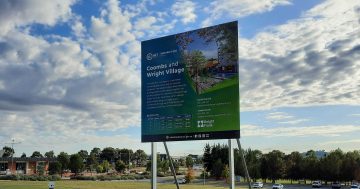
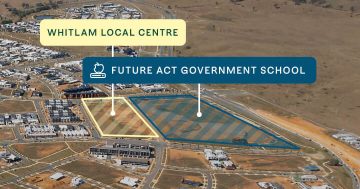
The 12,200 square metre site on the corner of John Gorton Drive and Steve Irwin Avenue is planned to be part of the proposed Coombs-Wright village.

It is one of three blocks on the major intersection that will comprise the village. The SLA pulled the blocks from the market last year after a failed Expression of Interest campaign.

This new sale was expected to get a result after the SLA acknowledged that the previous sale conditions were too onerous.

The site can deliver 240 dwellings, but included a requirement for up to 27 affordable units and 10 for community housing. Up to 10 storeys can be built on the corner.

“Flexible CZ5 zoning means more possibility with how the location takes shape — with the site designed to seamlessly integrate with future transport connectivity, including future light rail and rapid bus, ” the SLA said in its sales brochure.

READ ALSO 'Disappointing': Revamp for Coombs, Wright Village design as land sales cancelled after four years

But Colliers’ national director of development Paul Powderly said blocks like these were expensive to develop and the demand was not there for apartments, with thousands more still available and in the pipeline, including up the road in Denman Prospect.

Mr Powderly said tough market conditions, including falling prices, rising construction and borrowing costs, were making it harder and harder to build multi-unit developments with basements, which were much more expensive to build than townhouses.

The inclusion of affordable and public housing only increased the risk for developers and made projects harder to stack up.

Colliers had presented to the SLA and Chief Minister Andrew Barr, telling them that the land release program, of which 90 per cent were for apartments, needed to include more townhouse developments and house blocks.

“We’re producing too many sites that are apartments only and that’s not what the market wants,” Mr Powderly said.

“What we were saying to the government is you need to get a bit more house and land packages in your pipeline and some more townhouse sites.

“For example, there’s one site in Lawson [about] which we said to the government, ‘it’s got approval for 90 or 100 units, it’s probably better that someone will buy it for 30 townhouses’.”

But the problem was that the government was running out of land within the city limits and did not want to drop the density because it needed to get its numbers up for the land release program, despite all the talk about the missing middle.

READ ALSO ACT Government needs to rethink apartment-heavy land release program

An SLA spokesperson said the agency would review the market feedback and this would inform next steps for the Wright site.

Property Council ACT & Capital Region executive director Ashlee Berry said the failed sale raised questions about the state of the market and the government response to it.

She said the SLA and government should be asking what the failure meant for the current environment for housing and what it meant for the remaining sites up for sale this year.

“What concerns us the most about yesterday’s outcome is that this site has already been through a previous failed sale process and was brought back to market with increased flexibility on development conditions, to try and improve its attractiveness to investors,” she said.

“The fact that it still had no registered bidders confirms there are broader issues with development feasibility that we can no longer ignore.”

Ms Berry said land was only one factor. Projects must be commercially viable for homes to be built.

“The result at Wright should prompt a serious discussion about the cumulative impact of taxes, charges, the price of land, construction costs and development requirements on the delivery of new housing,” she said.


Free Daily Digest

Want the best Canberra news delivered daily? We package the most-read Canberra stories and send them to your inbox. Sign-up now for trusted local news that will never be behind a paywall.
Loading
By submitting your email address you are agreeing to Region Group's terms and conditions and privacy policy.

Join the conversation

54
All Comments
  • All Comments
  • Website Comments
LatestOldest

One can hardly criticise developers for wanting a profit when of course the land is so expensive because the ACT Government itself wants a profit.

The ACT Government should focus on releasing cheaper land. I have it on good authority that a bloke valuing land in the ACT is selling land over the border with the claim that it’s cheaper than in the ACT!

And remember those Mr Fluffy blocks? The government artificially inflated the value of the land, and then used those blocks as a ‘baseline’ for the unimproved land value off which that suburb’s rates are based.

Capital Retro12:11 pm 08 Aug 26

Speaking of ACT Government profits on land sales, what is the situation with the great joint venture with Riverview Developments in West Belconnen/Ginninderry?

https://suburbanland.act.gov.au/our-places/ginninderry

Developers also need to share some of the blame for the lack of interest in these types of apartments. Poor designs make many apartments unattractive and too expensive to potential buyers/renters. They keep trying to shove in features of full size houses in units with small overall space (such as too many bathrooms) which not only takes away living space, it also increases the cost. Apartments, designed for 1-2 people, do not need 2-3 toilets.

Marios Arvanitis9:40 pm 07 Aug 26

As a real estate agent and former property investor, the fact this didn’t sell comes as no surprise to me.
There are plenty of reasons, but here are a few.
Building costs are sky high, government charges and red tape continue to add to development costs, and we’re already saturated with apartments. In many areas, selling established units is challenging enough without adding more supply.

Meanwhile, the market is crying out for something completely different — genuinely single-storey, 2 and 3-bedroom homes and townhouses.

We have an ageing population of Baby Boomers sitting in large family homes on big blocks who would happily downsize, free up some capital and move into something smaller and easier to maintain.

The problem? There’s very little for them to move into!

Governments seem to love apartments — more density, more rates and more revenue. Everyday buyers? Not necessarily.

I could go on, but the fact this didn’t sell certainly doesn’t shock me.

And if you do need an apartment… give me a call. There are plenty of established ones I could sell you! 😉

Capital Retro8:43 pm 08 Aug 26

You are spot on about baby boomers needs when wanting to downsize Marios.

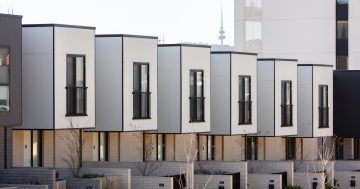
The last thing we want is a narrow townhouse with 4 levels, single level with no steps and access for ambulance is essential.

And this government is still not giving any meaningful incentives for us to move down.

What I don’t understand is all the new town houses in Molonglo seem to have gas meters when the Government wants us to kick the gas habit. Seems to be added cost for no benefit.

Capital Retro8:39 pm 08 Aug 26

Probably a legacy concession whereby the development had already received a valid Development Application (DA) or Building Approval (BA) before the rules took effect.

When total development costs—comprising land, $3,000–$4,200/m² construction rates, Lease Variation Charges (LVC), and elevated holding finance—exceed the valuation of existing stock, standard greenfield or suburban development feasibility doesn’t stack up at all. The government makes it prohibitive to start, assumes no risk and reaps most of the reward. You would be nuts to try and develop in Canberra.

Daily Digest

Want the best Canberra news delivered daily? Every day we package the most popular Region Canberra stories and send them straight to your inbox. Sign-up now for trusted local news that will never be behind a paywall.

By submitting your email address you are agreeing to Region Group's terms and conditions and privacy policy.