14 May 2026

Feds pulling the plug on EV tax breaks ... but you've still got time

| By James Coleman
Join the conversation
28

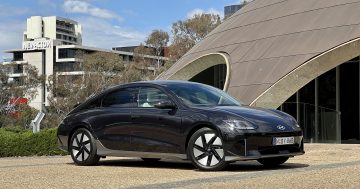
EV drivers will continue to receive a 25 per cent discount on FBT from April 2029. Photo: James Coleman.

A key tax break helping Australians buy electric vehicles will be wound back from next year as the Federal Government moves to claw back $1.7 billion over five years.

The upcoming budget will scale back the fringe benefits tax (FBT) exemption – known as the Electric Car Discount – for EVs under novated leases, starting in April 2027.

Under the changes, EVs priced above $75,000 will lose access to the exemption from that date. Cheaper models will also see support gradually reduced, before the scheme shifts to a flat 25 per cent FBT discount by April 2029 for vehicles below the luxury car tax threshold.

Treasurer Jim Chalmers and Energy Minister Chris Bowen said the changes reflected a maturing EV market.

“The current New Vehicle Efficiency Standards has seen a dramatic increase in the availability of affordable EV models, and now is the right time to focus the FBT exemption on these cars,” they said in a joint statement.

READ ALSO Canberra dealerships bracing for wave of EV buyers

The transition will happen in three phases. The current full exemption remains until March 2027. From April 2027 to April 2029, only EVs priced at $75,000 or less will qualify for the full benefit. After that, a reduced 25 per cent discount will apply to eligible vehicles.

Existing leases will not be affected, and EVs will remain exempt from import tariffs.

The government says the scheme has successfully boosted uptake, cut emissions and helped shield drivers from global fuel price shocks – but argues it now needs to be better targeted.

“This is all part of our government’s plan to address the immediate pressures our country is facing at the same time as we deliver support for Australian families and address our intergenerational responsibilities,” the ministers said in a joint statement.

When Anthony Albanese took office in 2022, only two EVs were available under $40,000. Today, there are about 10, including one priced below $30,000.

EVs now account for 16.4 per cent of new car sales – roughly one in six vehicles sold.

Volvo, BYD, Polestar car dealership, Melrose Drive, Phillip ACT.

BYD was the second-best-selling car brand in Australia in April after Toyota. Photo: James Coleman.

Industry groups have cautiously welcomed the changes. The Australian Automotive Dealer Association said the reforms were “pragmatic”, as long as incentives remain accessible.

CEO James Voortman said the government must now focus on the broader impacts of the transition, including charging infrastructure and support for small businesses.

“This includes greater investment in the electricity grid for installation of charging infrastructure, legislating franchising protections and protecting small businesses who need light commercial vehicles,” he said.

He also warned dealers could face pressure as emissions standards tighten under the New Vehicle Efficiency Standard.

“Electric vehicles have not been, and are not, the top-selling vehicles. When the NVES policy settings are tightened, Australian new car dealers will need to be shielded to protect the more than 64,000 Australians they employ,” Mr Voortman said.

READ ALSO Car dealers say fuel excise cut not enough, it's time for a 'root and branch review' of all car taxes

EV momentum does continue to build. Data from the Federal Chamber of Automotive Industries shows April 2026 was a record month for sales, with 92,591 vehicles sold overall – up 2.2 per cent year-on-year.

FCAI chief executive Tony Weber said the continuation of incentives, even in reduced form, would support further growth.

“There are around 110 EV models available to Australians, and the supply of EVs continues to increase,” he said.

But he also warned that infrastructure must keep up with demand.

“Stronger EV uptake is driving increased demand for public charging, and that demand must be matched by a step change in both public and private investment.”

Full details of the changes will be confirmed when the federal budget is handed down on 12 May.

Free Daily Digest

Want the best Canberra news delivered daily? We package the most-read Canberra stories and send them to your inbox. Sign-up now for trusted local news that will never be behind a paywall.
Loading
By submitting your email address you are agreeing to Region Group's terms and conditions and privacy policy.

Join the conversation

28
All Comments
  • All Comments
  • Website Comments
LatestOldest
Saul Goodman7:40 am 11 May 26

funny how those who complain bitterly about “EV taxpayer subsidies” are never also complaining about constant fossil fuel taxpayer subsidies 🙄

and why is that?

Capital Retro8:49 am 11 May 26

Which fossil fuel subsidies are you talking about, Saul?

Yes CR was wondering the same. Some of these people seem to think being forced to pay tax for something that’s not taxable, then getting a long-overdue refund, is a “taxpayer subsidy”.

A few Kerry Packer quotes come to mind here.

Thanks for the confirmation Saul. The Australia Institute is hardly a source of creditable economic information. 2/3rds of what they claim as a “subsidy” is the fuel tax credits scheme, which is no subsidy at all. It’s the refund of road use tax charged for vehicles which don’t use the roads.

Most of the rest is “concessional rates of excise”, meaning TAI don’t like the tax rate applied to stuff so claim it’s a “concession”. Most people don’t fall for this baloney, but clearly some do. They’re a greens mouthpiece, voodoo economics.

Capital Retro2:03 pm 11 May 26

Amazing how many people accept the crap that The Australia Institute promulgate.

Thanks for explaining (again) Penfold how false their spin is.

LOL, using spin to attempt claiming others are using spin 😂

You are close to being right about one thing though CR, it is amazing how many people fall for it.

Penfold starts with a falsehood then spins it further.

If the FTC were not a subsidy then none of those currently benefitting from it would object to having it imposed on them in the future, nor would any other fuel user benefit from having theirs removed.

Propagandist Penfold has never been interested in facts or analysis. He simply hopes others fall for his nonsense, and Capital Retro is right there in the charge.

Axon – nice of you to pop up again demonstring the wide chasm between economics and Axonomics. You almost got there yourself – the term “credit” should have been the giveaway. As you’ve been unable to ask Dr Google to help you out with this basic premise, perhaps the ATO can help:

“Fuel tax credits provide businesses with a credit for the fuel tax (excise or customs duty) that’s included in the price of fuel”.

Now there’s even more complexity i’m afraid because it introduces you to a new concept – an accounting one called debits and credits. Or to make it more digestable for you – ying and yang. You can even follow it on the abacus.

Btw subsidies aren’t imposed on people, they’re the beneficiaries thereof. Damn that English terminology !

Pengold,
What is the definition of a subsidy?

100% guarantee he won’t directly answer this basic question.

The groupthink talking points haven’t stretched that far yet. Along with the rest of economics, maths, science, well any topic that requires some independent thought really.

And why not TODAY they have had a pretty good run.

Capital Retro11:54 am 09 May 26

Well may you say “but you’ve still got time” because you won’t have the electricity you need to power them (no matter how much they give you in tax breaks and subsidies).

So says Capital Retro in 2015, 2020, 2025, 2030……..

And yet, stubbornly the electricity grid refuses to follow his forecasts.

Daily Digest

Want the best Canberra news delivered daily? Every day we package the most popular Region Canberra stories and send them straight to your inbox. Sign-up now for trusted local news that will never be behind a paywall.

By submitting your email address you are agreeing to Region Group's terms and conditions and privacy policy.