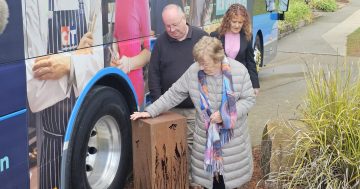
Governor-General Samantha Mostyn with school students at the 2025 Gift of Life Walk at Lake Burley Griffin. Photo: DonateLife ACT.
Before we’re old enough to get a driver’s licence or vote comes a choice that could alter lives.
In Australia you can register to become an organ donor at just 16, making it many teenagers’ first major life decision.
Raised in an era of the growing “death positivity” movement, today’s youths are proving to be remarkably open to conversations once thought too confronting for adults, let alone teenagers.
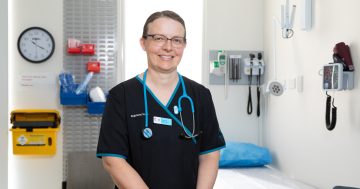
This unflinching nature is something Nardine Johnson observes daily as coordinator for the Prevent Alcohol and Risk-Related Trauma in Youth, or PARTY Program – a dynamic hospital and high school-based injury awareness and prevention program aimed at 15 to 25-year-olds.
In the hospital setting, students move from the Emergency Department to the Intensive Care Unit, hearing from trauma experts, police collision teams and people with lived experience of road trauma.
For the past two years, the program has also included DonateLife, the national program that leads organ and tissue donation efforts.
PARTY has provided a unique window for DonateLife to reach a demographic it wouldn’t typically have access to.
“It’s a chance to open up the organ donation conversation and talk about something that may be shied away from in normal conversations,” Nardine says.
The success of the program lies in the fact that it is no simple talkfest; it is a two-way dialogue where students ask the pointy questions.
“I generally find students don’t shy away from talking about these more complex and thought-provoking scenarios,” Nardine says.
DonateLife will typically field questions about how donation works, what organs or types of tissue can be donated and who gives consent. But usually, presenters start the conversation with a simple question: Have you ever discussed organ donation with your loved ones?
“For many students, it’s the first time the conversation has come up,” Nardine says. “Our hope is it opens up the discussion at home.”
That conversation is close to Georgia Bartlett’s heart, a PARTY program volunteer who shares her raw, personal story with students at Canberra Hospital.
Georgia was 16 when her mother suffered a sudden brain bleed and never woke up.
The family’s decision to donate her mother’s organs was made easy thanks to the open culture of her home.
“My mother was a very practical person. We knew she would be of the mind that if she wasn’t using her organs and if she could help others, she would,” Georgia says.
“She was a registered organ donor, but she had also had the conversation with my older siblings. There were never taboo topics in our household – if we had a question, we could ask it and she would answer to the best of her ability.
“That openness and willingness to discuss anything made my teenage years quite lovely.”
Georgia registered her own intention to become a donor at 16 and officially joined the register at 18.
She believes the cusp of adulthood is a prime time for these discussions, noting that her generation, with its unprecedented access to real-world issues via social media, is more resigned, if not comfortable, with the realities of road safety and mortality.
“At the end of the day, it’s better to have the conversation about organ donation and say no than to leave loved ones without a clue about your wishes,” she says.
The data supports this; family members are significantly more likely to consent to donation if they know their loved one’s wishes.
“Even if you’re registered, if you haven’t had the discussion, your family doesn’t necessarily understand how important it was to you,” Nardine says. “Then they may very well not follow through with your wishes.”
The impact of that “yes” is life-changing. In 2025, there were 13 organ and tissue donors and two intended donors in the ACT. Their generosity transformed the lives of 42 Australians and their families, while 17 eye tissue donors restored sight to 32 grateful recipients.
For more information to help start the conversation today, or to register for organ and tissue donation, visit DonateLife.
Region Media Partner Content