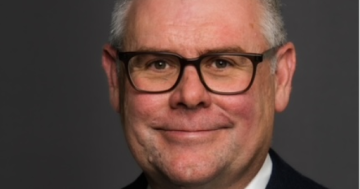
The Federal Government is cutting red tape for charities. Photo: File.
Red tape for the charities sector is being reduced through a better alignment of the corporate regulator’s register and the charities commission’s register, which the Federal Government hopes will help draw Australians back to a more generous sense of giving.
The government is committing just over $2 million today (10 June) to facilitate the change and free up charities to spend fewer hours filing duplicate forms and more time doing the work they were created to do.
Assistant Minister for Charities Andrew Leigh will make the announcement at a lunchtime National Press Club address today, during which he will also flag changes to giving funds.
These changes include lifting the minimum distribution to 6 per cent of net assets, which is expected to deliver an extra $60 million a year to charities.
“For too long, mismatches between the corporate regulator’s register and the charities commission’s register have meant information entered in one place has not always flowed neatly to the other,” Dr Leigh will say.
“Good regulation should protect trust while preserving purpose. The aim is regulation with a backbone, rather than regulation with a clipboard addiction … Over recent decades, the number of Australian associations per person has fallen by four-fifths, and the share of people involved in social, civic and political groups has declined.
“Across a dozen large organisations, the membership rate is down by three-quarters since the mid-1960s.
“The share of people attending a religious service at least once a month fell from half the population in the late 1940s to one in seven. Union membership has gone down from half the workforce in the early 1980s to one in eight.
“Compared with past decades, Australians are less satisfied with democracy, and less interested in elections.
“On the playing field, three-fifths of sports, including tennis, golf, cricket and rugby, are on the wane. Australians are giving up organised sports in favour of unorganised activities such as walking and gym-going.”
The Australian Bureau of Statistics’ General Social Survey suggests this pattern is continuing.
From 2019 to 2025, the share of Australians who agreed that most people can be trusted fell from 55 per cent to 50 per cent, according to the latest survey.
It found formal volunteering through an organisation fell from 30 per cent to 23 per cent; involvement in social groups fell from 51 per cent to 45 per cent; in community support groups, involvement fell from 25 per cent to 21 per cent; and in civic and political groups, it fell from 9 per cent to 7 per cent.
“That is a lot of decline for one survey. If civic life were a cricket team, our nation would be standing at long-on, wondering why only seven people had turned up,” Dr Leigh says.
“Australia remains, by global standards, a generous and cohesive country. Yet the broad pattern is plain. Civic life has thinned. Fewer volunteers. Fewer joiners. Less trust.
“That should concern every Australian. A country with fewer volunteers, fewer joiners and less trust is a country with a thinner safety net beneath daily life.
“After fires and floods, Australians are magnificent. We donate, cook, shovel and comfort.
“The question is how to carry some of that spirit into ordinary times. How to make generosity less episodic and more durable. How to turn helping into joining.
“This is where charities come in. A charity is often where an Australian first learns that citizenship is a verb.”
The government is calling for community foundations to become an ordinary feature of Australian civic life by 2036.
Stressing this, the Assistant Minister wants to make bequest-giving a normal part of estate planning, and he proposes a charity digital compact between charities, business, universities, philanthropy and skilled volunteers.
“Charities do more than deliver services,” Dr Leigh says.
“They create belonging; they carry memory; they build trust by giving people repeated opportunities to work alongside others … A strong democracy needs institutions between the individual and the state.
“Families, unions, churches, schools, clubs, local media, cultural bodies, charities, neighbourhood organisations and beer-brewing clubs all do this work.
“They help people practise cooperation. They give citizens a place to speak, serve and belong.
“One of the great errors in public debate is to treat charities as subcontractors for government.
“Many charities do deliver programs, often with public support. Yet their value runs deeper.
“Charities can see where official systems are missing people. They can advocate. They can innovate. They can ask uncomfortable questions.
“A confident democracy lets charities speak.”