6 July 2026

Half a million people in Canberra by 2030 — here's the plan for more homes

| By Dione David
Join the conversation
16
woman standing at kitchen bench

North Wright Sustainable Precinct resident Sara Hanley is proof that functional, sustainable living is within reach for Canberrans. Photo: SLA.

Sara Hanley knew the simple, functional features needed for a home built for the way she actually lived.

It would be a single-level house, separately titled and cost-efficient to run.

Sara found this dream home in the North Wright Sustainable Precinct.

The boutique house-and-land development by the Suburban Land Agency comprises architecturally designed, all-electric homes aimed at achieving net-zero carbon footprints.

The separately titled homes feature compact, adaptable floor plans, rooftop solar and heat recovery to minimise electricity bills, and access to open spaces that foster community connection.

North Wright Sustainable Precinct is one of the numerous developments delivering on the ACT Government’s long-term strategy to pave the way to house the projected 500,000 residents expected to call Canberra home by 2030, without sacrificing what makes Canberra special.

Other recent developments include the ACT’s first Built to Rent to Buy in Strathnairn and affordable housing developments underway in Curtin and Taylor.

READ ALSO It's not just about more housing in 2026, they have to be real homes

At its core is a commitment to pave the way for 30,000 new homes, including 5000 public, community and affordable homes.

To get there, the government is streamlining the process — updating zoning, improving planning approval wait times and focusing on town centres and transport routes to make better use of existing infrastructure.

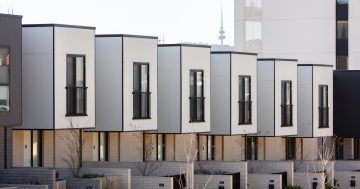
Alongside efficiency measures, the ‘Missing Middle Housing Reforms’ tackle the gap between detached houses and apartments, by making it easier to build townhouses, duplexes, terrace homes and low-rise apartments.

Rather than starting from scratch every time, a Canberra House Pattern Book of pre-approved, high-quality missing-middle housing designs is underway to help builders get to work faster.

“These reforms are expected to help people find more homes that suit their personal circumstances while delivering wider city benefits,” ACT Government Coordinator-General Housing Sam Engele says.

“Missing middle housing supports younger people seeking suburban living without a detached house, downsizers wanting to stay in their neighbourhood, and smaller households looking for well‑located homes.”

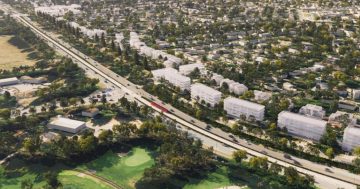
The Missing Middle Housing Reforms aim to address the gap between detached houses and apartments by paving the way for medium-density complexes scaled for suburbia. Photo: ACT Government.

Rather than presenting building out as the only way to address space constraints and rising populations, the reforms focus on smarter growth — such as clearing pathways for more housing around light rail and rapid bus corridors, so people can easily get where they need to go.

“The government is focused on design to make those transport corridors interesting, safe and useful places that people choose to spend time in,” Sam says.

In established suburbs, the focus is on well-designed infill that retains existing character.

“Done well, the streets stay leafy and familiar, with growth absorbed into the neighbourhood,” Sam says.

Making this vision work requires recognising that the way Canberrans use their city has fundamentally changed.

As an example, a Canberran’s daily life is less anchored to Civic and the town centres than it once was.

“More people mix work, study and caring responsibilities across the week, both in the office and at home, compared to the traditional 9-to-5 pattern,” Sam says.

READ ALSO 'Canberra needs homes!' ACT shifts gears on Planning to unleash the missing middle

The government’s strategy aims to support Canberra’s population growth while maintaining a functional and inclusive city.

“In 20 years, success should not be measured by a single project or skyline, but by how well Canberra functions as a city,” Sam says.

“More focused on the community outcomes: whether Canberra remains a young city where people on ordinary incomes can still build a life.

“There are many examples of cities that have got this wrong and quietly driven the next generation away. Thankfully, Canberra has all the ingredients to avoid this fate.”

For more information on the ACT Government’s Housing approach, visit Homes for CBR.

‘Half a million in Canberra by 2030’ is produced by Region in partnership with the ACT Government.

Region Media Partner Content

Join the conversation

16
All Comments
  • All Comments
  • Website Comments
LatestOldest
Gregg Heldon8:42 am 03 Jul 26

Of course the other problem is land banking. Like the old Strathgordon Court. What Village Building Company did with the old AFP complex in Weston.
It should be mandated that if a building company/developer purchases land, building must start with 30 months or it is handed back to the Government with only 10% refund.
Strathgordon Court has been sitting empty (except for a shipping container with a Porsche next to it) for about 6 years now.
Why? Why has it been allowed to happen? Why has no development been advertised? Why has no development been signed off?

I really would think Canberra’s real population would be around 700,000 and has exceeded 500,000 some time ago. There is so many here in other state registered vehicles and don’t switch them over. On census night I wouldn’t be surprised if those filling in their census return whilst sitting in a house of unit in Canberra is actually making out that they are still in Queensland or Sydney, as long as they don’t (in their minds) indicate they’re in Canberra. I also bet those residing in the various high rises around city centres are not actually completing the census at all. Especially those that are on visas of whatever type and not indicating in anyway that they are sleeping overnight across many months or years in Canberra. An actual Population of 500,000 has already been reached and exceeded and really far closer to 700,000 .

PaperTigerGovt9:32 am 02 Jul 26

One problem is that the big building companies with deep pockets are allowed to buy up multiple blocks in an area. They can then build and release as they like, maximising their profit. Land should only be sold, one block only, to the eventual owner, who then engages a builder for their house. This way the owner can get the house they want, rather than the house the builder has determined they should have because it’s already been built.

Mike Van Der Zwart9:30 pm 01 Jul 26

yeah, it reeks of greed. The blocks are so small too. Up until very recently minimum lot sizes were a law but local government and councils changed the laws to suit their need ahgm greed. Half a million dollars before you even dig the earth for a 350m2 plot. It is abhorrent and sickening. Not only did the goal posts move but they stopped the locals from being allowed to play. Since ever I can remember , media commentators have called out the ACT government and its little bureaucracies such as the SLA for nepotism and the like. It’s a good bet that there are a lot of people getting very very rich for doing absolutely nothing in this space.

Mike Van Der Zwart9:26 pm 01 Jul 26

yeah, it reeks of greed. The blocks are so small too. Up until very recently minimum lot sizes were a law but local government and councils changed the laws to suit their greed. Half a million dollars before you even dig the earth for a 350m2 plot. It is abhorrent and sickening. Not only did the goal posts move but they stopped the locals from being allowed to play. Since ever I can remember , media commentators have called out the ACT government and its little bureaucracies such as the SLA for nepotism and the like. It’s a good bet that there are a lot of people getting very very rich for doing absolutely nothing in this space.

Gregg Heldon5:12 pm 30 Jun 26

They may be functional and sustainable, but they’re not really that affordable.
We had a look at them late last year but decided not to go ahead because of their cost.

Mike Van Der Zwart9:26 pm 01 Jul 26

yeah, it reeks of greed. The blocks are so small too. Up until very recently minimum lot sizes were a law but local government and councils changed the laws to suit their greed. Half a million dollars before you even dig the earth for a 350m2 plot. It is abhorrent and sickening. Not only did the goal posts move but they stopped the locals from being allowed to play. Since ever I can remember , media commentators have called out the ACT government and its little bureaucracies such as the SLA for nepotism and the like. It’s a good bet that there are a lot of people getting very very rich for doing absolutely nothing in this space.

Ray Whitehead3:55 pm 30 Jun 26

I appuld the optimism of the article. However as we have seen over the last 30 years of rampant privatisation, the private sector will not build massive amounts of homes to flood the market. The biggest loser has been public housing. Governments have tried to exit the market by offering modest subsidies for people who really can’t afford to be in the private market. Over this time, this has been actively undermined by the private sector that just raises rents by the same amount that the subsidy goes up.
Also, the private building market is ill suited to build the massive number of public houses that are required just to meet the current demand. The private market is structred to extract as much profit as posdsible for the least amount of responsibility. And thats fair, it is private enterprise after all.
To solve the housing crisis and the trades crisis, the Gov needs to get back into the business of building public houses and infrastructure. They need the massive apprentice schemes of the 60″ 70″s and 80″s. By removing all the government demand from the private system, it will allow the private market to better support private buyers.
All this was done by Menzies in the 50’s. Public houses were built by the government, they had a pattern book of a few different designs to streamline the construction. GTovernments have to just own up and admit the great privatisation experiment has been an abject failure.

Forget for a moment that’s it’s KPMG, as appalling as that is, why on earth would any Government agency be contracting out training in such an integral part of their very existence, which should be taught in house by their own managers. What do all the increasing numbers of APS executives do any way?

Canberra’s population is likely to reach 500k by next year if not before. The most recent ABS stats, from December last year show the ACT’s population at 487k. Historically, the ABS has undercounted the ACT’s population between the 5 yearly Censuses. The last census, 5 years ago, added 20k to the previous estimate. In an attempt to redress this undercount, at the mid-point of the current mid-intercensual period the ABS made an adjustment of 5k, but even so it’s likely the next census in August will see another 5-15k being added to the ACT’s population on top of the quarterly estimate. Why does this matter? Because it results in the ACT being short-changed in GST distributions according to Andrew Barr. https://region.com.au/short-changed-canberra-deserves-a-bigger-piece-of-federal-money-pie-more-representation-barr/571136/

500,000 people??? First heard of this over 55 years ago…

Clever Interrobang1:40 pm 30 Jun 26

When the current layout for Canberra was being developed in the 1960s, it was expected that we would reach 500,000 by 1992 and be well over 1 million by now (which would have meant expansion of the city over the NSW border).

Canberra’s urban layout is not fit for the slow growth we’ve had from the 1980s onwards, the city was never able to grow into itself. The current strategy appears to be intensifying development in the inner core while neglecting the outer areas (a strategy rejected in the early 80s due to Canberra’s topography of hills and valleys not well suited to a dense core which has hard natural buffers preventing sustainable overflow in the middle).

Spot on comment that understands our city topography and restricted reserves compared to most other cities of the world.

It would help if developers stop assuming that the only buyers for smaller houses, units or townhouses are investors looking at short-term rentals. People who want smaller living arrangements are looking for functional kitchens, decent storage and reasonable sized living areas. Multiple bathrooms are lower priority. And because they will be occupied by the owner, we don’t want to be forced into strata arrangements which only serve as a money-making venture for so-called management companies.

The Big Picture8:56 am 30 Jun 26

So this time will we think about infrastructure *first*? Or continue building for rates revenue and spend 5x more fixing it all later?

Mike Van Der Zwart9:28 pm 01 Jul 26

Probably. That’s how our so very competent Government works.

Daily Digest

Want the best Canberra news delivered daily? Every day we package the most popular Region Canberra stories and send them straight to your inbox. Sign-up now for trusted local news that will never be behind a paywall.

By submitting your email address you are agreeing to Region Group's terms and conditions and privacy policy.