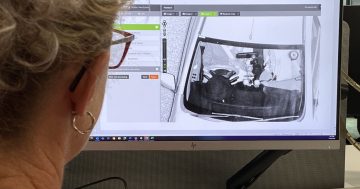
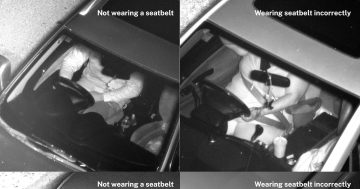
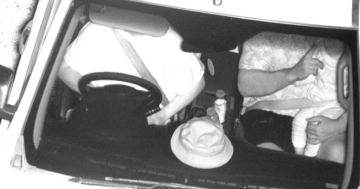
Mobile device detection cameras have issued over 10,600 seatbelt-related offences since 3 November. Photo: ACT Government.
Traffic detection cameras have pinged more than 50 people a day for not wearing seat belts since they began issuing infringements last November.
According to data from the ACT’s City and Environment Directorate, more than 10,600 seat belt-related offences have occurred between 3 November 2025 and 27 May 2026.
Of the total 10,628 offences, 4165 were in relation to the ‘driver not wearing properly adjusted/fastened seatbelt’, while 6463 were ‘Passenger seatbelt or seating position requirements offences’.
Nearly one in ten offences were disputed, with 264 disputes for driver-related offences and a further 703 for passenger-related offences.
Since 3 November, the ACT Government has used AI cameras that take three images of each passing car. The AI determines whether someone has committed an offence.
An ACT Government spokesperson said that a specialist officer then assesses images flagged by AI.
“High-resolution, infrared cameras capture three images of each vehicle that passes a traffic detection device. These three images are automatically analysed by specialised AI to determine if a potential mobile device and/or seatbelt offence is occurring,” they said.
“Images which are unlikely to contain an offence are immediately and permanently deleted.
“Where an offence may be occurring in the images, an image package is created and partially redacted (to protect the privacy of vehicle occupants) before they are initially assessed by a specialised officer employed by the camera provider.”
The ACT Government dismissed claims that the AI cameras are misreading images or flagging offences that aren’t legitimate, and reiterated that trained officers first check any flagged offences.
“Packages that still may contain an offence are then unredacted and sent on to specially trained Access Canberra authorised officers for final adjudication,” the spokesperson said.
“Authorised officers examine the high-quality images (including by adjusting exposure, brightness and zoom), vehicle information and associated details to determine if they reasonably believe an offence may have occurred. If they believe an offence occurred, an infringement notice is then sent to the vehicle’s registered operator.
“Images relating to an infringement notice can be easily accessed on the Access Canberra website; however, it should be noted these are redacted to protect privacy, and users will not have access to the same enhancement tools as authorised officers.”
While the ACT Government said the review process is thorough, it admitted human error can still come into play when handing out offences.
“Despite this extensive review process, with the sheer volume of offences committed on ACT roads, there is always a possibility of human error occurring,” they said.
“If someone believes there has been a mistake or an error, there are options to seek review of their infringement notice.
“This should be done within 28 days of receipt, and applications should contain as much further information and/or evidence as possible to substantiate their grounds for review and circumstances.”
To dispute any traffic or seatbelt-related offences, visit Access Canberra.