Chief Minister Andrew Barr: The rest of the decade is all about the Northside Hospital. Photo: Ian Bushnell.
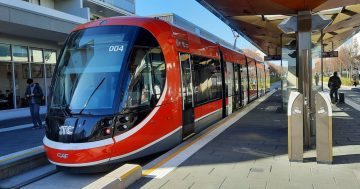
The ACT Government has given the clearest indication yet that light rail Stage 2B to Woden may be shunted into the next decade as it focuses on delivering the $1.5 billion Northside Hospital.
A budget infrastructure announcement is expected later this week, but at the Northside Hospital announcement on Tuesday (2 June), both Chief Minister Andrew Barr and Treasurer Chris Steel made it clear that health would be given priority.
Mr Barr said it would be the single largest infrastructure project for the Territory for the rest of this decade.
“We’ve made a range of decisions in the budget to prioritise this project, recognising its importance to our health system,” he said.
Mr Steel stated that the government carefully examined the infrastructure pipeline to incorporate the hospital project in a way that ensures its long-term sustainability and feasibility.
Construction of the new hospital is expected to start in 2027-28 for completion in 2031.
Light rail to Woden is expected to cost billions of dollars, although a business case is now not due until 2028-29.
Asked whether any projects had been deferred to do this, Mr Steel would only repeat that the government would ensure that the infrastructure program was sustainable and deliverable.
The responses come a week after the ACT Greens called on the government to get on with delivering light rail Stage 2B and start planning for Stage 3 from Belconnen to Canberra Airport.
The Greens wanted to see a Works Approval Application for Light Rail Stage 2B, including to Mawson, lodged with the National Capital Authority by the end of 2027.
That appears to be a pipe dream, given Mr Barr’s stance on Tuesday.
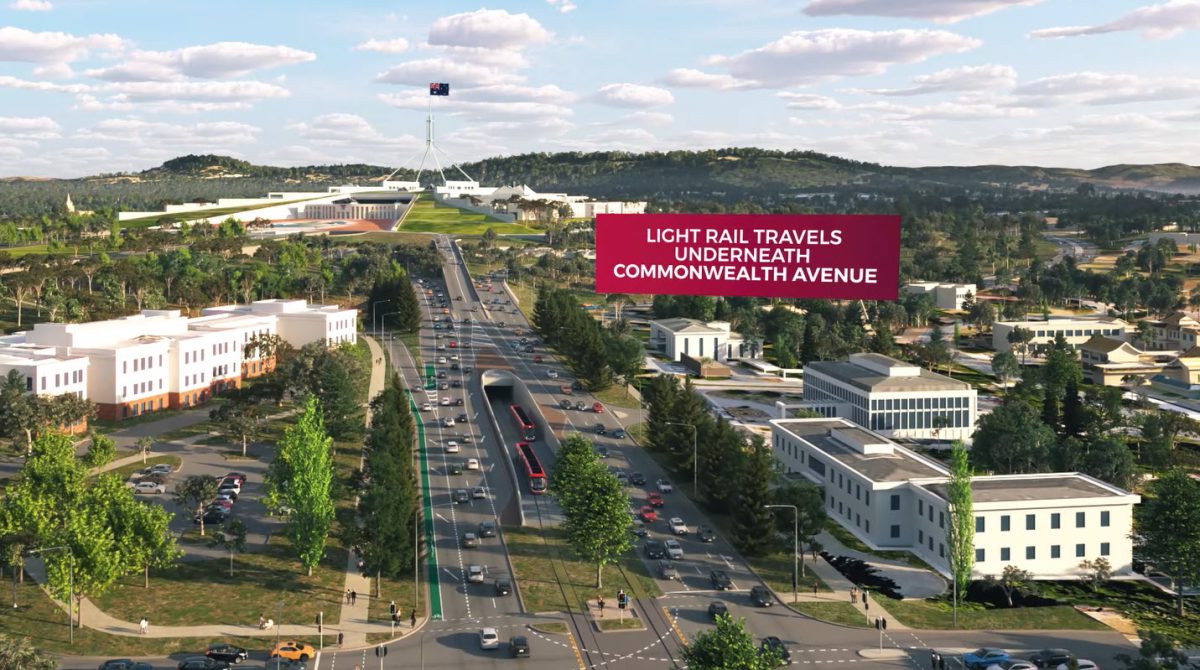
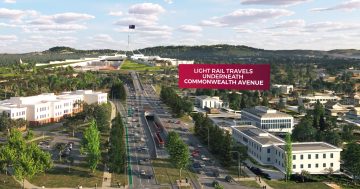
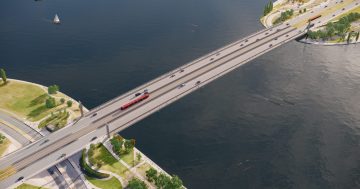
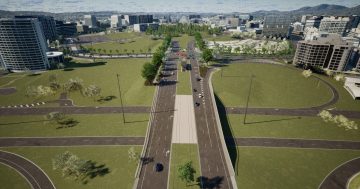
The proposed light-rail tunnel from Commonwealth Avenue to State Circle. Not this decade. Photo: ACT Government.
While Mr Barr would not answer questions directly about the fate of light rail Stage 2B in a looming infrastructure shake-up, Mr Barr said light rail had traditionally been financed through public-private partnerships, which were smaller annual availability payments over multiple decades.
“That has been the procurement model that we’ve utilised, and of course, we’ve had a Commonwealth contribution for each stage of light rail,” he said.
That put light rail in a different procurement category than health, but he reiterated where the government priorities lay when pressed.
“We’re not making an announcement today about that project [light rail],” Mr Barr said.
“We should read quite a lot into the statement I made at the very beginning of the press conference that this [the hospital] is the major infrastructure project for the Territory for the rest of the decade.
“If that wasn’t clear, it certainly should be now.”
Mr Barr has already said the other big-ticket item in the infrastructure pipeline, the convention and entertainment centre, would not break ground this decade.
Economist Saul Eslake criticised the government’s infrastructure decisions and their impact on the ACT’s finances in his report to the committee inquiring into the ACT’s fiscal sustainability.
Managing the timing of the infrastructure pipeline is expected to be a major part of the 2026-27 budget mission of putting the ACT’s finances on a path back to balance and surplus.