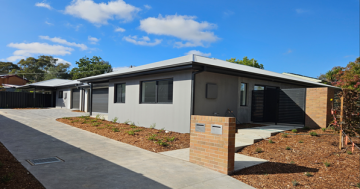
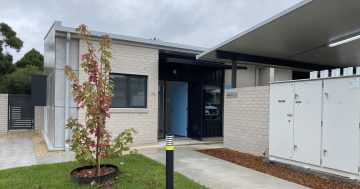
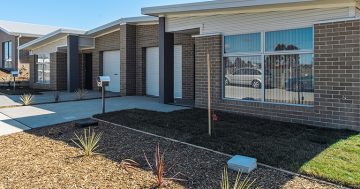
Canberra Central has the highest vacancy rate of public housing properties in the ACT. Photo: Michelle Kroll.
Hundreds of public housing properties are sitting empty across Canberra while 3500 approved applicants languish on a public housing waitlist.
Homes and New Suburbs Minister Yvette Berry said vacancies could be caused by a number of issues, including applicants not wanting to live in specific parts of the ACT.
Independent MLA Thomas Emerson described the situation as “perverse” given that cost-of-living and housing pressures are biting.
“It’s perverse that more than 500 of our public housing properties are sitting vacant in the middle of a housing crisis,” Mr Emerson said.
“Significant reform is needed if we’re serious about actually upholding the human right to housing in the ACT, rather than just talking about it.”
In response to a Question on Notice, Mr Emerson was told, as of 31 December 2025, there were 532 vacant public housing properties across Canberra.
Canberra Central had the most at 203 vacant properties – 38 per cent of all public housing properties that had no one living in them.
Mr Emerson was particularly surprised by the number of homes sitting vacant in Canberra’s centre.
According to SQM data, Canberra’s residential vacancy rate was 1.9 per cent in December 2025.
As of 30 June 2025 there were 2916 public housing properties in Canberra Central (covering the inner north and inner south). Therefore, comparing that with 203 vacant properties (as of 31 December), that area has a vacancy rate of about 6.9 per cent.
“A vacancy rate of almost 7 per cent for public housing in some of the ACT’s most sought-after suburbs is baffling,” he said.
“That’s four times the current vacancy rate in the private market for the same area.
“It doesn’t make any sense.”
Homes and New Suburbs Minister Yvette Berry said filling a vacancy could take time because tenants were given a choice about where they could live, such as if their children were already enrolled in school.
Sometimes the ACT Government would take advantage of a vacant house – due to a tenant moving or vacating for another reason – to undertake major upgrades.
“It might seem like a long time for some people that a home has been empty, it does take a lot of time to do a complete upgrade,” she said.
“When these homes are empty, it does give us the chance to really have a look at them and see what’s required, the kind of investment that we’d need to do, whether we decide to demolish, redevelop or sell, and then build somewhere else.
“We can’t flip homes overnight, and it does take many months to do that work and make sure that these homes are in good condition for people to live in.”
Vacant properties needing repairs in Canberra’s centre would include an ACT Housing complex in De Burgh Street, Lyneham, which was damaged after a fire in the basement.
As of 12 March 2026, seven of the impacted tenants had been relocated to permanent, alternative public housing accommodation, three were staying with family and friends, three were staying in hotels and two were in other accommodation.
The hotel accommodation is racking up bills of about $4700 per week but the ACT Government hopes to have the cost covered by insurance.
There’s no timeframe on when the building – which has not been condemned – will be fully repaired, but the insurance and procurement processes would have to occur first.
Ms Berry couldn’t say exactly why more Canberra Central homes were vacant at the moment, but speculated it could be down to a number of factors.
“[We do give] people choices about where they want to live, and that’s not necessarily in the inner city at this time. I imagine it’s to do with all the roadworks and not being able to drive and that sort of thing,” she said.
“People have the same kinds of thoughts and dreams as the rest of us … sometimes the dwelling just doesn’t suit.”
Mr Emerson said, outside of the homes needing serious repairs, there were people desperately in need of a roof over their heads and something needed to change.
“There are 3500 approved applicants on our public housing waitlist in the ACT, including 132 on the priority housing list,” he said.
“Single mothers experiencing violence in their own homes, people with serious health issues, Canberrans sleeping rough as we head into winter – these are the people being told we don’t have a home for them while hundreds of government-owned properties sit vacant.”
Mr Emerson pointed to the damning ACT Ombudsman report that found Housing ACT had breached its legal obligations to provide public housing tenants with timely repairs and maintenance.
Productivity Commission data has also showed the ACT’s public housing stock is in the second-worst condition in the country.
“There’s a clear pattern of neglect here.”