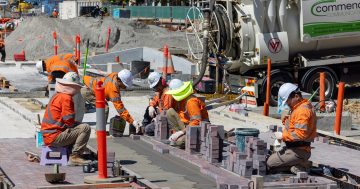
New public transport corridors across Canberra, including future light rail routes, were identified as a future investment opportunity by Infrastructure Australia. Photo: ACT Government.
Public transport corridors, Sydney to Canberra rail and battery energy storage systems: this is where the Commonwealth should focus infrastructure investment for the Territory, according to Infrastructure Australia.
The independent statutory body has released its priority list for nationally significant priorities, where the Australian Government’s involvement could add the greatest value over the next 10 years.
Infrastructure Australia Chief Executive Officer Adam Copp said the list represented their top-down view of proposals that could best strengthen the nation’s productivity, liveability and sustainability – now and for the future.
“From our growing population and the strength of our economy to the liveability and connectivity of our cities and regions, everything hinges on having the right infrastructure invested in at the right time,” he said.
“This investment blueprint will give the Australian Government the confidence, clarity and evidence it needs on what the highest priority proposals are for the country that can address critical infrastructure gaps and unlock economic opportunities.
“This will ensure the government knows when a proposal is needed most by communities while also giving taxpayers the best bang for their buck.”
High-capacity transport for growing cities, along with connectivity, was identified as a key priority area.
Infrastructure Australia said governments needed to encourage more shifts to mass transit public transport as populations grow.
“Buses and active transport – walking and cycling – are an integral component of high-functioning, multimodal transport systems. However, these transport modes alone will not provide the scale or capacity to address the passenger volumes in Australia’s largest or fastest growing cities, especially for new housing developments in the greater growth areas of the major capital cities,” it stated.
“Smaller cities [such as Canberra] can benefit from light rail and bus rapid transit systems, which provide flexibility and lower capital costs while enabling urban connectivity.”
It noted Australians living in high-growth areas in middle and outer suburbs were “significantly underserved” by public transport.
New public transport corridors across Canberra, including future light rail routes, were identified as a future investment opportunity across the two-to-four-year infrastructure pipeline.
“The proposal will support improved access to public transport and connections to heavy rail and Canberra Airport,” the report noted.
“New corridors will also provide capacity to meet forecast population growth in identified growth areas, while also supporting increased urban infill and new housing development.”
The Federal Government has already committed to planning for the Belconnen Transitway.
It’s also investigating a high-speed rail link between Sydney and Newcastle, with a long-term vision to connect Brisbane, Sydney, Canberra and Melbourne.
Developing a proposal to improve rail services between Sydney and the ACT was identified as a priority in the next few years.
“Upgrades to the rail connection will improve travel-time reliability for passengers and reduce pressure on the air and road corridor and should integrate with proposed high-speed rail services,” the report noted.
Strategic medium and deep-energy storage was another priority identified for the Commonwealth.
Infrastructure Australia labelled the ‘ACT renewable energy storage enhancement proposal’ as an immediate, investment-ready priority for investigation.
“Adding new firming capacity would help reduce the risk of power outages and rolling blackouts in the NEM [National Electricity Market], which can have detrimental impacts on network equipment, leading to potential security and reliability issues for those connected to the electricity grid,” it noted.
“Though many shallow and medium-sized batteries will be delivered by the private sector, government investment may still be necessary to ensure grid stability and security through the availability of strategic medium and deep storage.”
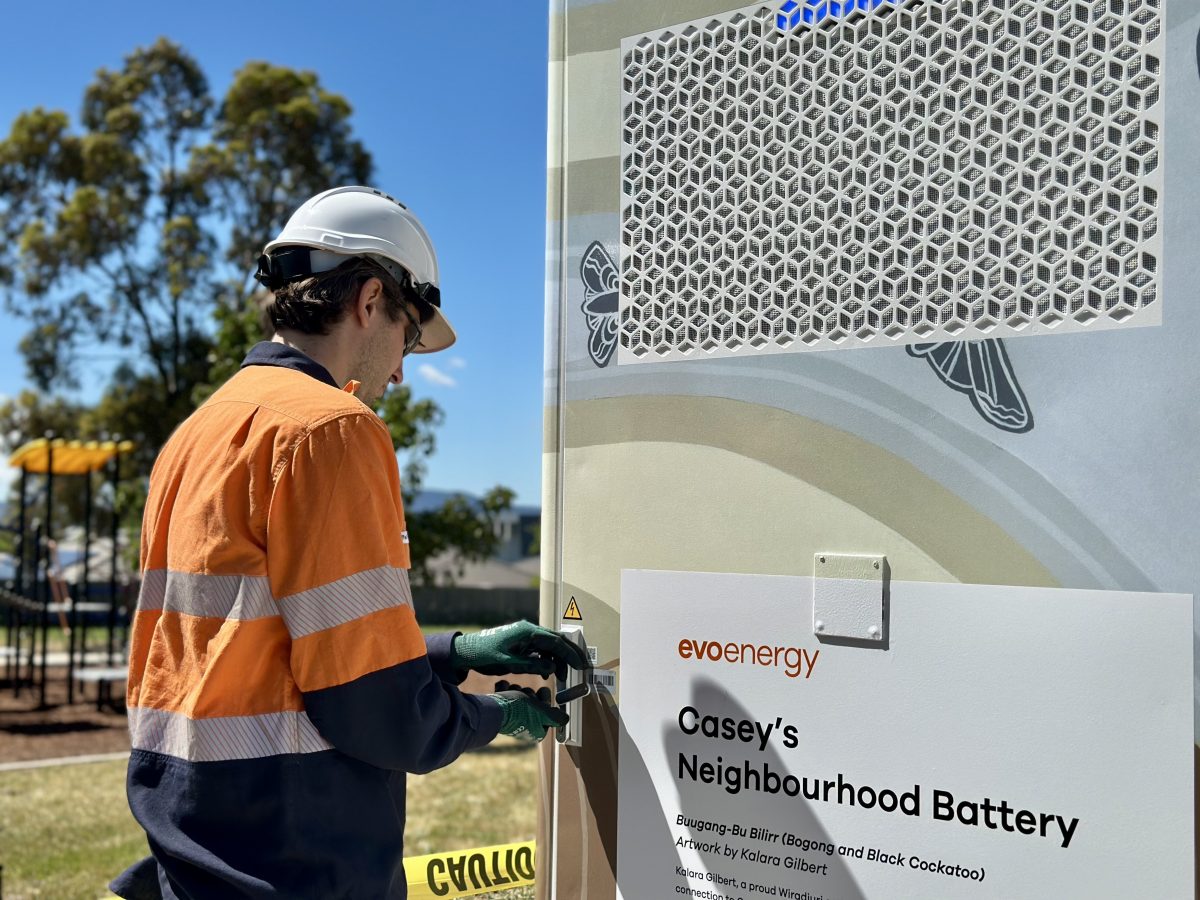
The Big Canberra Battery project continues to take shape across the Territory. Photo: James Coleman.
Chief Minister Andrew Barr was pleased that one of his election commitments had made it onto the priority projects list.
“Working with the NSW and Commonwealth governments to improve Canberra-Sydney rail services was a commitment I took to the last Territory election,” he said.
“Infrastructure Australia are building momentum behind this project to deliver better and more reliable transport options along this corridor.
“We will continue our work with the NSW Government through our cross‑border working group, and ongoing engagement with the Commonwealth, to progress investment options.”
He was also glad the ACT proposals for renewable energy and public transport improvements made the list.
The list is one of several opinions considered by the Commonwealth when making investment decisions. Time will tell whether all of Infrastructure Australia’s suggestions are supported through Federal funding pathways.