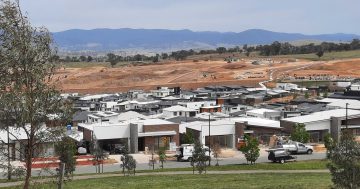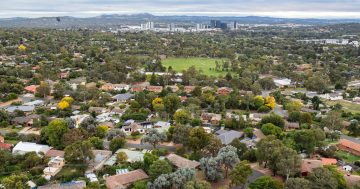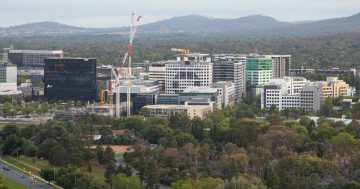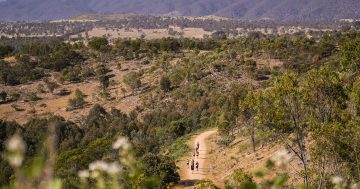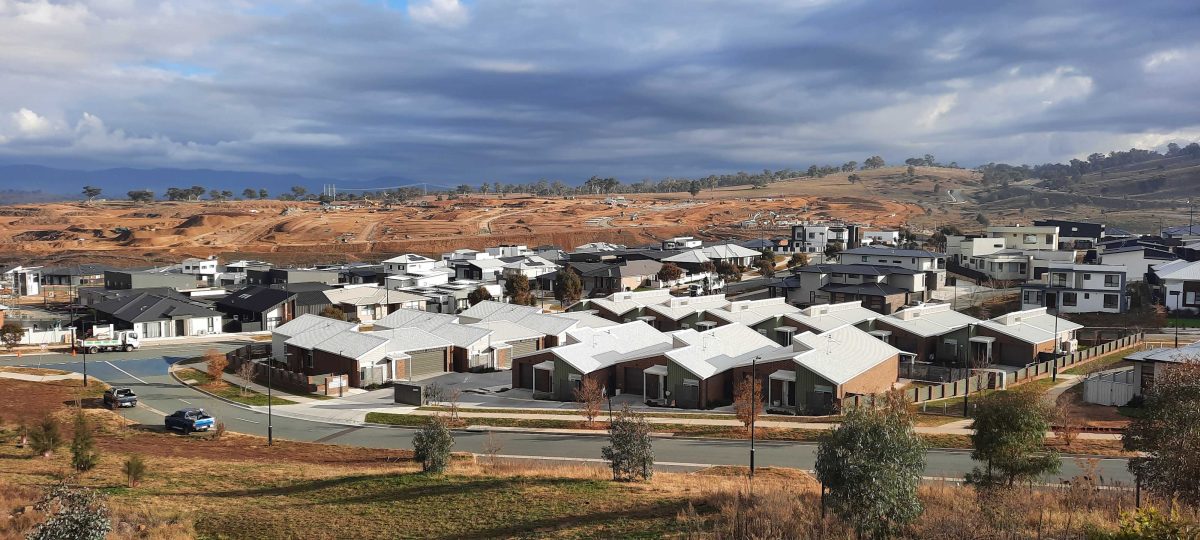
The ACT Government has agreed to assess how its proposed urban growth boundary could affect housing supply and affordability in Canberra. Photo: Ian Bushnell.
The ACT Government has agreed to examine whether its proposed urban growth boundary could push up house prices and restrict housing supply, following concerns raised in the Legislative Assembly.
The assessment, due in June 2027, will examine the impact of limiting Canberra’s outward expansion as the government seeks to protect surrounding bushland and environmentally sensitive areas.
The commitment follows a motion from independent MLA Leanne Castley, who warned that restricting new suburban developments without building enough homes in existing suburbs could worsen Canberra’s housing crisis.
Ms Castley said successive governments had failed to deliver enough housing over the past two decades, leaving buyers and renters facing increasingly unaffordable prices.
She told the Assembly that in 1981, a Canberran earning the median income could buy a typical home for around two-and-a-half years of earnings. Today, it would take more than seven years.
She fears an urban growth boundary could further restrict the supply of detached homes and properties with three or more bedrooms, particularly if higher-density development fails to keep up with demand.
“By restricting new greenfields developments in the ACT, an urban growth boundary could mean that we significantly and permanently reduce the supply of new housing,” she said.
“While the intention is to replace greenfields projects with urban infill, I’m not confident that the territory will be able to deliver enough new dwellings to keep up with demand, and I’m not confident that the territory will deliver the types of housing that Canberrans want.”
Ms Castley acknowledged the need to protect environmentally sensitive areas but said the government should examine the costs and benefits before legislating the boundary.
“So with this motion, I’m asking the government to look at the impact of the proposed boundary on supply and affordability before it proceeds to legislation.”
Responding to the motion, Planning and Sustainable Development Minister Chris Steel confirmed the government would support the assessment.
“Government agrees that there is value in understanding the implications of the urban growth boundary on land supply and housing affordability, considering the impact on the market is an important part of delivering on this policy,” he said.
Mr Steel said work on the boundary was already underway, along with a draft planning and transport strategy and a proposed amendment to the Territory Plan.
The assessment will consider how many more homes could be built in existing suburbs, the availability of land for new suburbs, and the infrastructure needed to support Canberra’s growing population.
Mr Steel said the government wanted more housing close to public transport, jobs and services, including mid-rise apartments, townhouses and other low-rise housing options. He also stressed the importance of protecting Canberra’s hills, ridges, bushland and river corridors.
ACT Greens leader Jo Clay supported the motion but argued that limiting suburban expansion did not necessarily mean higher house prices. She said continued urban sprawl also came at a cost, with new suburbs requiring roads, schools, power lines and water services.
Citing a 2018 government-commissioned study, Ms Clay said the average infrastructure cost of development was approximately $68,000 per home in Whitlam, compared with $6500 in Woden and $23,000 in Campbell.
She argued that Canberra had room for more housing within existing suburbs without sacrificing environmentally significant land.
Independent MLA Thomas Emerson also supported the assessment but said housing affordability and environmental protection should not be treated as competing priorities.
Canberra Liberals MLA Deborah Morris also backed the motion, warning that limited land supply was already pushing families towards developments across the NSW border.
She said an independent assessment was needed to understand how the boundary could affect housing costs and the availability of different types of homes.
The assessment is expected to be published alongside the government’s draft planning and transport strategy and proposed urban growth boundary amendment in June 2027, allowing Canberrans to see how the policy could affect housing supply and affordability before the boundary is finalised.