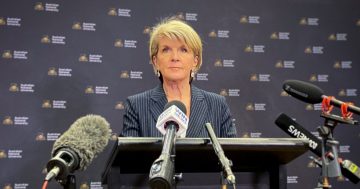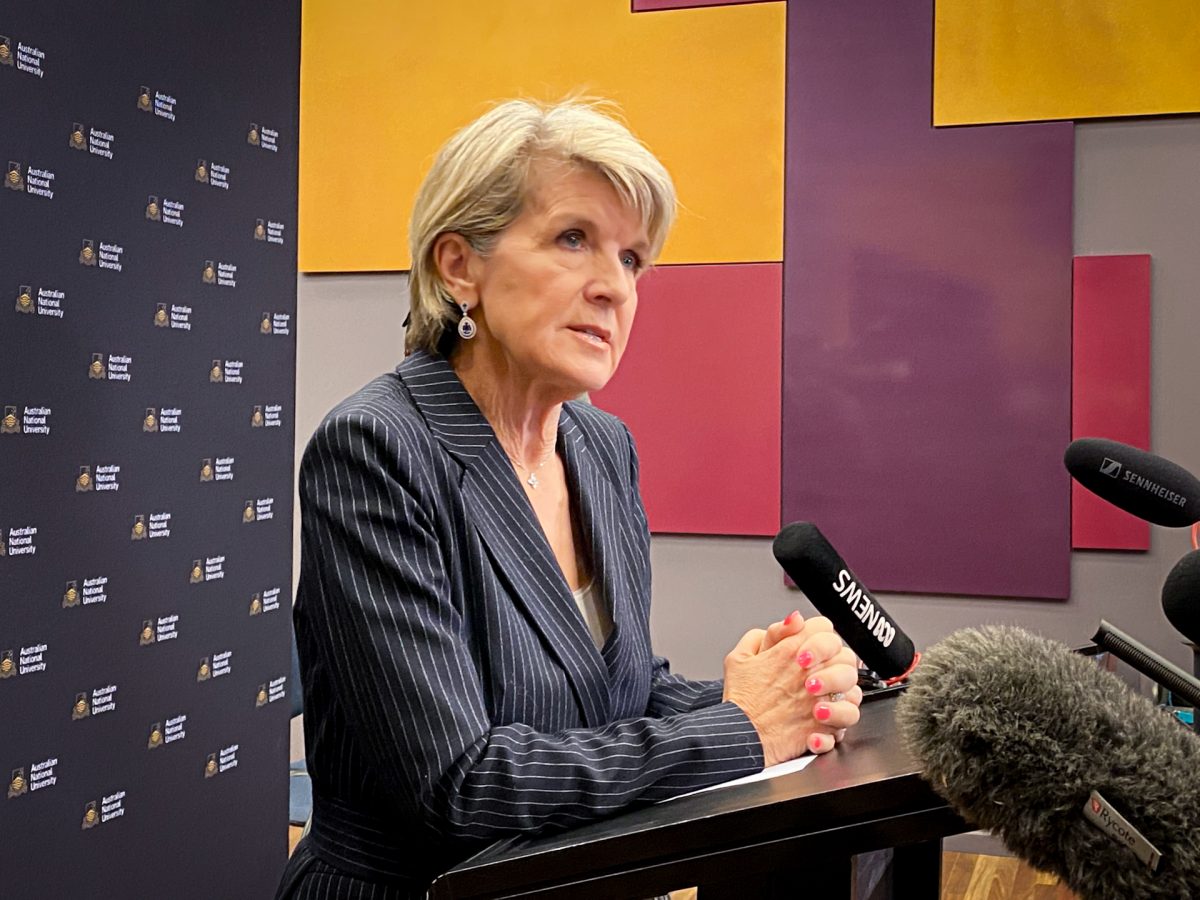
Julie Bishop has been under increasing pressure. Photo: Claire Fenwicke.
Julie Bishop has resigned as Chancellor of the Australian National University, saying it was untenable to remain in the role until her term expired in December.
She told the university and Federal Government of her decision on Thursday night.
The University Council said in statement that Pro-Chancellor Dr Larry Marshall would act as Chancellor until a permanent appointment was made.
In a statement, Ms Bishop said she was “deeply privileged” to hold the position and regarded the ANU as a national treasure.
But she hit out at “unprecedented and coordinated interference” and expressed concern about the ANU Council’s ability to “discharge its legal and ethical obligations”.
“The higher education sector is at a crossroads of regulatory overreach in the governance of our institutions or autonomy and academic freedom,” she said.
“I fear the collateral from this regulatory overreach will be the next generation of students and staff.”
Finance Minister and ACT Senator Katy Gallagher noted her resignation by saying the challenges facing ANU did not arise overnight, and rebuilding trust and confidence across the university community would take time and careful work.
“I have consistently said the university leadership and Council need to work openly and constructively with staff, students and the broader community to rebuild confidence and agree on a path forward,” she said.
“That remains the task ahead for the university.”
Ms Bishop and Council members have faced increasing pressure since the failure of the Renew ANU program and the resignation last year of former vice-chancellor Genevieve Bell.
The ANU is also the subject of multiple inquiries into its governance and culture.
The staff union had consistently called for Ms Bishop and the Council to go, holding them responsible for a discredited cost-saving and restructuring program that had damaged the university.
The National Tertiary Education Union said the resignation was long overdue and offered a chance for the university to heal.
National President Dr Alison Barnes said it closed one of the darkest chapters seen at any Australian university.
“Staff have suffered enormously during her disastrous reign,” she said. “ANU was the canary in the coalmine for the toxic governance crisis that infected our universities.”
NTEU ACT Division Secretary Dr Lachlan Clohesy said her going was chance for calm and stability.
“Now that the fire has been put out, we’ll wait and see if the forthcoming TEQSA report will tell us how it started,” he said.
Independent ACT Senator David Pocock said Ms Bishop was acting in the best interests of the ANU.
Senator Pocock said ANU leaders needed to be accountable for their governance and leadership failures.
“When things go so terribly wrong at the helm of such an important institution, especially one governed by Commonwealth law, there must be accountability,” he said.
He praised the bravery of staff and students who had forced ANU leaders to take responsibility.
“We’ve seen individuals give evidence in front of a Senate inquiry at great personal cost,” Senator Pocock said.

ACT Senator David Pocock addresses a rally last year. Photo: James Coleman.
On Tuesday, Senator Pocock was one of several prominent people concerned that Ms Bishop was attempting to scapegoat the interim Vice-Chancellor Rebekah Brown.
“We’ve seen not one but two elected representatives resign from Council in protest at poor governance. We’ve seen dozens of Professors, Emeriti and Alumni put their name to letters over the years, and as recently as this week, demanding better governance of our national university,” he said.
“We’ve seen the NTEU and ANUSA steadfastly amplifying these calls from staff and students.”
Senator Pocock said the current inquiries and reviews needed to run their course.
He welcomed the voluntary undertaking with the regulator to conduct an independent process to appoint the next Chancellor, which would hopefully help rebuild trust, confidence and better governance at Australia’s national university.
The Council said Ms Bishop had raised the University’s profile domestically and internationally and strengthened global connections, including during the COVID pandemic.
But it acknowledged significant turmoil in the governance of the university.
“The Council is committed to providing a new period of strong and positive governance and leadership, and to working in a highly respectful, collegiate and positive way to advance the interests of ANU in every way possible, the Council said.
“This includes a strong recognition that we need to rebuild trust and confidence with our thousands of staff, students and alumni and with the ACT and Australian communities.
“Rebuilding trust and confidence in the quality of the governance of the University with our regulator TEQSA, other key accountability and oversight bodies, including the Minister for Education, and the Australian Parliament is paramount.”
The Council was committed to restoring the university’s reputation with its community.
The ANU Students Association said Ms Bishop’s resignation was a welcome indication of change and a small sign of hope for the future of the ANU.
“How we as a community navigate the next 12 months are vitally important to what the following decades look like for the ANU,” it said.
It said the past two years have been among the darkest in the university’s history.
“Time and time again we have seen our university leadership fail our community. We have seen poor financial management, a toxic culture of top-down corporate managerialism, and a culture of secrecy,” it said.
“We have lost world-class researchers and staff. We have fundamentally lost our way as the national university of Australia.”
ANUSA said the ANU would continue to face significant challenges over the next few months as it awaited the findings of several reports into governance.
“At every step, ANUSA will be holding leadership to account, calling out toxic governance, and pushing for a university that is founded upon its core duties,” it said.