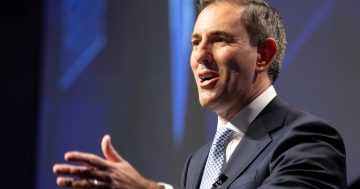
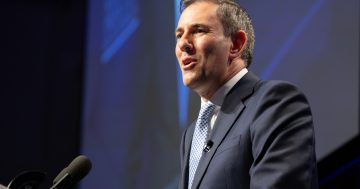
Jim Chalmers and Katy Gallagher were on the offensive yesterday ahead of the Reserve Bank’s announcement today. Photo: Jim Chalmers.
Treasurer Jim Chalmers has been busy this morning (29 September) doing the media rounds, crossing live to a string of national TV and radio news shows to spruik the government’s economic credentials.
That followed a day of media events on Monday, including a long press conference with Finance Minister Katy Gallagher (who had some of her own media appearances earlier in the day), a News24 interview and the ABC’s 7.30 last night.
Chalmers’ hectic media schedule, which has dominated his agenda this week, is a strategic move with one purpose: to talk up Labor’s handling of the economy before RBA Governor Michele Bullock gets her turn to speak this afternoon.
The Reserve Bank is widely expected to increase the official interest rate today, the fourth time this year, setting it at a 15-year high.
Inflation concerns will likely push the RBA Board to lift the cash rate from 4.35 per cent to 4.6 per cent, sending home loan interest rates to even more uncomfortable levels for Australian homeowners.
Flow-on effects will be felt across the economy as households struggle to meet what seems like ever-increasing living costs.
Whichever way you look at it, it’s not a position the government wants to be in.
The pain Aussies are feeling will, in some measure, be directed at blaming the government. That is already evident in political polling numbers.
So, with the best defence being a good offence, Chalmers is out and about trying to put lipstick on a pig.
The mantra is that it’s the global economy to blame.
“We have a lot going for us, and we’ve got a lot of work to do to make sure that in these difficult global circumstances Australia continues to outperform the world,” he told 7.30.
“We have a big inflation challenge in our economy. It’s made much worse by decisions taken on the other side of the world.
“From an economic point of view, this war in Iran has been an absolute disaster for Australian families, because they have been asked to pay a hefty price.”
This morning on Channel 7’s Sunrise: “I think people understand that there are inflationary challenges in our economy.
“But when you see what’s happening with global oil prices, when you see what’s happening with the escalation of the war in the Middle East, obviously factually, that is one of the big drivers of that inflation that people are having to deal with right now.”
Also this morning on Radio National: “I don’t want to see Australian workers carry the can for decisions which are being taken on the other side of the world to prolong a war which has been absolutely disastrous from a cost-of-living point of view and from an economic point of view.”
The other component of the offence-defence approach is to blame the Coalition, both for the state of the coffers the former government left Labor and for what the current Opposition’s policies would do to the economy.
“Spending as a share of the economy is very substantially lower than when we came to office, it was lower still in nominal terms in the budget outcome that we released yesterday, and that’s because we’ve been banking upward revisions to revenue,” Chalmers told News24 this morning.
And so it’s been going for the past day, with much of the same being spread across the media landscape.
It’s a sure sign Labor knows it has a hard sell to convince the nation that none of it is the government’s fault.
Good luck with that.
Opposition Leader Angus Taylor had a few things to say himself about the current state of the economy.
He insists it’s all about Labor’s addiction to spending.
“The reality is it is more of the same. More spending, more taxation, more debt, rising interest payments and, of course, a government that has lost control of the economy,” Taylor said on Monday.
“We’ve seen that spending has reached record levels over the last 40 years outside of COVID, 26.9 per cent, 26.9 per cent of GDP, and we haven’t seen that outside of COVID in 40 years.
“We’re seeing spending rising at almost double the rate of the overall economy, and this is bad news as we go into a Reserve Bank interest rate decision tomorrow [Tuesday].
This afternoon, Ms Bullock will reveal the RBA’s interest rate decision, and it’s unlikely to be a comfortable message for Australians or the government.
Then the Treasurer will step up again – and no doubt say exactly the same thing as he said this morning and yesterday and for the past couple of years.