13 March 2026

Levy business profits to fund unis: Bill Shorten makes the case for an education sovereign wealth fund

| By Ian Bushnell
Join the conversation
35
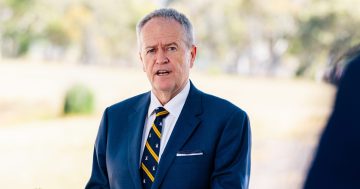
UC Vice-Chancellor Bill Shorten at lectern giving speech

UC vice-chancellor Bill Shorten delivering the 2026 Aitken Lecture. Photo: Davey Barber Five Foot Photography.

University of Canberra vice-chancellor Bill Shorten has proposed a new education levy on business in a reformed funding model for Australia’s higher education sector.

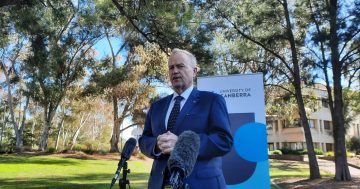
In the 2026 UC Aitkin Lecture at the National Press Club, Mr Shorten said proceeds from the one per cent levy on profits would go towards a Sovereign Wealth Education Fund.

Mr Shorten said this could raise $5.2 billion a year and should be administered jointly by government, industry and universities for agreed national priorities in a non-partisan way.

“The money would come from those who benefit most from a highly skilled, well-educated population – businesses and corporations,” he said.

Mr Shorten said the current funding model was obsolete and government contributions had been scaled back over the last four decades, forcing universities to increasingly rely on international student fees and behave like private businesses.

“Incentives for universities to act as individual profit-making businesses should be discouraged so they stop competing as if they are multinationals,” he said.

“The incentive is to deliver low-cost, high-profit, high-volume courses, regardless of national priorities, regardless of what an institution’s local region needs.”

The cost of university education had been individualised to students who were increasingly burdened by HECS debt, compounded by cost-of-living pressures and distortions in the housing and tax system that had created intergenerational inequity.

“Why do we presume that the only Australians who benefit from the education system are those who progress through it?” Mr Shorten said.

He said Australia needed to take the long-term, 20 to 30-year view, like Norway did in establishing its Sovereign Wealth Fund.

In return, the higher education sector needed to accept reforms to how it operated, including becoming more efficient and flexible.

Mr Shorten said universities needed to recognise prior learning and experience and teach the gaps.

“One of the biggest inefficiencies in education is the assumption that the student knows nothing when they start a uni degree,” he said.

“We often educate people in skills they already possess … expending unnecessary time and resources on students as if they are a blank page.”

Mr Shorten said universities should move to a hub and spoke model, in which universities aren’t expected to provide every course but where students can draw on other campuses to build a degree without having to move.

“If you live in Rockhampton, for example, you should be able to take Italian semiotics from another university for your Rockhampton degree and have it funded strategically and sustainably,” he said.

Mr Shorten urged more specialisation with the support of the Sovereign Wealth Education Fund and the goal of delivering a better student experience and to stop treating education as a commodity.

He said there should be more focus on quality teaching and rigour, especially in the context of AI and a switch to “authentic” assessment – “real-world tasks with the emphasis moving from knowledge recall to better judgement synthesis, and ethical reasoning”.

READ ALSO Richardson quits $5500 a day special adviser post on Bondi royal commission

Without change, Mr Shorten warned, Australia put at risk its national sovereignty.

“I don’t just mean as it relates to national security and defence, but the social and economic well-being of Australia,” he said.

“Education is a pillar of national sovereignty as important as defence.

“Our national sovereignty depends upon economic resilience, the complexity of our economy, productivity, the drivers of which are a higher education system that offers high-quality, up-to-date, industry-relevant education.”

Mr Shorten said a Sovereign Wealth Education Fund was about a country investing in some of its citizens so that all of its citizens benefited from their skills and knowledge in a febrile, unpredictable world.

National Tertiary Education Union ACT Division Secretary Dr Lachlan Clohesy welcomed Mr Shorten’s proposal, saying corporate Australia was the beneficiary, so it was fair that it contributed.

“This is a policy for parents,” he said. “Even those that have not been to university themselves often want their kids to have that opportunity one day.

“For that, we need universities that can support students, without parents worrying that their kids will rack up a lifetime of debt.”


Free Daily Digest

Want the best Canberra news delivered daily? We package the most-read Canberra stories and send them to your inbox. Sign-up now for trusted local news that will never be behind a paywall.
Loading
By submitting your email address you are agreeing to Region Group's terms and conditions and privacy policy.

Join the conversation

35
All Comments
  • All Comments
  • Website Comments
LatestOldest

Typical Socialist left response to anything much. That is wealth redistribution. Take from the rich and give to whichever leftist cause you are involved in. In this case Shorten is now in senior management of a University. So his new cause is all of a sudden education. How not strange.

Many years ago, Universities were funded solely by the taxpayer (free education), then HECs came (student funded loan scheme) and more places were opened up.

Now Mr Shorten, (the guy who could have been PM, had he and Mr Bowen not dreamed up a tax policy that caused them to lose an unlosable election), now wants to create a Sovereign Wealth Fund to fund Universities, by taxing business.

Of course, the Shorten scheme would make Albanese 20% HEC refund election promise look fairly amateurish.

The thing that I really laugh and just shake my head with disbelief, is Mr Shorten likening “his” Sovereign Wealth Fund proposal, to that of Norway.

Norway is often seen as the “poster child” for all things positive. The Greens champion Norway for it’s generous subsidies on electric cars, (and penalties for driving ICE cars), and yet petroleum is pretty much it’s highest export.

Norway funds their Sovereign Wealth Fund from it’s petroleum royalties. In comparison Australia’s Petroleum Rent Resources Tax returns less tax to the country, than it raises from beer excises! (Thanks Senator David Pocock for exposing this).

If Australia stopped giving away it’s natural resources, we could have a freaking awesome Sovereign Wealth Fund…oh and we mightn’t even get cheaper beer? 🍻

How about the people that use it pay for it

Capital Retro5:19 pm 12 Mar 26

Shorten already has the runs on the board for the NDIS and what an outstanding success that has been for everyone involved.

With that sort of visionary input what could possible go wrong with another gem like the NDIS?

Then just about everything, correct?

How about taxing unions Bill. Perhaps it’s time they contribute to the national budget.

About a billion dollars a year should do it. There, problem solved.

Taxing not for profit member organisations?

If only you’d thought about it for a second before mashing the keys.

Capital Retro8:28 am 13 Mar 26

You surprise me chewy.

I mean, you are a person of superior intellect and a supporter of the latest technology yet you still use a mechanical keyboard when touchscreens are available?

Don’t be so surprised CR, sitting there in their union / ALP office they’re probably still using Windows 98 and Internet Explorer 5 to post their daily silliness. You’d reckon with all the rivers of gold the government sends their way they’d get a little more up-to-date but don’t ever think that the term progressive includes any notion of progress.

As for Billy’s Sovereign Wealth Education Fund clearly he’s developed a thing for four-letter acronyms. As you said above the NDIS is one of the worst policy implementations in Australian history – perhaps he should try to find a way to stop the rorts, overpayments, dodgy operators which consume more than $50 billion per year before trying to hurt Aussie businesses and workers even more.

Capital Retro,
What does Pengold sitting in a basement mashing keys have to do with my computer use?

He clearly doesn’t have time to think about any issue before commenting, the pre-prepared groupthink talking points is the only reference needed.

Of course this leads to the regular hilarity we see every day, arguing against his own points, forgetting what he said yesterday and basic mathematical errors.

Capital Retro10:03 am 13 Mar 26

Shorten is wedged on bringing the NDIS into line because if he eliminates all the dodgy contractors and rorts in the sector, unions such as the Australian Services Union (ASU) and the United Workers Union (UWU) who have reported rapid growth in their disability support memberships will be threatened.

Also hilarious that he thinks i work for the ALP whilst regularly berating them on these pages.

As above, thinking and logical arguments aren’t a strong point for the Goldfish.

Well Billy was always the AWU golden child CR, hung his coat tails off Beaconsfield. But presumably the more snouts in the trough the merrier.

But isn’t it amazing the number of Australians claiming disability support these days. The scheme was designed for about 500,000 but currently supports around 800,000. Gordon Gecko comes to mind.

We know some commenters are living in the past with issues around memory loss, but it seems they’ve forgotten Bill Shorten is no longer the leader of the ALP, nor in parliament anymore.

Capital Retro2:44 pm 13 Mar 26

ALP/AWU. They have the same DNA.

Yes Penfold, going back to your original question maybe the government should also look at tax changes and the loopholes introduced by the Howard government to “turbocharge” the economy and make it more profitable for investors, the wealthy and retirees. Loopholes so beloved of the LNP including capital gains tax concessions, negative gearing and cash refunds for excess franking credits, dodgy but legal activities which are currently costing this country more than the health and education budgets combined.

Maybe the government should also clamp down on the building and construction industries and introduce long overdue reforms to control their rampant and unscrupulous behaviour. Companies operating while bankrupt owing millions to creditors, shoddy building practices, non-compliance and employee safety violations are just a few of the breaches always in the news.

There are also opportunities for the government to reduce the tax burden on everyday taxpayers, rather than our laws benefiting wealthy multinationals who currently pay little to no tax. Multinationals including the powerful building, mining, gambling and tobacco industries who contribute so significantly (both directly and indirectly) to the Liberal party coffers. Also those labour hire contractors who undermine our public service by providing “shadow” workforces.

There are also the Defence and weapons industries. Industries who are rewarded with government contracts and sponsorships with their donations providing a “revolving door” of access and personnel between them and government. Lockheed Martin, Boeing, Northrop Grumman and many other Defence manufacturers who are currently making billions from the AUKUS deal and arming the US and Israel in their wars in the Middle East.

Perhaps it is time they contribute to the national budget.
About a billion dollars a year should do it. There, problem solved.

Daily Digest

Want the best Canberra news delivered daily? Every day we package the most popular Region Canberra stories and send them straight to your inbox. Sign-up now for trusted local news that will never be behind a paywall.

By submitting your email address you are agreeing to Region Group's terms and conditions and privacy policy.