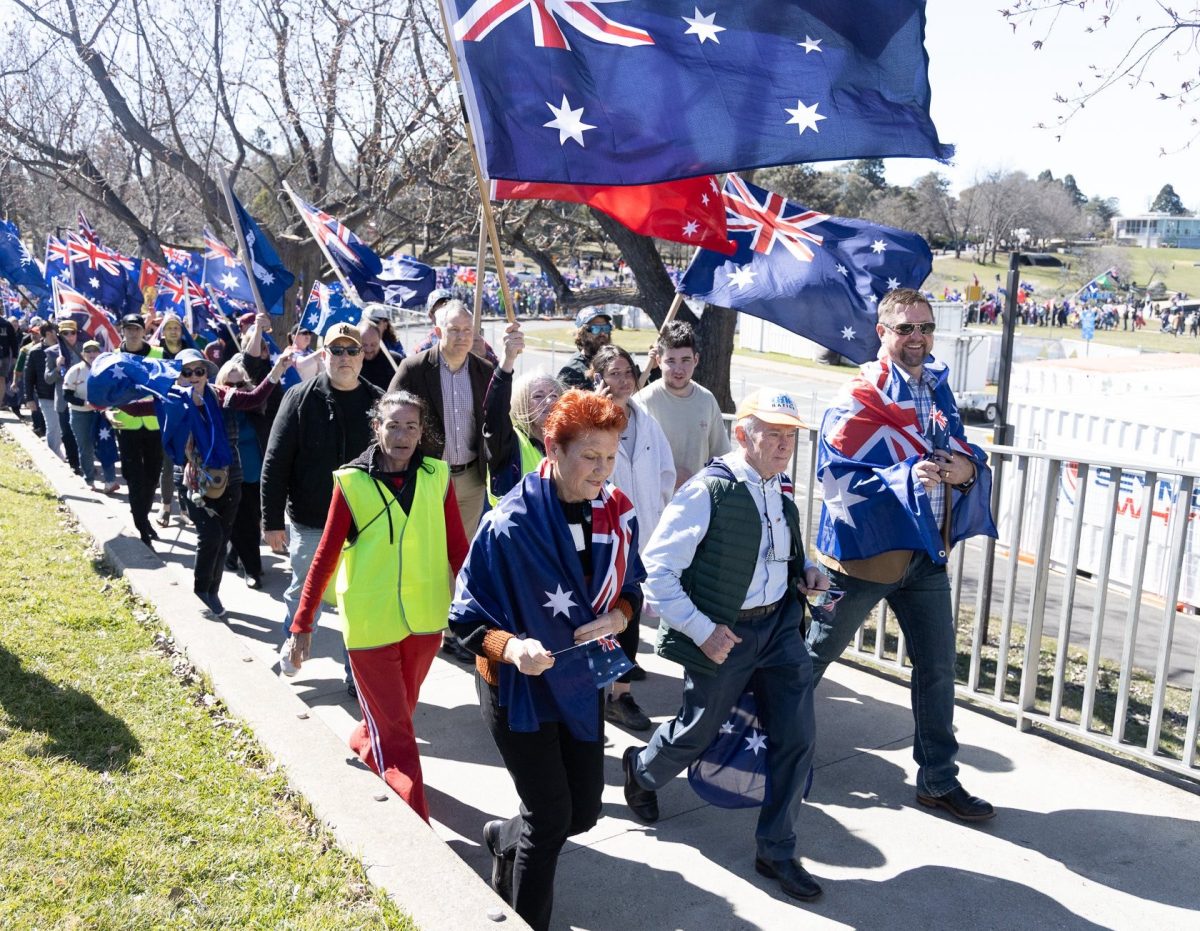
The March for Australia rallies in August 2025 were widely condemned as racist. Photo: Facebook.
Every few weeks, the phone rings. “Are you safe?”
It’s the question Indian students in Canberra say they hear most often from parents back home.
The calls usually come after another news report about Australia’s immigration debate, another political speech blaming migrants for housing shortages or the rising cost of living, or another social media video showing anti-immigration protests.
Thousands of kilometres away, families watch from India and worry. For the students living through it, the reality is often far more complicated.
None of the students Region spoke to could describe being attacked because they were Indian. None could recall an incident of outright racial abuse. Yet almost all admitted they carry a lingering fear that wasn’t there when they first arrived.
“I can’t point to a single incident that has happened to me,” Raj (name changed), a University of Canberra student, said.
“I don’t know if I’ve really experienced racism. But yes, I constantly live with this fear.”
That feeling resurfaced earlier this month when Indian Prime Minister Narendra Modi visited Australia.
Outside his hotel, right-wing activist Hugo Lennon and other protesters gathered carrying Australian flags and anti-immigration placards, including signs reading “Modi Go Home and take the rest with you”. Police maintained a strong presence while members of the Indian community attended events linked to the visit.
For many Australians, it was another political protest. For students watching from university campuses, it was another reminder that migrants have increasingly become part of Australia’s political conversation.
“I think the news affects our families much more than us,” another postgraduate student from India said.
“They call after watching something online and ask if we’re okay. Then we start questioning ourselves too.”
She admits every unsuccessful job application occasionally sends her mind down an uncomfortable path.
“I always try to tell myself it’s probably not because I’m Indian. But those thoughts do come.”
The students say the anxiety is difficult to explain because it rarely comes from something they have personally experienced. Instead, it builds slowly through headlines, political rhetoric and conversations on social media. Only once did Nisha (name changed) genuinely feel afraid.
She was walking to work when she unexpectedly came across an anti-immigration protest. Nobody approached her. Nobody threatened her.
The demonstration remained peaceful. Yet she still remembers wanting to disappear. “I was petrified,” she said.
“I just wanted to hide somewhere. I wanted to make sure nobody noticed me.”
Months later, she still remembers that feeling, not because anything happened, but because she feared something might.
The students say life as an international student was already becoming more difficult before politics entered the conversation.
The Australian dollar continues to stretch family finances, while the Indian rupee has weakened, making tuition fees and everyday expenses increasingly difficult to manage.
The Federal Government has also increased the base international student visa application fee to $2500 and capped new international student commencements at 295,000 for both 2026 and 2027.
“Eating out is never really an option,” Raj said. “We simply can’t afford it.”
Viswa (name changed), an Australian National University student, said financial pressure often leaves international students vulnerable in the workplace.
“I’ve never been paid weekend penalty rates,” he said.
“Despite Australia’s minimum wage, many international students end up accepting around $17 an hour because they don’t think they have another choice.”
For him, the economic pressures and political debate often feed into each other. “When migrants keep getting blamed for everything, people back home naturally worry about us.”
A common thread ran through Region‘s conversations with students. While many spoke of growing anxiety, none had personally experienced the incidents they feared.
None of those interviewed could describe even a mild racist attack. None knew close friends who had been assaulted because they were Indian.
Most said Australians they met through university, work and their neighbourhoods had been welcoming. The fear, they said, had largely been built through perception rather than personal experience.
“I tell my family back home not to read the news,” Viswa said with a laugh. “That’s probably the best way to feel safe.”
Despite the anxiety, none of the students said they regretted choosing Australia. Most still hope to build careers here, apply for permanent residency and eventually raise families.
For Nisha, the contradiction is impossible to ignore. “I honestly don’t know what the truth is anymore,” she said.
“But as a young woman, I actually feel completely safe when I walk home alone.”
For these students, the headlines and their everyday lives often tell two different stories. The politics may sometimes leave them questioning whether they belong.
But it is the people they meet, in classrooms, workplaces and neighbourhoods, that keep convincing them they do.