Going up: War means petrol prices have only one direction. Photo: James Coleman.
The economic shockwaves of war in the Middle East again show how vulnerable Australia is to oil and gas price spikes and the need to accelerate the energy transition.
Australia has made great strides in weaning itself away from coal-fired power, exemplified by the impact solar energy production had during a fiercely hot summer when the nation’s air conditioners were running full pelt without any disruptions to the system.
Renewable energy production is also bringing down the wholesale electricity price.
But the choking off of oil supplies from the Middle East and attacks on gas facilities have already hoisted fuel prices.
This threatens to spark higher electricity bills, as happened when Russia attacked Ukraine and the gas market was disrupted, and higher fuel bills for motorists.
This will flow into cost-of-living increases, and higher interest rates, unless a tanking economy deters the Reserve Bank.
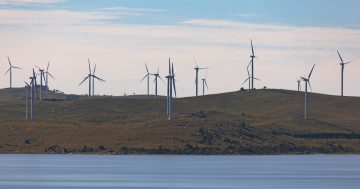
If Australia is to inure itself to these almost regular energy shocks, it needs to speed up the development of renewable energy projects, battery storage, and the charging infrastructure required for electric vehicles.
Too many projects are being delayed by misinformation campaigns or objections by a self-interested few, some well-heeled, and egged on by opportunistic politicians and amplified in the fetid swamp of social media.
Wind turbines are eyesores and health hazards, solar farms and big batteries are catastrophic fire hazards and both are destroying valuable farmland and cannot coexist with agriculture.
All of which can be refuted by the facts, and whatever impacts there are pale into insignificance with coal mining, gas fracking and the clearing of forests for industrial agriculture.
This is not to dispute the right of people to have genuine environmental concerns about some development locations and the need for renewable energy companies to earn a social licence.
As people, or at least those without solar panels and/or battery, watch their power bills soar, they might question why it is taking so long to make the shift.
Those also filling up their vehicles in coming weeks, and probably months, might start thinking about an electric vehicle.
The new fuel-efficiency standards have had the desired effect and drawn several new brands and models to Australia, but range anxiety continues to be a barrier, mainly on longer journeys where the recharging network is patchy and unreliable.
Capitalising on this, hybrids have proliferated, providing great mileage, the best of both worlds and the security motorists want, but delaying the transition away from oil.
If the Federal Government really wants a fully electric car fleet, it needs to get cracking on a genuine EV (fast) charging network that is as reliable as fuel stations.
Then, with the price of EVs falling, it would be a no-brainer to go electric.
The war in the Middle East is but another reminder for Australia to kick its fossil fuel habit and become truly energy self-sufficient.