


Irma Palasics died after a home invasion on 6 November 1999. Photo: Supplied by family.
As the murder trial of two men neared its end, defence lawyers have attacked the strength of the evidence in the case and questioned whether a third person could have been involved.
Irma Palasics, 72, was tied up and assaulted when intruders broke into her McKellar home on 6 November 1999, before her husband, Gregor Palasics, found her dead in their hallway.
The ACT Supreme Court trial of the two 70-year-olds accused of her murder, Steve Fabriczy and Joseph Vekony, started in February and then ran for six weeks before closing arguments were held this week (7-8 April).
“In my submission, the question of who killed Irma remains unanswered,” Mr Fabriczy’s barrister, Skye Jerome, said.
“It’s not Mr Fabriczy.”
She described the prosecution case as weak, vague, tenuous and circumstantial, and said there was “a compromised crime scene” after Irma’s death, including contaminated exhibits.
She drew the jurors’ attention to the teenager who claimed he was connected to Irma’s death. When she died, he was 16, had blonde hair and an Australian accent.
Irma said the intruder who attacked her in 1998 had an Australian accent and blonde hair, while Gregor said the man who attacked him in 1999 had an Australian accent and was not European. Both Mr Fabriczy and Mr Vekony are Hungarian.
Police decided the teen’s claims of being connected to her death were fanciful, which Ms Jerome described as a “totally inadequate” decision.
“There is a man who fits the description, and he confesses to being involved in the home invasion,” she said.
Also, a forensic pathologist said Irma had a broken nose, and if she had been unconscious, she may not have been able to clear her airway by coughing up blood, so essentially, she would have asphyxiated.
But Ms Jerome said the prosecution could not say who was alleged to have restrained or assaulted Irma.
“Did she fall forward and break her nose? Was it an accident?” she asked.
She said her client had a very limited involvement in the case.
“He was a look-out for a burglary which he understood was committed by Mr Vekony,” she said.
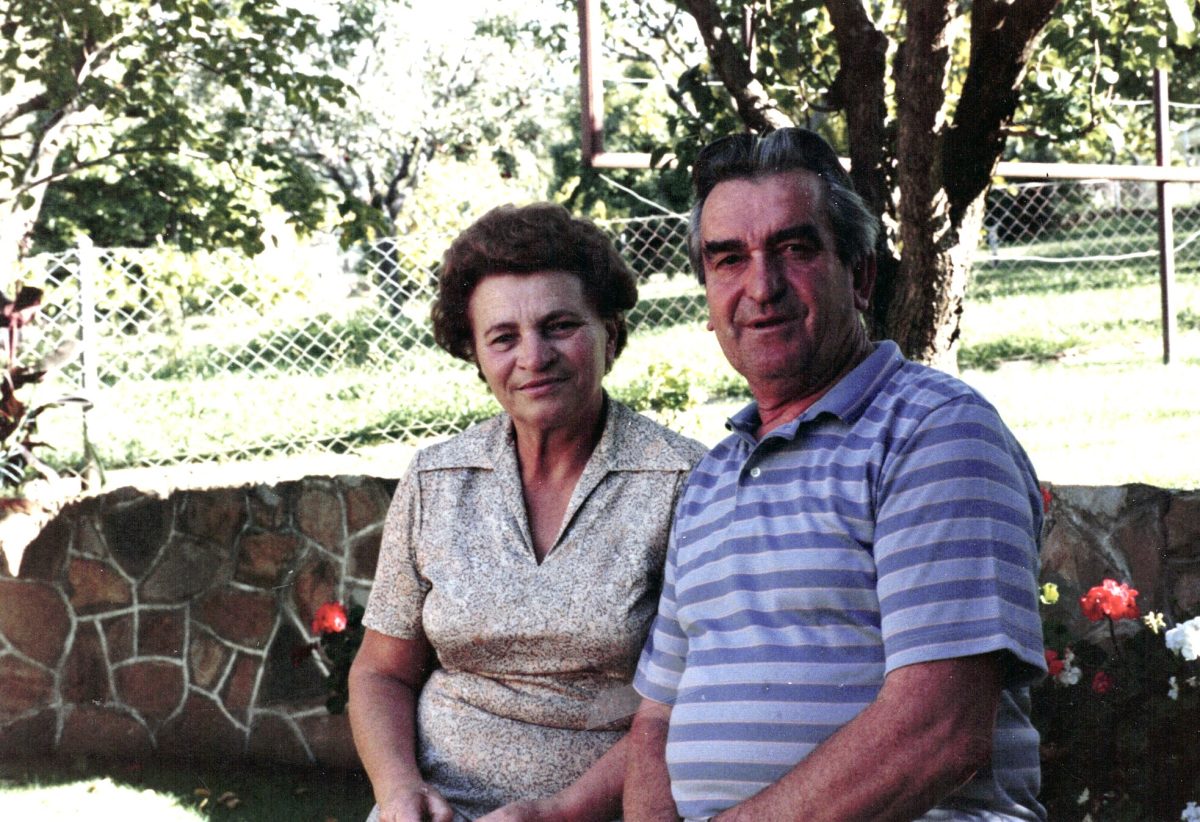
Irma and Gregor Palasics, pictured when they lived in Red Hill. Photo: Supplied by family.
ACT Director of Public Prosecution deputy director Trent Hickey said police originally investigated 330 people and couldn’t find any evidence they were involved in the 1999 burglary. However, they did find two unknown DNA profiles on a water container and a milk bottle in the Palasics’ fridge.
In recent years, Mr Fabriczy’s DNA was allegedly linked to one of these samples, then an undercover operation obtained partial admissions that he had been at the scene.
Police then covertly obtained a DNA sample from Mr Vekony, and this was allegedly linked to the second sample from the fridge. His DNA was also allegedly linked to the balaclava Irma pulled off the head of the intruder in the 1998 burglary.
But Ms Jerome said Gregor had only seen one intruder drink from the fridge in 1999, so jurors might think the other unknown sample had been transferred there.
The defence barrister said the prosecution could not prove Ms Fabriczy had been at the fridge. Even if it could, the DNA could only prove he had taken a drink from the fridge and was not evidence of him ransacking the house or causing Irma’s death, she said.
Mr Hickey said the Crown case was Mr Fabriczy and Mr Vekony “agreed to commit a violent home invasion” as they allegedly went to the Palasics’ home with duct tape, cable ties, a weapon and wearing balaclavas, while Gregor described the invaders as two men “seeming to act in concert with each other”.
Mr Hickey said both Mr and Mrs Palasics were repeatedly hit in the face before they were bound. Irma was found with bruises, in addition to her broken nose, all over her body.
“Leaving Irma tied up in the corridor with her hands tied up behind her back, her face beaten … showed callous indifference,” the prosecutor said.
Mr Hickey accepted there was no intention for Irma to be killed. But he argued that by violently beating and then binding her, including around her mouth, the intruders must have known there was a substantial risk they could kill an elderly woman in her 70s.
He said if jurors were not satisfied Mr Fabriczy and Mr Vekony were guilty of murder, they could consider the statutory alternative of manslaughter in their deliberations.
But the barrister for Mr Vekony, Travis Jackson, said there was no specific evidence in the case about what either of the two accused men was alleged to have done.
“There’s no definitive cause of death, and that’s important as it goes back to who did what,” he said.
He said police were “blindsided” to the possibilities that the unknown DNA profiles could be from another alleged offender.
Mr Vekony, in his interview with police, said he had never been to Canberra.
Mr Fabriczy has pleaded guilty to one count of burglary as he admitted going to the Palasics’ home on 6 November 1999, but pleaded not guilty to murder. Mr Vekony pleaded not guilty to charges that included murder and two counts of burglary.
Justice David Mossop has begun giving his summary of the case to the jury.













One can only wonder are they going to make the same mistakes that has plagued CC stadium with heat… View