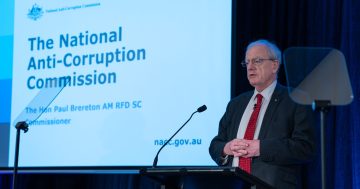

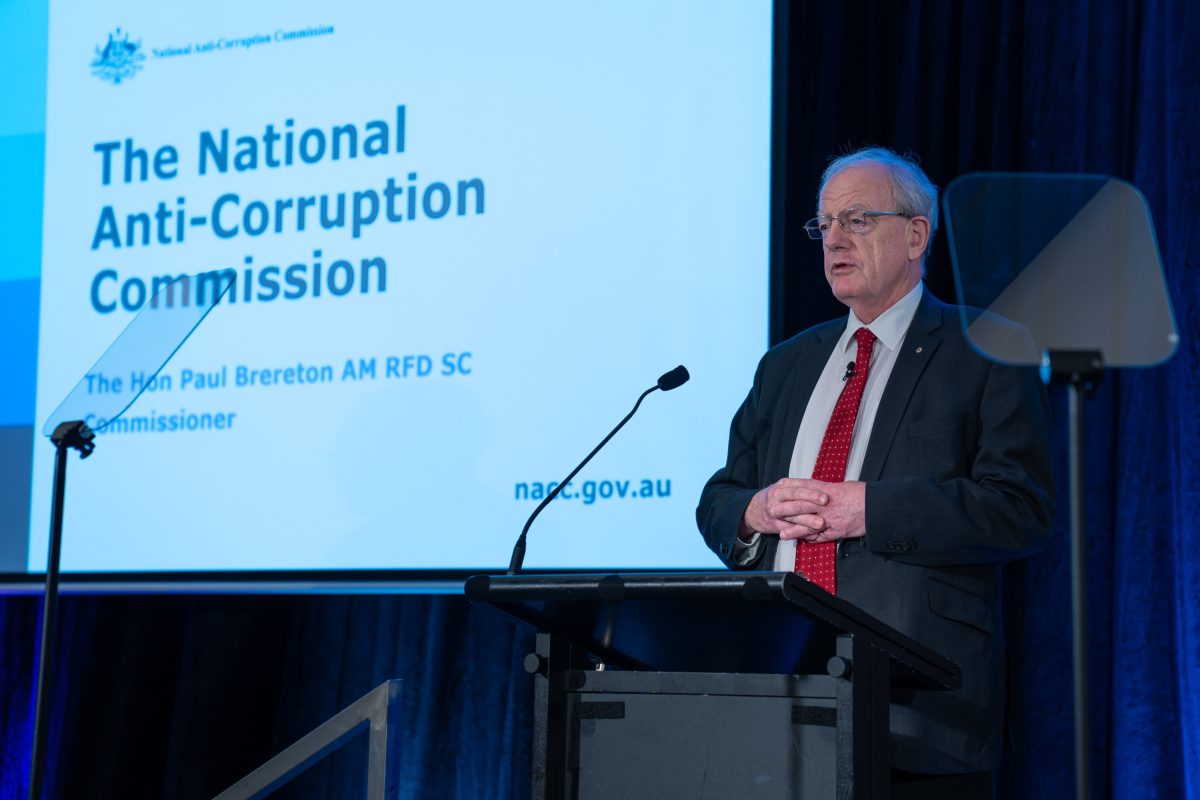
The National Anti-Corruption Commission, headed by Commissioner Paul Brereton, has all but concluded its investigations into the Robodebt Six. Photo: Screenshot.
The National Anti-Corruption Commission has reached its findings on six individuals, as yet unnamed, whom the Royal Commission into the Robodebt Scheme referred for investigation.
It is understood that the draft findings have been distributed to the subjects of the investigation, and the NACC is preparing to release their names once responses have been received.
The Saturday Paper’s Jason Koutsoukis broke the story on the weekend, saying a final determination over whether any or all of the six engaged in corrupt conduct is about to be made.
Region has subsequently confirmed through its own sources that the report is imminent and names are likely to be exposed.
The six were named in a sealed section of Royal Commissioner Catherine Holmes’ report delivered in July 2023
The NACC neither confirms nor denies that its investigation is all but concluded and is making no comment on the individuals concerned.
“The Commission has previously confirmed that an investigation into the Robodebt Royal Commission referrals is underway,” a NACC spokesperson told Region.
“Beyond this, it is not appropriate for us to comment further.
“We do not generally comment on the status of ongoing investigations, as to do so may compromise operational activities or unfairly impact reputations.”
The NACC Act requires that individuals be given the opportunity to respond to findings made against them before they are made public.
Adverse findings in the case of any of the so-called Robodebt Six could recommend criminal prosecution.
When referring the six to the NACC, the royal commission included recommendations for further investigation.
Five of the individuals were senior public servants, while one was a former Coalition government minister.
Of the politicians who gave evidence to the royal commission, former ministers Stuart Robert and Alan Tudge have publicly stated that they had been informed their names were not included in the report’s sealed section.
This has led to speculation that the sixth person, by process of elimination, could be former prime minister Scott Morrison, who initiated the Robodebt scheme when he was the social services minister in 2015.
Mr Morrison has rejected all of the royal commission’s public criticisms of his handling and involvement in the scheme.
But he has made no statement on whether he was told he was named in the sealed section.
Former Department of Human Services secretaries Kathryn Campbell and Renée Leon were both named by the Australian Public Service Commission following its 2024 investigation.
The APSC found both to have breached the public service code of conduct in their handling of Robodebt and had failed in their obligations a total of 25 times during their tenures.
They were not subject to APS sanctions, however, as by then, they were both former public servants.
Australian Federal Police investigated allegations that a witness to the royal commission provided false testimony, but concluded there was not enough evidence to charge anyone. No one has been named through the NACC process yet.
The federal corruption watchdog initially decided, after almost a year of silence, not to investigate any of the six people referred to it.
It announced that decision with a one-page press release on 6 June 2024.
Subsequent public outcry prompted an investigation by the NACC’s independent Inspector, Gail Furness.
That investigation found that NACC Commissioner Paul Brereton erred by failing to properly recuse himself from deliberations, given his perceived conflict of interest arising from having dealings with one of the referred.
The NACC was then forced to conduct an investigation into the Robodebt Six following an independent review of its initial refusal to pursue any of them.
The Robodebt automated debt recovery scheme was piloted in 2015 and fully rolled out between 2016 and 2019 by the Department of Human Services and its successor, Services Australia, with more than 470,000 false debts issued.
It caused extensive grief and trauma. Some recipients are reported to have taken their own lives over the debts.
It was officially scrapped in 2020, with the promise that outstanding debts would be refunded in full.
After Labor won office in 2022, Prime Minister Anthony Albanese launched a royal commission into the scheme.
Almost three years after the royal commission delivered its final report, along with recommendations and a sealed section, there is finally the prospect of someone actually being held to account.