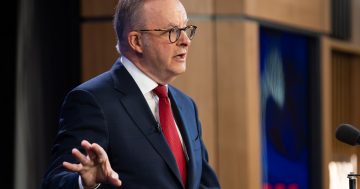
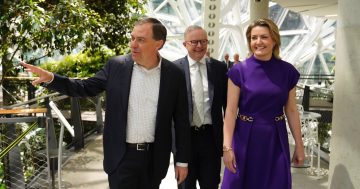
AI was top of the agenda when National Cabinet met in Sydney on Wednesday. Photo: Anthony Albanese Instagram.
National Cabinet has agreed to further tighten Australia’s gun control laws, with states and territories joining the Federal Government in signing an updated National Firearms Agreement.
The changes aimed at reducing the risk of firearm-related harm include sharing Commonwealth criminal intelligence across all jurisdictions; making Australian citizenship a condition of holding a firearms licence (subject to some agreed exceptions); and prohibiting the manufacture of 3D-printed firearms.
Possession and distribution of material for manufacturing 3D firearms will also be illegal.
The meeting of the federal, state and territory leaders, who gathered in Sydney on Wednesday (26 August), marked the first time since 2017 that the National Firearms Agreement has been updated or amended.
“First Ministers agreed these reforms will improve public safety by strengthening the safe and responsible possession and use of firearms, as per Recommendation 13 of the Interim Report of the Royal Commission on Antisemitism and Social Cohesion,” their joint communique said following the meeting.
“Governments will continue to accelerate the implementation of the National Firearms Register and work together to finalise implementation arrangements for criminal and security intelligence sharing.
“The Commonwealth stands ready to support states and territories which choose to implement a National Gun Buyback Scheme to purchase surplus and newly restricted firearms, as per Recommendation 14 of the Interim Report of the Royal Commission on Antisemitism and Social Cohesion.”
Anthony Albanese welcomed progress on implementation arrangements of the National Gun Buyback Scheme with NSW and the ACT.
The Prime Minister also outlined a number of other issues canvassed at the meeting, including new artificial intelligence laws, progressing policies to end gender-based violence, avian flu, and fuel security.
But the PM didn’t get his way on all of them, with AI and the rollout of data centre regulations further exposing several points of difference.
Agreement was secured on the need to develop national data centre standards, but Queensland and the Northern Territory were not having any of the Federal Government’s insistence that renewable energy only had to power all new centres.
The PM had to give some ground and agreed to carve-outs for those jurisdictions to include some fossil fuels.
“We have buy-in on Australia’s national AI laws,” Mr Albanese said following the meeting.
“I certainly understand that different states have different issues, but we know that the priority is keeping our energy costs low.”
The Prime Minister noted the importance of data centres earning and keeping a social licence to operate.
“There’s agreement across the board from all jurisdictions that we need to ensure that that social licence has occurred.”
Queensland Premier David Crisafulli called for greater flexibility when settling national standards for data centres.
“In the case of Queensland, we’ve got a really big point of difference, and that is that we own distribution, transmission, generation, and that enables us to control that energy mix, and we’ve done that well. And our energy plan shows that,” Mr Crisafulli said.
“So, what this does is enable us to send messages – and states can absolutely participate in what the PM says is that social licence – [that] each state will have a point of difference.
“We believe that we can control our data sovereignty, protect the rights of local communities, and enable that energy mix to bring those data centres on, and that comes with the point of difference that we have in our situation.”
The Federal Government intends to legislate AI standards in early 2027, including conditions for delivering AI training.
The PM said Commonwealth legislation will be designed to complement, not duplicate, state and territory planning and approval processes.

Following the meeting, shadow energy minister Dan Tehan said it was obvious the states had rolled Mr Albanese and Energy Minister Chris Bowen.
“How humiliating. Anthony Albanese and Chris Bowen’s renewables-only energy plan for data centres has barely lasted a month,” Mr Tehan said.
“Queensland will rightly be able to pursue a technology-neutral approach.
“The Prime Minister has clearly been rolled, and Chris Bowen’s renewables-only mandate rejected.
“I welcome Queensland Premier David Crisafulli’s comments about the need for flexibility when settling national standards for data centres.
“States and Territories should be empowered, not punished, for choosing the energy sources that best meet their needs.
“Artificial intelligence, underpinned by data centres, requires energy abundance. Making use of all of Australia’s natural resources should help power these new opportunities.”
National Cabinet also received an update from Australia’s Chief Veterinary Officer, Beth Cookson, on the global spread of avian influenza (H5) and the national response from all governments.
The Commonwealth is increasing available funding by $125 million, bringing the Commonwealth’s total H5 bird flu investment to more than $270 million.
The additional funding is to support immediate national emergency biosecurity response activities for the bird flu, which are cost-shared equally by the Commonwealth, states and territories.