Petitioner John Mikita and sponsor, Canberra Liberals MLA Peter Cain. The government is continuing to upgrade the contentious detection technology. Photo: John Mikita.
The company behind the technology used by the ACT mobile device detection cameras has won another government contract to “modernise” the system.
The ACT Government has signed contracts with Acusensus Australia and Orikan Australia to support the next stage of modernising the Territory’s traffic and parking systems.
The Acusensus contract is reportedly worth $63 million over five years, but if two five-year options are exercised, that amount grows to $210 million. A staged rollout is expected to start in mid-2027.
The contracts come amid a debate about the accuracy of the mobile device detection cameras, with a petition launched calling for an independent audit of the entire infringement system.
The City and Environment Directorate said Acusensus would provide mobile and fixed cameras to detect road safety offences across the Territory.
Orikan would deliver the Territory’s new parking solution and infringement management system, “helping to provide a more integrated and efficient experience for drivers”.
A spokesperson said the ACT Government was confident in the accuracy of existing systems.
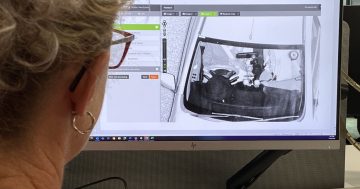
“While cameras capture photographic evidence where an offence may have occurred, the decision to issue an infringement is made by ACT Government public servants,” the spokespersons said.
Under the new contracts, decisions on whether to issue an infringement would remain the role of a public servant.
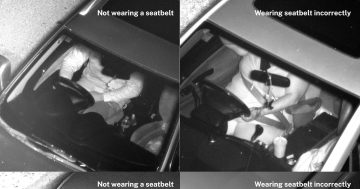
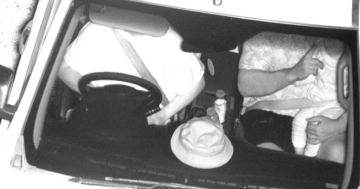
The new cameras would be able to detect road safety offences such as speeding, mobile phone use, running red lights, not wearing seatbelts correctly, and unregistered vehicles.
Some devices would be able to detect multiple offences.
The spokesperson said the new contract would replace existing ageing infrastructure and systems, including fixed and mobile devices.
It was unclear whether the new contracts would broaden detection coverage or where the new devices would be deployed.
But the government will continue to publish mobile device locations on the ACT Open Data Portal.

Mobile device detection cameras have been issuing fines for seatbelt offences since 3 November 2025. Photo: ACT Government.
The spokesperson did not provide more details on the devices’ new capabilities but said the new contracts aimed to modernise parking and traffic infrastructure and systems.
“The community can expect modern traffic and parking infrastructure; improved parking payment options; streamlined infringement management services; and continued investment in road safety across the ACT,” the spokesperson said.
But the new technology won’t end the Territory’s “grey ghosts” that patrol government carparks.
The ACT would always require public servants to respond to parking matters, the spokesperson said.
The contracts were part of a multi-year initiative to replace legacy infrastructure and deliver contemporary technology and services that support the continued operation of traffic and parking services across Canberra.
As of 3 July, traffic cameras issued almost 58,000 infringement notices for distracted driving, seatbelt and mobile device offences, totalling $36 million in fines.
Petitioner John Mikita said the government must demonstrate the existing technology is accurate and reliable before expanding its use.
“The ACT Government is prepared to spend up to $210 million on more cameras, but where is the independent assurance that the existing system is working correctly?” Mr Mikita said.
Previous questions on notice have revealed that the ACT Government doesn’t know the error rate of the AI system that scans Canberra’s mobile detection cameras for road rule breakers.
This includes no information on how many infringement notices were internally reviewed, how many were mistaken identifications, or how often the system was wrong.
The petition has called for an examination of the technology itself, how it’s applied in the ACT, and independent testing to establish its accuracy, including false-positive and false-negative detection rates.
Recent issues with the administrative and legal framework underpinning the camera’s operation have also dogged the system.

Acusensus developed the world’s first camera program to enforce seatbelt non-compliance and illegal mobile phone use.
According to its website, AI is used to identify images that are likely to contain offences, and whether the images should be checked by reviewers to confirm or discard each potential offence.
“Acusensus does not use generative AI and does not modify the original images captured by the cameras,” it stated.
“These images are encrypted and digitally signed on-site (at the roadside), ensuring that they cannot be manipulated in any way before being delivered to the jurisdiction responsible for the local road safety program.”
It’s currently conducting research and development to use its Heads-Up technology to potentially detect drug- and alcohol-impaired drivers, tailgating and red light offences.
The contracts have not yet been published on the Tenders ACT website but are expected to be available by 13 November.