
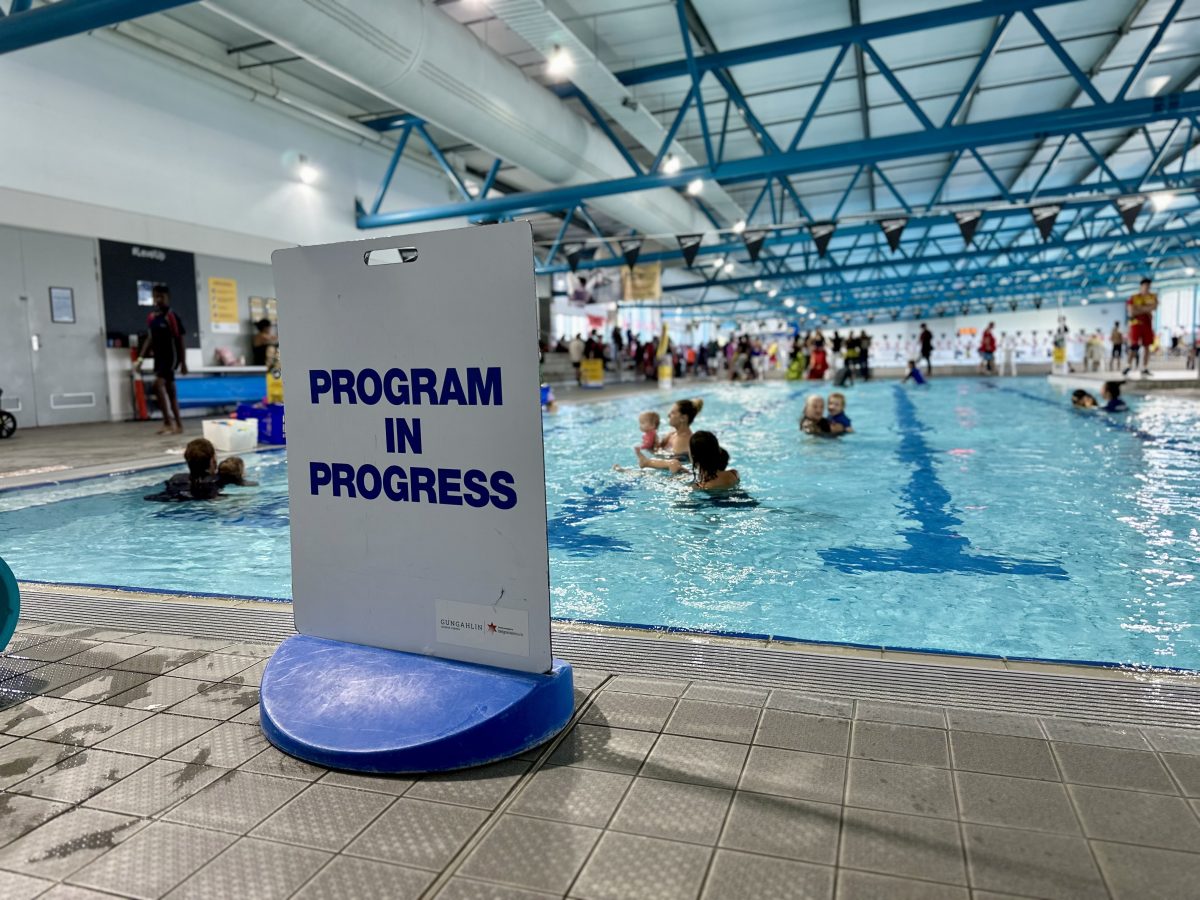
Gungahlin Leisure Centre is working to reverse alarming trends. Photo: James Coleman.
“They come in here, and they don’t want to put their mouth in the water, but by the end of the program, they’re picking up sinkies from the bottom, and they’re yelling out to me, ‘Jayde, look at me, I’m doing my kicking on my back by myself!’”
That’s Jayde Williams, manager at Gungahlin Leisure Centre, describing the progress she’s already seen from her new swim-school program.
Described as “unique and culturally safe”, the program is designed for Aboriginal and Torres Strait Islander children, who statistics show are nearly three times more likely to drown than non-Indigenous children.
Belgravia Leisure, which also runs five other ACT public pools – in Civic Pool, Dickson Pool, Stromlo Pool, Tuggeranong Leisure Centre, and most recently Erindale Leisure Centre – is now looking for government support to roll it out across Canberra and take in a wider net of kids.
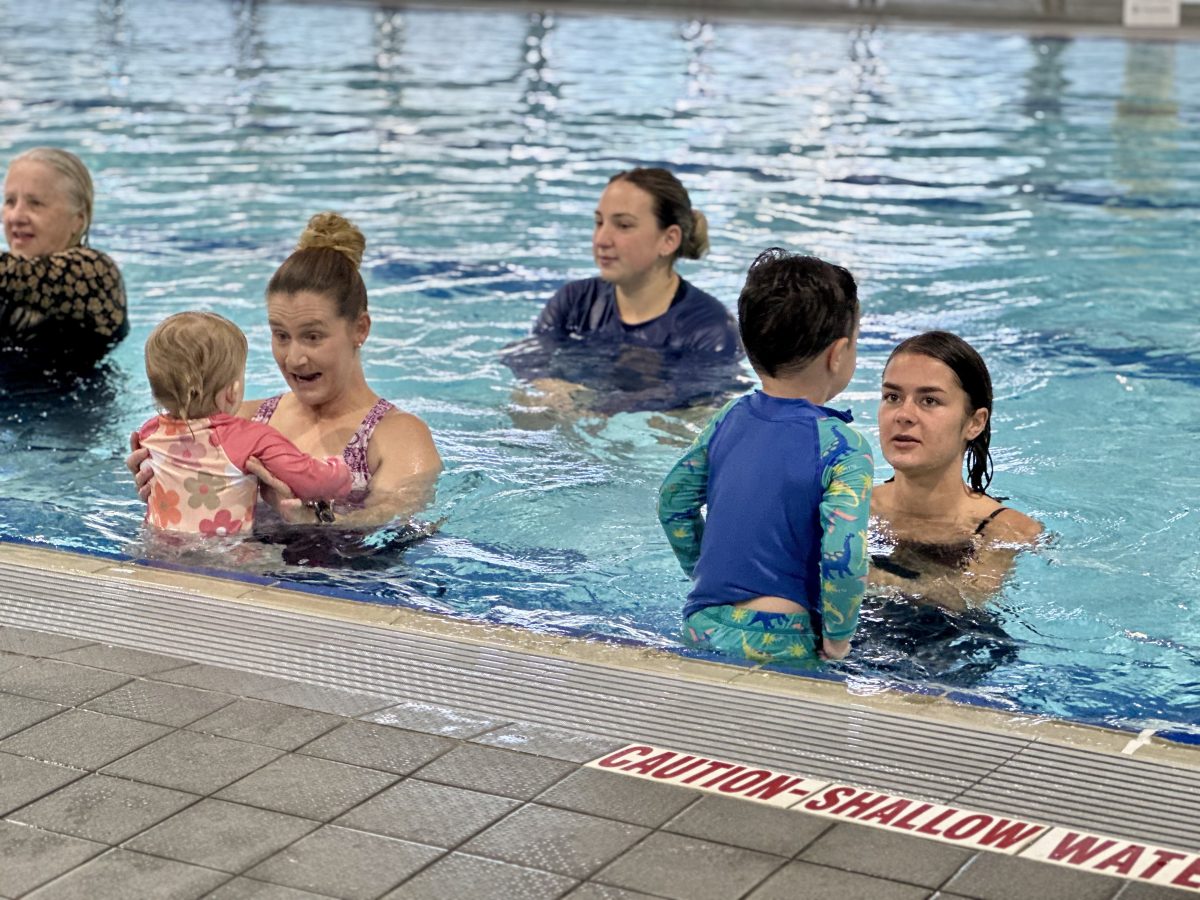
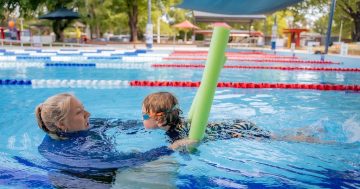
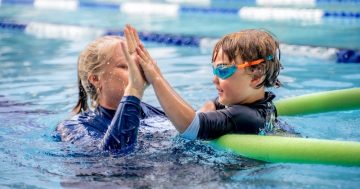
The classes are run each Friday morning during the ACT school term at Gungahlin Leisure Centre. Photo: James Coleman.
How the program works
The program launched late last year, with the same cohort of participants resuming in 2026 on 13 February.
Lessons run every Friday morning during school terms for six months, and are free for families involved in the Northside Play Group hosted by Canberra’s Winnunga Nimmityjah Aboriginal Health and Community Services. Children as young as three months old can participate.
Ms Williams says the program focuses on water familiarisation, play, and survival skills like floating.
“One little boy doesn’t participate fully, but he just walks around in the water, puts his face in, and he’s just putting his arms out and feeling the water on his face. It’s just absolutely amazing to see.”
Why Indigenous kids are at higher risk
Jenny Johnson, from Winnunga, says drowning risks are tied to intergenerational swimming gaps.
“Many Indigenous people live around inland waters and coastal waters, and their parents have never been taught to swim, so it doesn’t get passed on to the children,” she says.
Cost, school programs, and social pressures exacerbate the situation.
“Lessons cost a lot of money … schools sometimes offer them, sometimes not. And the kids often get bullied because they can’t swim, so they often stay away for that reason too,” Ms Johnson says.
Royal Life Saving Australia data shows Aboriginal children are 2.9 times more likely than non-Aboriginal children to drown, while adults aged 45-54 are 3.5 times more likely than non-Indigenous adults. Children under five remain the highest-risk group.
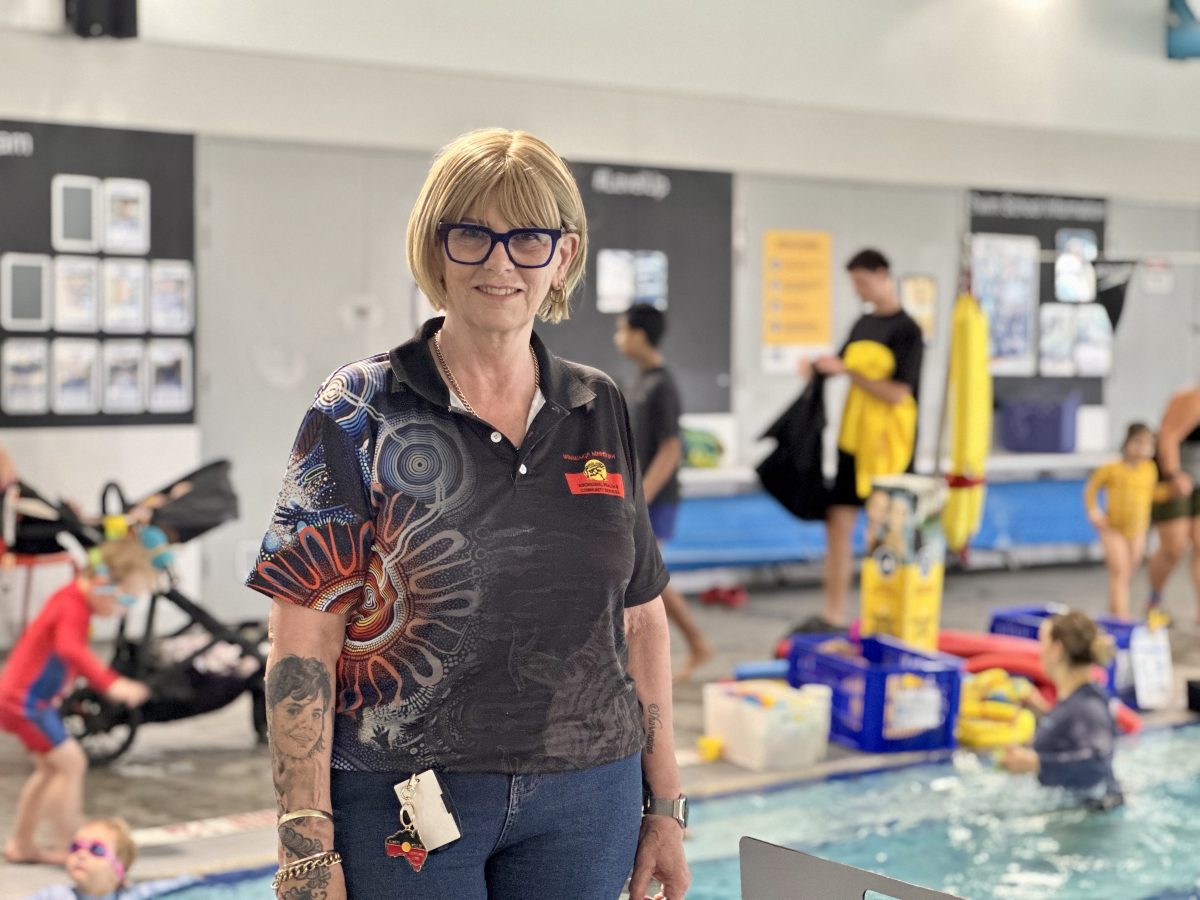
Jenny Johnson says families must be connected with the Winnunga Nimmityjah Aboriginal Health and Community Services to qualify for the free lessons. Photo: James Coleman.
Other community programs
Belgravia Leisure also runs six other targeted swim programs for diverse communities, including Afghan women and African migrants.
“We started the refugee and migrant programs four years ago …. We do it three times a year with 30 participants each time,” Ms Williams says.
She says teachers receive “cultural awareness training” to adapt lessons to diverse needs.
“I would put the Indigenous community on the same level as our migrants and immigrants when it comes to being comfortable in the water. They often haven’t been given the opportunity for swimming lessons,” she adds.
Hopes for government support
Currently, the program runs on the Gungahlin Centre’s budget, but Ms Williams says government funding could expand its reach.
“It’s not a lot of money. To put 30 teams through a 10-week program, that’s around $3,000. Even $15,000 per year could cover over 100 kids or adults across Gungahlin, Tuggeranong, Dickson and Erindale,” she says.
She says smaller pools, like Erindale, could offer more personalised sessions that make families feel comfortable, so they’re more likely to stay in the program.
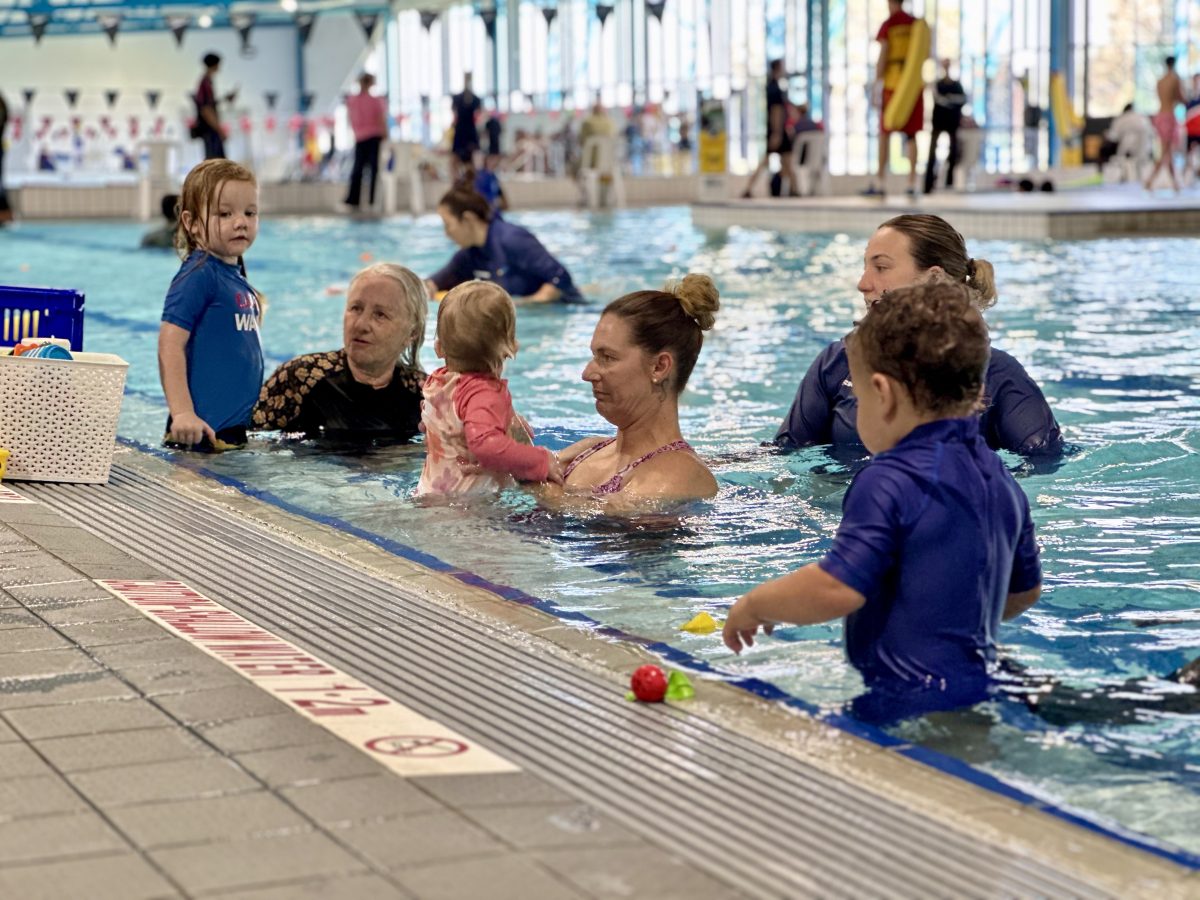
Belgravia Leisure wants to expand the program across its sites. Photo: James Coleman.
“Families coming into the Gungahlin centre, because it’s so loud and big, sometimes find it a bit intimidating. They don’t feel comfortable, so they don’t come back, but having a little centre like Erindale, we can make it more homey.”
As one of the teachers, Ms Williams says the most rewarding part is “seeing the little smiles on their faces”.
“We teach them water can be fun, but also very dangerous. Seeing them enjoy it and be safe – it’s priceless.”
Contact Winnunga at connectedbeginnings@winnunga.org.au or 6284 6222 for more information on how to be involved.