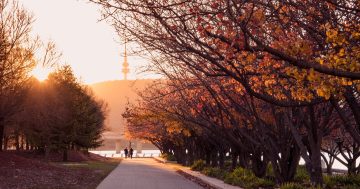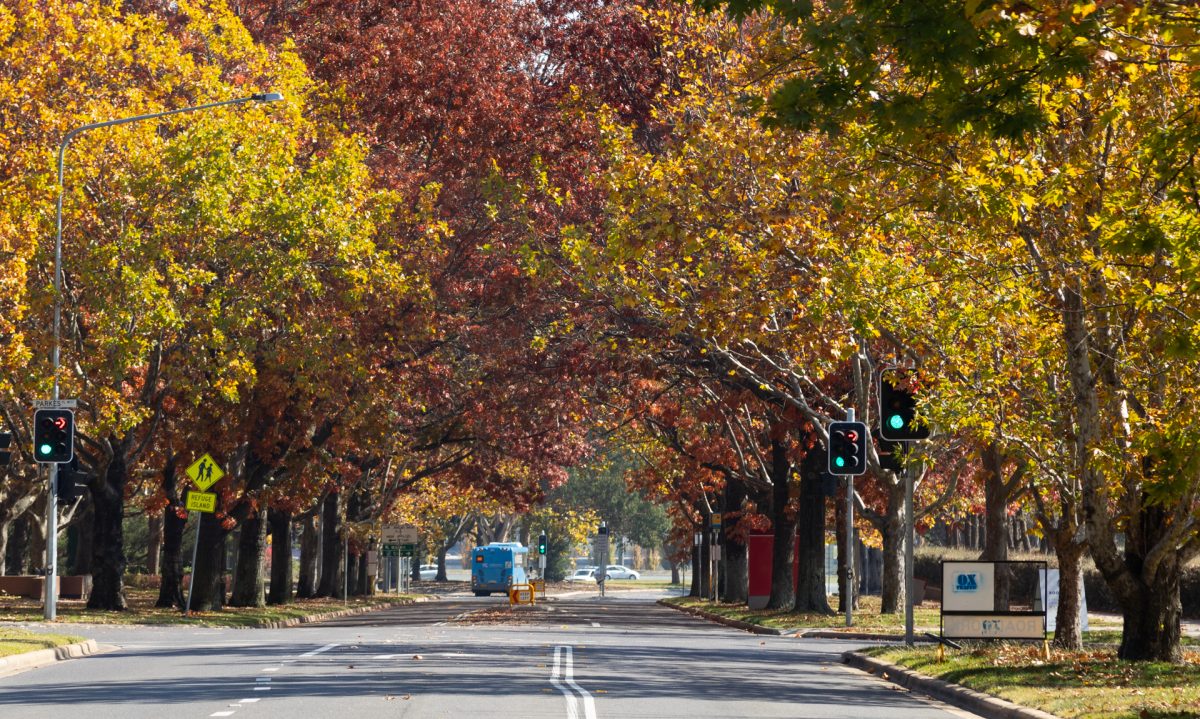
A question for a city being asked to build more homes within its existing footprint: what happens to our trees? Photo: Michelle Kroll.
A promised 10-day pathway to resolve tree disputes holding up Canberra housing projects may not be as quick as it sounds, with Master Builders ACT warning the clock could be repeatedly reset and applicants left carrying thousands of dollars in specialist costs.
The industry body has backed the ACT Government’s attempt to give builders and homeowners earlier answers on whether a protected tree can be removed, but says the proposed process could still be lengthy and expensive.
Under the Urban Forest and Planning Legislation Amendment Bill 2026, decisions on removing protected trees for design reasons could be made separately from the full development application process.
Master Builders told a Legislative Assembly inquiry the proposed 10-working-day assessment period could restart when officials sought further information.
“The principal one is in fact around the legislative timeframe, which is the 10 days which can be stopped and reset continuously,” CEO Anna Neelegama told the inquiry.
“If you reset it on day 10 and you do that 10 times, you therefore attract a 100-day delay.”
Master Builders also argued much of the work required from applicants would remain unchanged. In its submission it argues that plans, design material and specialist evidence will still be needed, including an arborist’s report it says typically costs between $5000 and $10,000 for each tree proposed for removal.
“The only part this legislation’s really changing is putting the 10-day limit on the government,” it added.
Government officials rejected concerns that the timeframe would prove difficult to meet, saying an existing comparable process consistently meets a 10-day deadline.
The new assessment would be limited to the proposed design, the tree and relevant supporting information rather than requiring the referrals, public notification and broader assessment involved in a full 35-day development application.
“We think that that’s very achievable to do within that 10 days and the team have relevant experience in delivering on that time frame,” an official said.
But behind the argument about how many days an approval should take sits a much bigger question for a city being asked to build more homes within its existing footprint: what happens when the tree is standing where those homes need to go?
Property Council ACT and Capital Region executive director Ashley Berry said uncertainty around trees could emerge after developers had already spent considerable time and money progressing a project.
Developers could spend “12, 18 months or more” going through the development application process before being told a tree could not be removed, potentially forcing them to redesign the project or change the number of homes proposed.
The Property Council said it supported the Bill, but wanted decisions made early enough for developers to know what could realistically be built on a site.
“We’re constantly going to be weighing up, you know, is this tree worth homes,” Ms Berry said.
Ms Berry acknowledged that if delivering housing were the only consideration, the answer would be straightforward.
“How can we get the balance right between maintaining the trees that we need and also delivering housing?”
The government’s proposed guidelines attempt to draw that line.
Planning and Sustainable Development Minister Chris Steel told the inquiry a tree’s position on a block would be relevant. A tree sitting in the middle of a block could fall within its primary building zone and potentially be considered for removal.
The draft guidelines also list a development delivering additional homes and a mixture of dwelling types and sizes within the existing urban footprint as a characteristic that could favour removing a protected tree.
Climate Change, Environment, Energy and Water Minister Suzanne Orr said the assessment would go well beyond counting additional homes.
A tree’s species, condition, life expectancy, location and ecological value would be considered alongside the consequences of the proposed design. Applicants would also have to consider reasonable alternatives that could allow the tree to remain.
“Is there a better design outcome that retains the tree and if not, are other objectives going to be met that justify its removal?” Ms Orr said.
Registered, remnant and heritage trees would not be covered by the new pathway.

The Conservation Council ACT Region nevertheless warned that the reforms risked making it easier to sacrifice mature trees for additional housing.
The council supports greater urban density but described the idea that Canberra must choose between densification and its urban forest as a “false” choice.
It is particularly concerned about the meaning of a “desired planning outcome”, arguing the concept could allow a developer to point to missing-middle housing objectives to justify removing mature trees.
It said mature native trees deserved a strong presumption in favour of retention because some can take 100 to 150 years to replace.
The inquiry also established that the government has not specifically modelled the impact the Bill could have on Canberra’s tree canopy.
Greens MLA Andrew Braddock asked whether analysis had been undertaken to determine whether the changes could be detrimental to canopy cover compared with the existing legislation, to which Ms Orr replied: “No, not against the bill.”
She added that separate modelling was being developed to examine different scenarios for reaching the government’s 30 per cent canopy target, part of the government’s new climate policy.
City and Government Services Minister Tara Cheyne said the legislation was not creating a new choice between development and trees. Planning decisions can already allow a tree to be removed through the DA process.
“What we’ve sought to do with the amendments in this bill … is to make that a stand-alone process, rather than having it as part of a DA,” she said.
“So it can be brought forward in the development cycle, you can also then scrutinize that process quite a bit more.”
Ms Cheyne said the change would not allow trees to be removed that could not already be considered for removal, but would bring the decision forward and make the process more transparent.