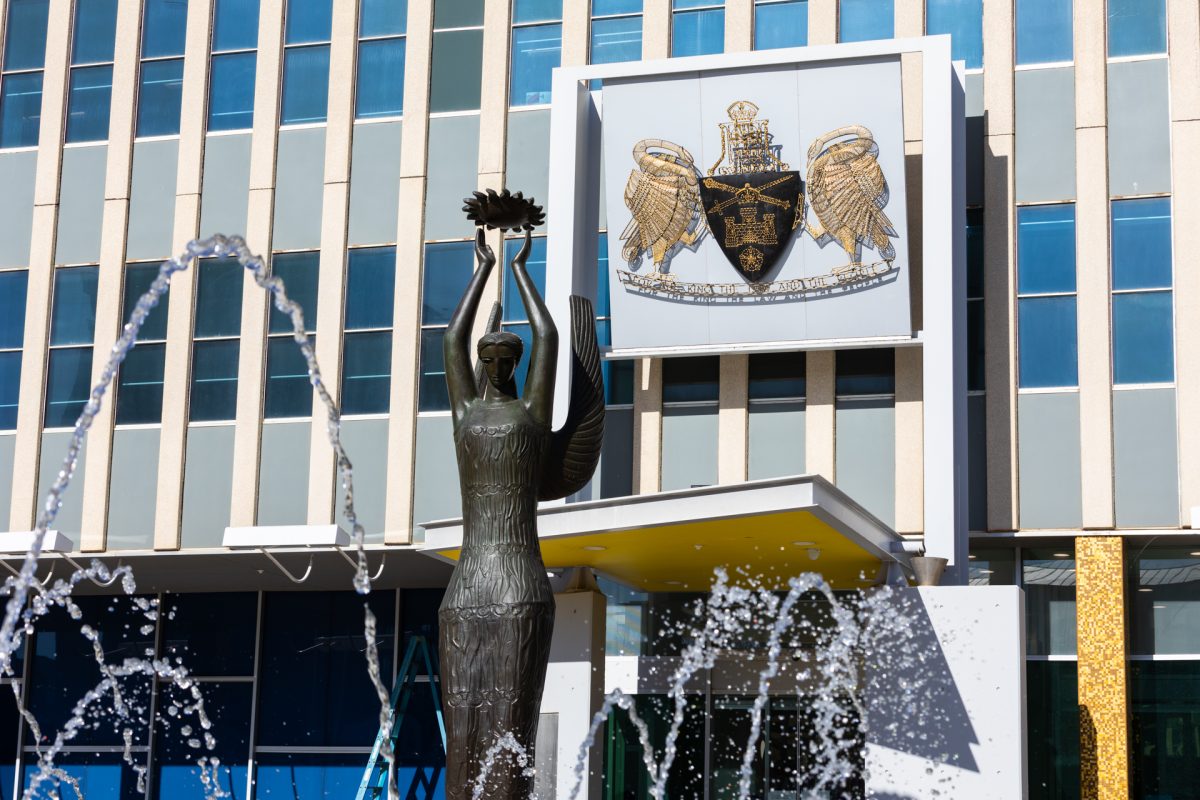
If there were people’s councils at the Legislative Assembly, would you be tempted to join? Photo: Michelle Kroll.
A people’s assembly in the ACT? People’s juries for important questions? Citizen referenda to give citizens the ability to force discussion?
Let’s do it.
For most people politics feels out of touch, out of reach, muddy and indifferent. Many people have concluded that the system is broken.
In my opinion, it isn’t broken but it’s heading that way.
If Australians want a political system that is more transparent, more competent and more representative, the path forward is not simply to demand better behaviour from politicians. It is to rebuild public participation that makes good governance possible in the first place.
Democratic participation shouldn’t happen just on voting day, while the space between elections is filled with professional political players, lobbyists and those with the time and incentive to control the conversation.
Participatory democracy is often dismissed as idealistic or naïve. Yet it is neither new nor just a theory. Countries such as Switzerland and various states in the USA have long demonstrated that structured citizen participation can produce stable, pragmatic outcomes.
Citizens’ assemblies, referenda and local consultation processes provide a constant feedback loop between government and community.
Closer to home, similar ideas are gaining traction – often driven not by governments but by the emergence of independent politicians and by committed citizens who refuse to abandon the democratic process.
I have seen this work firsthand with genuine community independents. Well supported and unmanufactured independents such as Fiona Carrick MLA show what can be done. Claire Miles (the independent candidate for the seat of Canberra) showed that true independents are supported by people when, at the last election, she achieved 11 per cent of the vote coming from a low base and without a big network – which she has now as she prepares for the next federal election.
Equally important are non-partisan civic organisations that continue to push for deeper engagement despite years of indifference or ridicule. The Canberra Alliance for Participatory Democracy, for example, has consistently advocated for citizens’ assemblies and juries as practical mechanisms for involving ordinary Australians in complex policy questions.
These approaches are not about replacing representative democracy but strengthening it.
Citizens’ assemblies, when properly designed, bring together randomly selected members of the community who also reflect the demographic diversity of the population.
Given access to expert evidence and time for deliberation, these groups often produce recommendations that are more measured, less ideological and more forward-looking than those generated through adversarial political processes.
Participation also rebuilds civic capability. It reminds people that politics is not the exclusive domain of parties. It creates pathways for new voices, new talent and new leadership to emerge outside those party structures.
This matters because the alternative is a continued drift toward disengagement, cynicism and division.
Participation can mean attending forums, engaging in structured consultation processes, supporting community-based candidates or simply insisting that decision-making be more transparent and inclusive.
The change is important – politics is not something done to us. It is something done by us.
The organisations and individuals already doing this work, often with limited resources and little recognition, are effectively keeping parts of the democratic infrastructure alive. Their persistence demonstrates that renewal is possible.
Rebuilding trust can’t happen quickly. It needs sustained effort, cultural change and a willingness from both citizens and institutions to share responsibility.
The alternative is a continued hollowing out with fewer participants, less scrutiny and increasing distance between decision-makers and the communities they serve.
In the ACT I believe the Greens are up for it and, believe it or not, I think the Libs will embrace it. Perhaps the far-right ideologues of the Libs will reject it as fantasy (also they know most Canberrans don’t support their extreme views) but the majority of party members should be open-minded enough to see the benefits – like, for example, they might win an election when people feel there is a governor on their extremes.
Labor? The health unions would love it as they know the people want better health support. It would be rejected by the CFMEU* which is allergic to scrutiny and rejected by the TWU which would be afraid its members would be inconvenienced by the needs of travellers.
So in my opinion, ACT Labor would reject the concept as unnecessary.
Yet it is obvious to me that people do want to participate in civic life. Examples include those countless people involved with the various community councils, residents groups, charities and sports clubs in the ACT.
I reckon many would also like to participate in political decision-making – just like the old days.
*Editor’s note: The Labor Party officially stopped affiliating with the CFMEU in 2024.