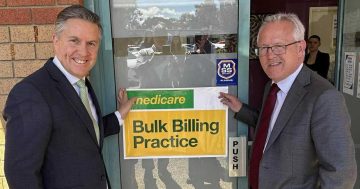
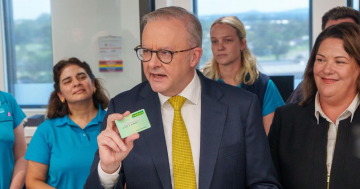
The rates of bulk billing practices across the country have been increasing. Photo: PMO.
The Royal Australian College of GPs has warned of a growing two-tier healthcare system, with regional Australians more likely to face larger Medicare gaps when bulk billing is unavailable.
The RACGP said new Cleanbill data (which tracks bulk billing availability and accessibility) showed what it had long been warning: that bulk billing increased where funding better reflected the true cost of care, not where there was greater competition between practices.
President Dr Michael Wright said the findings validated the college’s call for an independent Medicare pricing body and a 40 per cent increase in rebates for longer consultations.
“This shows why our patients need the funding for their care to be set by an independent pricing authority which can ensure Medicare funding matches the cost of their care, particularly in areas where costs are higher, or the GP workforce is more stretched,” he said.
“An independent pricing authority would provide transparent, evidence‑based decision‑making that directs funding where it’s most effective and most needed. This would give GPs the trust and certainty they need when making financial decisions, including those related to billing policies.
“This isn’t about competition between GP clinics. It’s about whether Medicare funding comes anywhere close to covering the real cost of providing care.”
The Cleanbill report broke down practices across the Modified Monash (MM) areas, a measure the Health Department uses to define whether a location is metropolitan, rural, remote or very remote. These classifications determine bulk billing incentive amounts.
It ranges from MM1, metropolitan areas and major cities where 70 per cent of Australians live, to MM7, very remote communities such as Coober Pedy, Longreach and Thursday Island.
Earlier this year, Cleanbill’s 2026 Blue Report examined how the 1 November 2025 Medicare changes had affected GP accessibility nationwide.
It showed higher proportions of bulk-billing clinics alongside higher average out-of-pocket costs across the country.
Comparing changing rates across Modified Monash areas showed rural, regional and remote areas had experienced an “unprecedented surge” in bulk billing.
“While regional centres and large-medium rural towns still trail metropolitan areas in overall bulk billing proportions, the gap has closed considerably,” the report noted.
“In small rural towns and remote communities, the odds of a given GP clinic being fully bulk billing are higher than 50 per cent for the first time since Cleanbill began collecting data in 2023.
“However, significant accessibility gaps remain outside of Australia’s capital cities.”

Comparisons between the bulk billing rate and out-of-pocket costs across the seven Modified Monash areas. Photo: Cleanbill Regional Breakdown.
The report stated that, across all states except Queensland and Tasmania, fewer than 35 per cent of GP clinics were located outside the capital cities.
“[This means] geography alone presents a major barrier to care,” it noted.
“And, for any patients not being bulk billed, average out-of-pocket costs remain generally higher outside of our capital cities.”
Dr Wright said all this data showed that “intervening” in the market didn’t deliver fairer pricing or access, but that “adequate funding does”.
“In most states, fewer than 35 per cent of GP clinics are located outside capital cities … this workforce maldistribution, combined with inadequate Medicare rebates, makes access harder for patients who already face the greatest barriers,” he said.
“If we want sustainable bulk billing and better access to care, Medicare must be properly priced, especially for longer, more complex consultations.
“The current Federal Government’s investments show the value it places on primary healthcare, but this doesn’t guarantee the same level of commitment from future governments.”
The Federal Government has rejected Cleanbill data, with Health Minister Mark Butler stating the analysis “cannot be relied upon and should not be reported as accurate”.
The Commonwealth uses Department of Health, Disability and Ageing data, which collects Medicare information from more than 140 million GP services each year.
It showed that more than 3700 practices were now fully bulk billing.
More than 1400 of these were mixed billing practices before the 1 November changes.
“This exceeded government projections that 3600 Medicare Bulk Billing Practices would be achieved by 2028,” Mr Butler said.
“Because of the Government’s delivery, approximately 97 per cent of Australians are now within a 20-minute drive of a registered Medicare Bulk Billing practice.”
Close to 7600 general practices are also now registered with MyMedicare.
“Doctors and practices are moving back to bulk billing because it works for patients and it works for their practices,” Mr Butler said.
“The Albanese Government is also expanding access to care by delivering 137 Medicare Urgent Care Clinics, and the establishment of 1800Medicare, a free, nationwide 24/7 health advice line and after-hours GP telehealth service.”
The next quarterly Medicare statistics, covering January 2026 to March 2026, will be published in May.